

Is repentance necessary for salvation? That is one of the most common questions people ask when they hear that eternal life is a free gift. Almost everyone agrees that repentance matters. The disagreement is about what it is for. Many gospel presentations tell a person to repent of their sin and believe in Jesus in order to be saved. In that way of speaking, repentance becomes a condition for receiving eternal life.
The gospel invitation in Scripture is simpler than that. Jesus does not tell people to repent, confess, commit, or submit in order to receive everlasting life. He invites them to believe in Him for it. Repentance belongs in the Christian life, but it is not the condition for entering the family of God.
What People Usually Mean by the Question
When most people ask whether repentance is necessary for salvation, they are not asking about deliverance from sickness, from a destructive habit, or from the earthly consequences of sin. They are asking how a person receives eternal life and spends eternity with God. That is the question I am answering here.
This matters because the Bible uses the word “salvation” in more than one way. In many passages it means deliverance from some danger or damage in this life, and those kinds of deliverance often have conditions. The question behind this post is narrower. Must a person repent of sin in order to receive the free gift of eternal life?
The answer of Jesus is no. The central invitation of the gospel is that we believe in Jesus for everlasting life. That invitation has three parts: we believe, in a person, for a promise. The person is Jesus. The promise is eternal life. The response is faith, not a work we perform in order to qualify. I have explained that invitation in The Clear Gospel Invitation: Believe in Jesus for Eternal Life.

Why Repentance Gets Added to the Invitation
It is not hard to see why repentance is so often added. Sin is destructive, and Jesus is Lord. Nobody should want a message that treats either of those facts as small. So teachers attach extra words to the invitation, hoping to protect the gospel from misuse. They tell people to turn from sin, clean up their lives, and submit to the lordship of Jesus, and then believe. Or they say that if a person has truly believed, repentance and a changed life will automatically follow, and the absence of that change proves the person was never saved.
In both cases, repentance has been made a condition. In the first case it is placed in front of faith, as something you must do before God will give eternal life. In the second case it is placed after faith, as the proof that the gift was real. I have written about this kind of addition in Repentance is not a condition for eternal life. The wording changes. The result does not. Eternal life is no longer received simply by believing in Jesus for it.
That is also why it is unwise to replace the word “believe” with other words we think are close enough. The New Testament almost universally uses “believe” or “faith.” When we substitute repent, commit, submit, or turn from sin, we are no longer using the words Jesus and the apostles used in their invitations, and we are in danger of turning faith into a work. Faith is not a work. It is how we receive what God has already done. I have discussed that in Faith is NOT a Work.
Where Repentance Does Belong
None of this means that repentance is unimportant, or that Christians should be careless about sin. The gospel contains many truths for people who have already believed, and one of them is repentance from dead works and religion. This is not a second condition for eternal life. It is part of how believers live the life they have already received.
Most Christians, however, have a backwards understanding of this. When the Bible talks about dead works, the flesh, and rebellion against God, we often think first of obvious sins such as lust, lying, and greed. Those things are sin, and Scripture does mention them. But a careful look at the context of many repentance passages shows that the larger issue is not only “bad behavior.” It is the attempt to please and appease God through good works and self-righteousness. Religion, in that sense, is a bigger problem than we usually admit.
Worst of all is when religious language is used to baptize behavior that would be recognized as sinful in any other setting. Gossip becomes “sharing prayer requests.” Greed becomes a strategy for influence. Anger becomes “righteous,” and judgment of others is treated as faithfulness. The Bible calls us to repent of these things as well, not only of the sins we already know to avoid, but of the evil that masquerades as righteousness. There is a place for good works in the life of the believer, but they do nothing to help us earn, keep, or prove God’s free gift of eternal life.

Repentance Is for Living the Life You Have Received
This is why I have often found it helpful to talk about repentance with Christians, not as a test of whether they have eternal life, but as a way of seeing where religion has taken the place of a relationship with God. The person who has already believed in Jesus does not need to be sent back to the starting line. They need to be reminded that God is not trying to manage their sin through fear, and that dead works cannot give them a standing they already have in Christ.
If you want a fuller treatment of the word itself, I have a longer study in What is Repentance? The point of this post is the question people are usually asking. Is repentance necessary in order to receive eternal life? No. Jesus gives eternal life to those who believe in Him for it. Repentance, turning from dead works, and a life of obedience belong to the life that follows, not to the condition for becoming a child of God.
So if you have believed in Jesus for eternal life, you have it, whether your repentance has been fast or slow, obvious or quiet, recent or long ago. Do not let a second condition be added to a promise Jesus made without one. And if you have not yet believed Him for that life, the invitation is still the one He gave: believe in Jesus for everlasting life. That is enough, because He has already done everything that needs doing.
Learn More in The Gospel According to Scripture
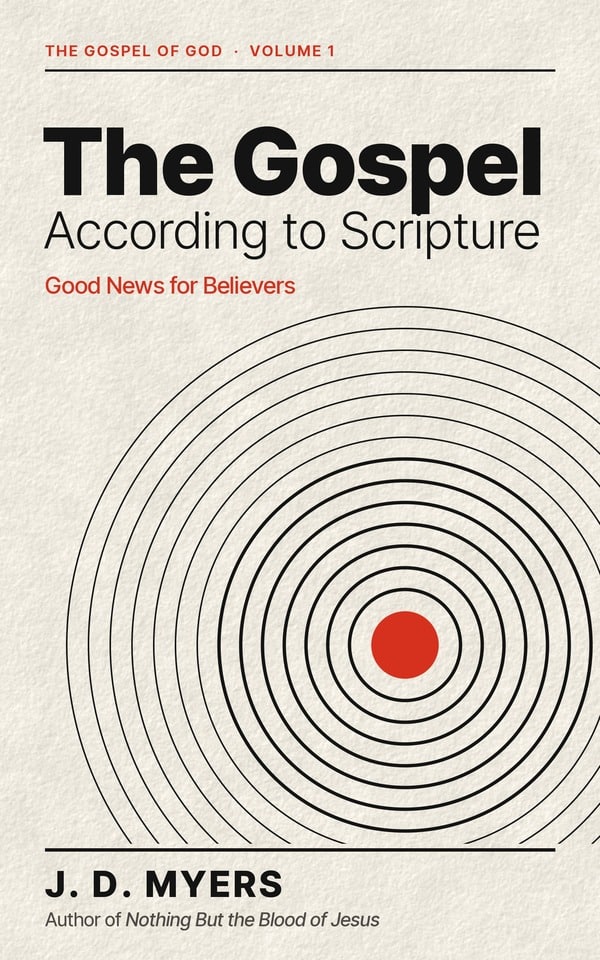
I discuss the gospel invitation, the place of repentance, and the difference between receiving eternal life and living it in my book The Gospel According to Scripture. It is available in Kindle, paperback, and hardcover. You can also read more on the book page.
If you want to study these truths with others, join the RedeemingGod.com Discipleship group.

Leave a Comment or Question