

How do I know I have eternal life? Many Christians have quietly asked this question for years. They believe in Jesus, they go to church, and they try to follow God. But deep down, they are not sure. They wonder if they believed the right way, or if they believed enough. They wonder if they have done enough good works to prove that their faith is real. And so they live with a nagging fear that when they stand before God, He might tell them they never really belonged to Him at all.
If that describes you, I have good news. God does not want you to live with that fear. Scripture teaches that you can know, not just hope, that you have eternal life. This assurance does not come from looking at how strong your faith feels, or at how well you are living. It comes from looking at the promise of Jesus, and at what it means to believe it. In this post, I want to show you what Scripture says about assurance, and why you can rest in the certainty that eternal life is yours.
You Can Know You Have Eternal Life
Some people think it is arrogant to say you know you have eternal life. They believe the humble thing is to say, “I hope so.” But the Apostle John wrote one of his letters so that believers would know. He says that “God has given us eternal life, and this life is in His Son. He who has the Son has life” (1 John 5:11-12). Then he adds, “These things I have written to you who believe in the name of the Son of God, that you may know that you have eternal life” (1 John 5:13).
Notice that John does not say “that you may hope” or “that you may think.” He says “that you may know.” God wants His children to be certain of their place in His family. And it is not arrogant to believe what God has said. If God promises something, the humble response is to take Him at His word. The arrogant response is to doubt Him, or to think that our own efforts must be added to His promise before it can be trusted. I write more about this in Is Certain Assurance of Salvation Possible?
What Does It Mean to Believe?

Much of the confusion about assurance comes from confusion about faith. Many people think of faith as a feeling, or a leap in the dark, or a commitment to obey. But in Scripture, faith is being persuaded that something is true. The Greek word for faith, pistis, was used for evidence that convinces someone. When you are convinced that something is true, you believe it. Faith is not measured in amounts. You either believe something or you do not.
This gives us a simple way to know whether we believe something. Try replacing the word “believe” with the word “know.” Do you believe that water is wet? Of course you do, because you know it is true. In the same way, you know you have believed in Jesus for eternal life if you know that His promise is true. You do not need to search your heart for some special feeling. You only need to ask whether you are convinced that Jesus keeps His promise of eternal life.
Doubt Is Not the Enemy of Faith
Some people worry that their questions and doubts mean they do not have real faith. But doubt is often the path that leads to faith. We rarely investigate something unless we first question it. And as we look into our questions, we either come to believe something more firmly, or we discover that we were wrong. So if you have doubts, do not run from them. Bring them to God and to His Word. Many believers find that their faith grows deeper and stronger after a season of honest questions.
How Do I Know I Have Eternal Life? Look at the Promise
At the heart of the gospel is a promise. Jesus offers eternal life as a free gift to all who believe in Him. Jesus said, “Most assuredly, I say to you, he who believes in Me has everlasting life” (John 6:47). He also said, “he who hears My word and believes in Him who sent Me has everlasting life” (John 5:24). And John 3:16, which so many of us learned as children, says that “whoever believes in Him should not perish but have everlasting life” (John 3:16).
Notice that Jesus does not say that whoever believes might have eternal life, or will have it if they prove their faith over time. He says the one who believes has it now. So the question is not whether your faith is strong enough. The question is whether Jesus is trustworthy. Scripture says that “God is not a man, that He should lie” (Num 23:19). If you know that Jesus’ promise is true, then you have believed it. And if you have believed it, you have eternal life, because He said so.
Why the Object of Faith Matters
This does not mean that we are saved by faith in faith. Everyone believes something. Even an atheist believes there is no God. It is not the act of believing that gives eternal life, but the One we believe in. Imagine your neighbor told you that he would give you eternal life if you believed in him. You would not believe him, and you would be right. But Jesus is not your neighbor. He died and rose from the dead, and He has the authority to make this promise. This is why the gospel is simple to understand, but not always easy to believe.
Why Good Works Cannot Give You Assurance

Many Christians have been taught that good works are the proof of genuine faith. If you have believed, they say, your life will show it, and if it does not, you probably were never saved. This sounds reasonable, but it robs people of assurance. How many good works are enough? How long must you keep them up? And what about the person whose life is quietly changing in ways no one else can see? God does promise to work in the lives of His children. But Scripture never tells us to measure our standing with God by measuring our works.
In fact, Jesus warned about people who would point to their works on the day of judgment. They will say, “Lord, Lord, have we not prophesied in Your name, cast out demons in Your name, and done many wonders in Your name?” And He will answer, “I never knew you” (Matt 7:22-23). These people were not trusting in Jesus’ promise. They were trusting in their own works. If we look to our works for assurance, we are doing the very thing Jesus warned against.
What Paul Learned About Himself
The Apostle Paul is a helpful example. In one letter he described himself as “the least of the apostles” (1 Cor 15:9). In a later letter he wrote that he was “less than the least of all the saints” (Eph 3:8). And in one of his last letters, he said that among sinners he was the worst (1 Tim 1:15). As Paul grew closer to God, he became more aware of his sin, not less. If he had based his assurance on his works, he would have become less sure of his salvation every year. But because he trusted the promise of God, he could praise God more and more. Good works are important, but they belong to our growth as followers of Jesus, not to our assurance. I explain this in Are good works necessary for eternal life?
What About “Examine Yourselves”?
Some people point to 2 Corinthians 13:5, where Paul writes, “Examine yourselves as to whether you are in the faith.” They believe Paul is telling Christians to check whether they are truly saved. But Paul is not talking about faith in general here. He is talking about “the faith,” which refers to the Christian way of believing and living. Throughout this letter, Paul treats the Corinthians as believers. He is not asking them to doubt their salvation. He is asking them to see whether their beliefs and behavior match who they already are in Christ.
This is an important difference. Paul wants the Corinthians to act like who they are. He does not want them to question whether they have that identity at all. We, too, should examine our lives, not to find out if we are saved, but to see where we can grow in following Jesus. That kind of examination is healthy. It comes from security, not fear.
Can I Lose the Eternal Life I Have Received?
Finally, once you know you have eternal life, you can also know that you will never lose it. Jesus said of His sheep, “I give them eternal life, and they shall never perish; neither shall anyone snatch them out of My hand” (John 10:28). Eternal life would not be eternal if it could be lost. Paul adds that nothing “shall be able to separate us from the love of God which is in Christ Jesus our Lord” (Rom 8:39). I explain why I believe in eternal security, though not every version of “once saved, always saved,” in this post on eternal security.
This is the freedom God wants for you. When you know you have eternal life, you no longer serve God out of fear that He will reject you. You serve Him out of love and gratitude, because He has already accepted you. That is when real spiritual growth begins.
Learn More About Faith and Assurance
So how do I know I have eternal life? You know it by knowing that Jesus’ promise is true. Look away from your feelings, your doubts, and your works, and look to Jesus. He has promised eternal life to all who trust Him, and He cannot lie. If you are persuaded that His promise is true, then you have believed, and the life He promised is yours today and forever.
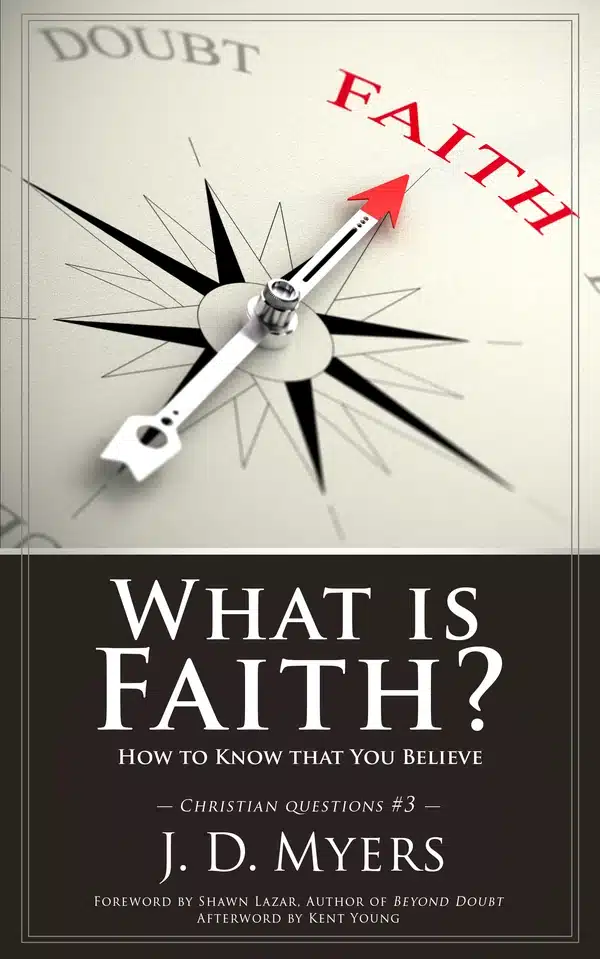
If you want to understand faith more clearly, my book What is Faith? How to Know that You Believe explains what faith is, how it works, and what Scripture really means when it talks about believing. It also corrects common misunderstandings about faith and walks through many of the most debated faith texts in the Bible. Get What is Faith? on Amazon and discover the joy of knowing that you have eternal life.

Leave a Comment or Question