

Does faith always result in good works? Many Christians are taught that it does. They are told that if a person has truly believed in Jesus, a changed life will inevitably follow, and that the absence of good works proves the person never had eternal life in the first place. The teaching sounds careful and serious. It is also a way of turning the result of faith into a condition for it.
I want to be clear from the beginning. Christians should live lives of obedience, love, and good works. Scripture is filled with commands, encouragements, and warnings about how the people of God are to live. The question is not whether good works matter. The question is whether they always, automatically, and necessarily follow from faith, and whether they can be used as proof that a person has eternal life.
A Necessary Result Is Still a Condition
Some teachers would never say that good works are a requirement for receiving eternal life. They say instead that good works are the necessary result of real faith. If the works are not there, the faith was not real. In practice, this is the same thing as making works a condition. The person is told that he cannot know he has eternal life unless the works appear, and that a lack of works means he was never saved.
That is not how a free gift works. If God gives eternal life to the one who believes in Jesus, then the gift is given at the moment of faith. What happens afterward matters greatly for the kind of life that person will live, but it cannot be turned into the test of whether the gift was given. I have discussed this confusion in Are Good Works Necessary for Eternal Life? and in Faith is NOT a Work.
The difference can be stated in a short contrast: should is not the same as will. Christians should live faithfully. That does not mean they will. God does not force His children to obey Him. He invites, commands, teaches, and disciplines, but He does not irresistibly compel people to do His will. If He did, the long lists of commands in the New Testament would be unnecessary. There is no need to tell people to do what they cannot help doing.

Scripture Is Honest About Believers Who Fail
The Bible is more honest about the people of God than many of our theological systems are. It tells us about people who belong to God and still live in rebellion, foolishness, or compromise. Cain, Lot, Esau, Saul, and Solomon are only some of the examples. The Corinthian believers were called saints, and yet many of them were living in ways Paul had to rebuke sharply. The point is not that such lives are acceptable. The point is that Scripture does not treat those failures as proof that the people in question were never God’s people at all.
If faith always resulted in good works, these stories would not read the way they do. We would be forced to say that anyone who falls badly was never born again, and we would end up saying that about people the Bible itself does not describe that way. A better reading is the simpler one. People can receive eternal life and then fail to live in light of it. That is tragic, but it is not impossible.
This is also why we should be very slow to look at a struggling person and say, “Maybe you were never a Christian.” That sentence is often used as a shortcut when discipleship would be harder. The New Testament writers do not usually handle failure by taking people back to the starting line. They remind them of who they already are, and they call them to live like it.
Good Works Do Not Prove Eternal Life
There is another problem with using works as proof. Jesus Himself said that some people will do impressive works in His name, and He will still say that He never knew them. In Matthew 7:21-23, the people who say “Lord, Lord” point to their prophecy, their exorcisms, and their many mighty works. Those works do not prove that they have eternal life. If good works were the evidence that a person has been born again, this passage would be almost impossible to explain.
Works can be imitated. They can be done for praise, for fear, or for religious advancement. They can also be absent for a time in the life of a genuine believer. That is why I have argued that good works do not prove you are a Christian. The way you know you have eternal life is not by adding up your performance. It is by believing the promise of Jesus. I have written about that assurance in How Do I Know I Have Eternal Life?

Good Works Belong to Sanctification
None of this is an argument for careless living. Good works are part of sanctification, the lifelong process of learning to live as a child of God. After a person has believed in Jesus for eternal life, Scripture calls that person to love others, to serve, to put off the old way of life, and to walk in the Spirit. Those things are important. They are simply important for the right reason. They are how we live the life we have received, not how we get it, keep it, or prove it.
This also helps us talk with people who are afraid. Some Christians live in constant doubt because their works never feel adequate, and they have been taught that inadequate works mean they may not be saved. Other people hide their failures because they are afraid that honesty will be taken as evidence that they were never Christians. In both cases, the teaching that faith always results in good works has done damage. It has taken a free gift and turned it into a performance review.
So, does faith always result in good works? It should result in a changed life, and the Spirit of God works toward that end. But “should” is not “will,” and a necessary result that must appear in order for the gift to be real is no longer a result. It has become a condition. The person who has believed in Jesus for eternal life has the gift already. The call that remains is to live in light of that gift, not to use works as the test of whether God has kept His promise.
Learn More in The Gospel According to Scripture
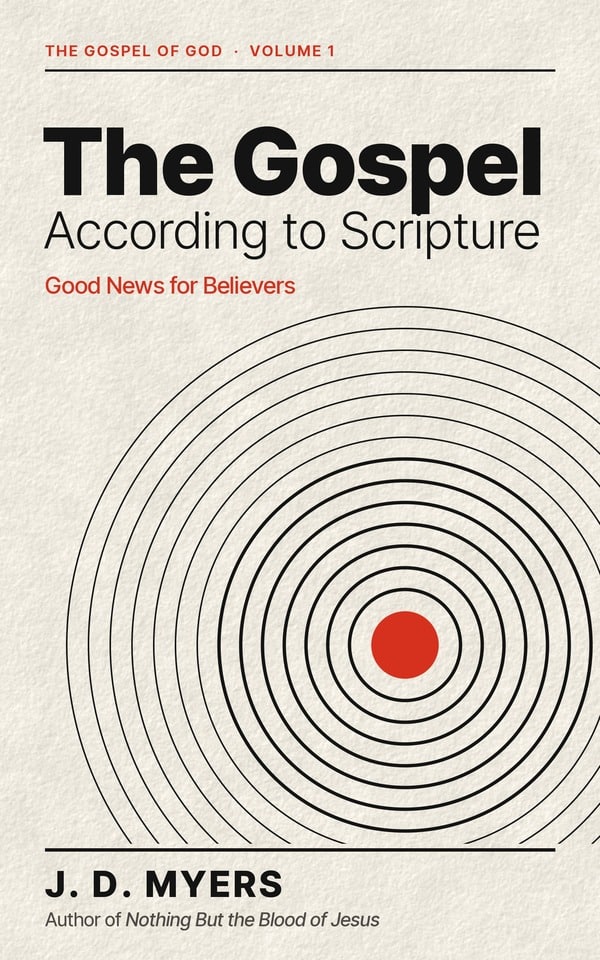
I discuss faith, good works, and the difference between receiving eternal life and living it in my book The Gospel According to Scripture. It is available in Kindle, paperback, and hardcover. You can also read more on the book page.
If you want to study these truths with others, join the RedeemingGod.com Discipleship group.

Leave a Comment or Question