Redeeming God

Liberating you from bad ideas about God

Join the discipleship group
  • Join Us!
  • Scripture
  • Theology
  • My Books
  • About
  • Discipleship
  • Courses
    • What is Hell?
    • Skeleton Church
    • The Gospel According to Scripture
    • The Gospel Dictionary
    • The Re-Justification of God
    • What is Prayer?
    • Adventures in Fishing for Men
    • What are the Spiritual Gifts?
    • How to Study the Bible
    • Courses FAQ
  • Forum
    • Introduce Yourself
    • Old Testament
    • New Testament
    • Theology Questions
    • Life & Ministry

Theories of the Atonement Compared: Four Views of the Cross

By JD Myers
Leave a Comment

Theories of the Atonement Compared: Four Views of the Cross

When Christians talk about the cross, we usually agree on the facts. Jesus died, He was buried, and He rose again on the third day. But when we start to ask why Jesus had to die, and what His death actually accomplished, the agreement quickly falls apart. That is where the theories of the atonement come in. Over the centuries, Christians have offered several ways of explaining how the death of Jesus brings us back to God. Some focus on a legal payment and some on the example of love. Others focus on a ransom, or on a victory over the powers of evil.

This matters more than it might seem. The way we understand the cross shapes the way we see God. If the cross shows a God who needed blood before He could forgive, we will think of God one way. If the cross shows a God who gave Himself to rescue us from sin, death, and the devil, we will think of Him in a very different way. So in this post I want to compare four of the main theories of the atonement and look at what each one gets right. Then I will explain why I believe one of them best reveals the God we see in Jesus Christ.

Why Theories of the Atonement Matter

Before we look at the theories, it helps to remember that the fact of the atonement is more important than any explanation of it. C. S. Lewis made a similar point in Mere Christianity. Christians are not saved by holding the right theory. We are saved by the One who died and rose again. Every theory is a human attempt to put words to something that is bigger than our words. So we should hold our theories with some humility, and we should be willing to learn from each of them.

But that does not mean all theories are equally helpful. Each theory of the atonement carries a picture of God inside it. And the picture we hold of God affects how we pray, how we read the Bible, and how we treat other people. If we believe God was angry and had to be appeased, we will tend to approach Him with fear. If we believe God was never against us, but came in Jesus to rescue us, we will approach Him with trust. So the question is not merely academic. It is about the character of God.

It also helps to think about the word itself. Many people say that โ€œatonementโ€ means โ€œat-one-ment,โ€ the idea that the cross makes God and humanity one again. There is truth in this. But I believe the cross does not so much repair a broken relationship from Godโ€™s side as reveal that God never left our side at all. As Paul puts it, โ€œGod was in Christ reconciling the world to Himself, not imputing their trespasses to themโ€ (2 Cor 5:19). The movement is from God toward us, not from us toward God.

Penal Substitution: The Most Popular Theory of the Atonement

A judge's gavel in an empty courtroom, picturing the penal substitution theory of the atonement

The view that most evangelical Christians hold today is penal substitutionary atonement. It goes by several other names as well, such as the satisfaction view and the vicarious view. Scholars draw fine distinctions between them. The basic idea is that God is holy and just, and so He must punish sin. Since we have all sinned, we all deserve death. But in His love, God sent Jesus to take the punishment we deserved. Jesus died in our place, the wrath of God was poured out on Him, and now God can forgive us because the penalty has been paid.

This theory has real strengths. It takes sin seriously. It also takes seriously the many texts which say that Jesus died for us and in our place. Isaiah writes that โ€œHe was wounded for our transgressions, He was bruised for our iniquitiesโ€ (Isa 53:5). Paul writes that God โ€œmade Him who knew no sin to be sin for usโ€ (2 Cor 5:21). Any theory of the atonement that ignores the idea of substitution will not do justice to Scripture. Its roots are usually traced to Anselm of Canterbury in the eleventh century. The Protestant Reformers later gave it the penal shape most people know today.

But penal substitution also raises troubling questions. If God must be paid before He can forgive, then He is not actually forgiving anything. Forgiveness and payment are opposites. When a debt is paid, nothing is left to forgive. The theory also has God paying Himself, since Jesus is God. And it suggests that the Father needed violence and blood before He could love sinners. That sounds more like the angry gods of the ancient world than the Father whom Jesus revealed. Many people have walked away from Christianity because they could not worship a God who needed to kill His Son before He could forgive. I explain more of my concerns in Good God, Bad God.

The Moral Influence Theory

A second view is the moral influence theory, sometimes called the exemplary love view. It is often associated with the medieval theologian Peter Abelard. In this view, the cross does not change Godโ€™s mind about us. Instead, it changes our mind about God. When we see Jesus willingly lay down His life, we are moved to repent, to love God, and to love others in the same way. Jesus Himself said, โ€œGreater love has no one than this, than to lay down oneโ€™s life for his friendsโ€ (John 15:13). John adds, โ€œIn this is love, not that we loved God, but that He loved usโ€ (1 John 4:10).

There is something beautiful about this view. Jesus did give us an example to follow, and He told His disciples that people would know them by their love for one another (John 13:34-35). Any good theory of the atonement should include the example of Jesus. But on its own, the moral influence theory does not go far enough. It assumes that what humans need most is a good example, when Scripture says we are enslaved to sin and cannot free ourselves. An example cannot set a prisoner free. And if Jesus is mainly an example, then He becomes one more great teacher among many.

There is also a practical problem. If our hope depends on following the example of Jesus well enough, then none of us has much hope at all. So while I believe we should include the insight of this theory, I do not believe we should adopt it as our explanation of the cross.

The Ransom Theory

A third view is the ransom theory. It builds on the words of Jesus, who said that He came โ€œto give His life a ransom for manyโ€ (Mark 10:45). Paul also says that Jesus โ€œgave Himself a ransom for allโ€ (1 Tim 2:6). Humanity was held captive, and Jesus paid the price to set us free. Some early church writers went further and asked who received the payment. Since humanity was held captive by sin and the devil, some of them answered that the ransom was paid to Satan.

This view correctly sees that we needed to be rescued from captivity. But it runs into problems as soon as we ask who was paid. If the ransom was paid to God, then the ransom theory simply turns into penal substitution. If the ransom was paid to the devil, then God owed something to Satan, which gives the devil far too much power. I believe the better answer is that a ransom in Scripture does not always require someone to receive a payment. When the prophet speaks of โ€œthe ransomed of the Lordโ€ returning to Zion (Isa 35:10), the point is the deliverance, not a transaction with a captor.

Christus Victor and the Non-Violent View of the Atonement

An empty tomb at sunrise, picturing the Christus Victor view of the atonement

This brings us to the view I hold, which is a non-violent form of the Christus Victor view. Christus Victor is Latin for โ€œChrist the Victor.โ€ In this view, the cross is not where God poured out His wrath on Jesus. It is where Jesus defeated the powers that held humanity captive. The Swedish theologian Gustaf Aulรฉn argued in his book Christus Victor that some form of this victory view was the main way the church spoke about the cross for many centuries. Whether or not that is entirely right, the theme of victory is everywhere in the New Testament. Jesus took on flesh โ€œthat through death He might destroy him who had the power of death, that is, the devilโ€ (Heb 2:14).

The non-violent part matters too. In this view, God did not kill Jesus. People did. Jesus was handed over by religious leaders and executed by the Roman state. The violence of the cross was our violence, not Godโ€™s. And yet, while people did their worst to Him, Jesus prayed, โ€œFather, forgive them, for they do not know what they doโ€ (Luke 23:34). So the cross does not show us an angry God who needs to be satisfied. It shows us a loving God who takes our violence upon Himself and answers it with forgiveness. I have written more about why God appears violent in Scripture even though He is not.

How Jesus Defeats Sin, Death, and the Devil

First, the cross defeats sin by exposing the lies that sin tells us about God. Sin tells us that God is angry with us, that He is disgusted by us, and that we must pay Him back before He will accept us. At the cross, God reveals that none of these is true. Second, the cross defeats death. Throughout history, people have tried to deal with their guilt by blaming and killing others. Jesus became the final victim of that pattern. His blood โ€œspeaks better things than that of Abelโ€ (Heb 12:24). Abelโ€™s blood cried out for vengeance, but the blood of Jesus cries out for forgiveness.

Third, the cross defeats the devil. The word โ€œdevilโ€ means accuser, and the devil has always accused us before God and before one another. But at the cross, Jesus wiped out the record that stood against us. Paul writes that โ€œhaving disarmed principalities and powers, He made a public spectacle of them, triumphing over them in itโ€ (Col 2:15). The accuser has nothing left to say. And notice that this view keeps the strength of substitution. Jesus really did die for us and in our place. But He did not die to absorb the wrath of God. He died to rescue us from sin, death, and the devil.

Comparing the Theories of the Atonement

Quote graphic: The cross is not a payoff. It is a rescue. J. D. Myers

So how do the theories of the atonement compare? Penal substitution rightly sees that Jesus died in our place, but it pictures a God who must be paid before He can forgive. The moral influence theory rightly sees the cross as an example of love, but it does not free us from slavery to sin. The ransom theory rightly sees that we were held captive, but it gets tangled up in the question of who was paid. The non-violent Christus Victor view keeps what is best in each of these. It includes substitution, example, and ransom, but it places them inside the bigger story of God rescuing His people.

I think of it like a prison break more than a payment. In penal substitution, Jesus pays the fine so the judge can let us go. In Christus Victor, Jesus breaks into the prison where we have been held captive, throws open the doors, and leads us out. This fits what Jesus said about His own mission, that He came โ€œto proclaim liberty to the captivesโ€ (Luke 4:18). The cross is not a payoff. It is a rescue. For more on how this changes everything else we believe, see 10 ways the non-violent God changes your theology.

This also changes how we think about substitution. Jesus does take our place. I have argued that we should think of Him as the substitute God. He took the place of the false and violent gods we had made in our own image. When we look at the cross, we do not see God venting His anger. We see what God has always been like. And this is good news, because it means we never needed to be afraid of Him.

Going Deeper into the Atonement of God
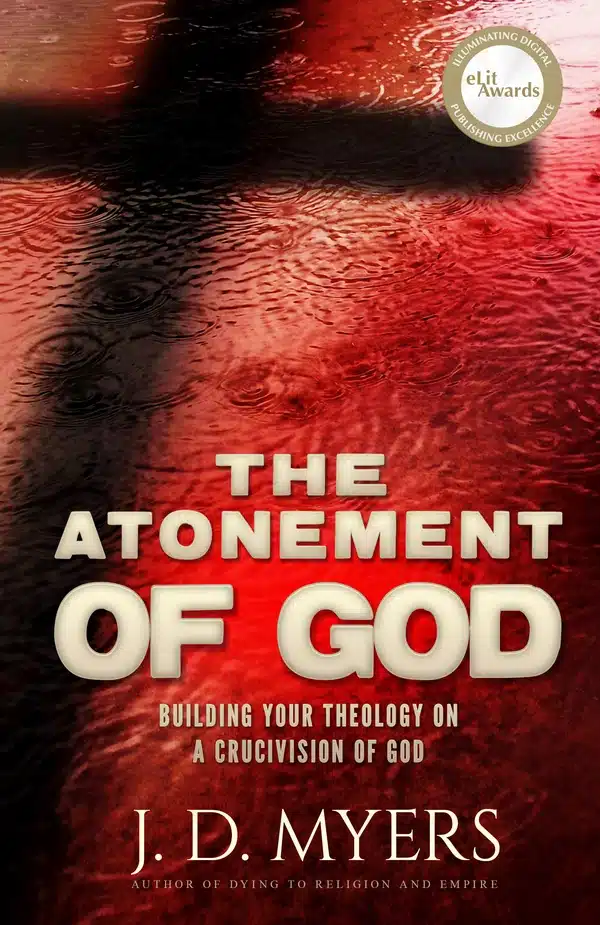
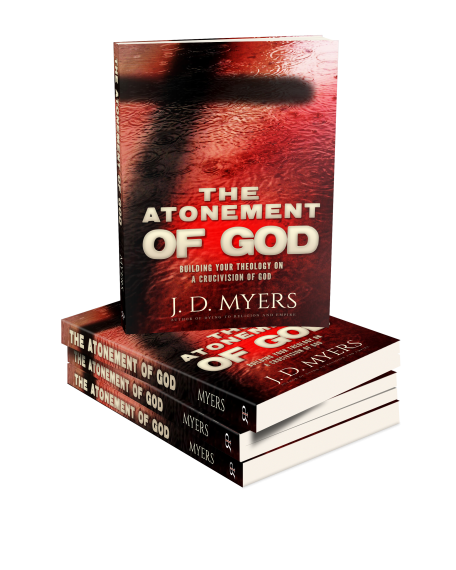
The Atonement of God book cover by J. D. Myers

If you have always believed penal substitution, some of this may feel unsettling. That is all right. Many people have felt the same way when they first began to question what they had been taught about the cross. But I encourage you to keep reading Scripture with Jesus at the center. If Jesus shows us exactly what God is like, then the cross is not a picture of divine wrath. It reveals a God who would rather die than stop loving us. Greg Boyd and I have also discussed some of these questions in this exchange about the blood of Jesus.

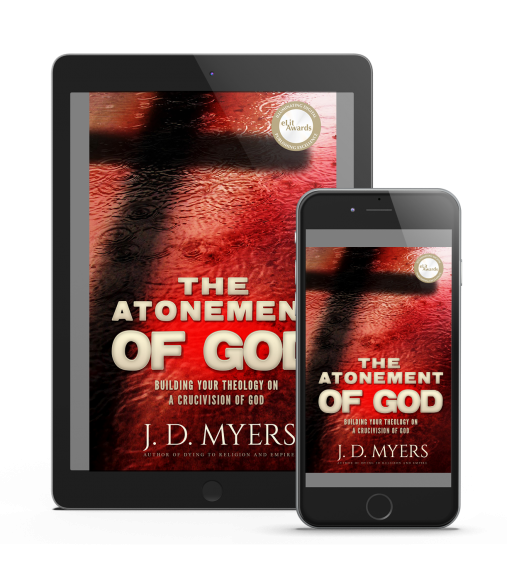
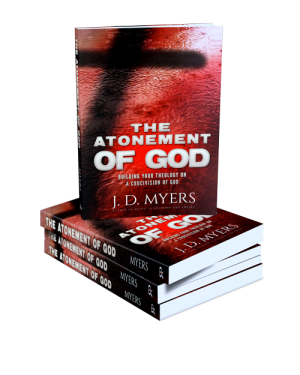
I cover all of this in more detail in my book, The Atonement of God: Building Your Theology on a Crucivision of God. The first part of the book looks closely at each of the theories of the atonement. The rest of the book shows how a non-violent view of the cross changes the way we understand God, Scripture, sin, forgiveness, justice, and violence. If this post raised more questions than it answered, the book is a good place to go next. Get The Atonement of God on Amazon and discover the God who looks like Jesus.
Affiliate Disclosure: As an Amazon Associate I earn from qualifying purchases. Thank you for supporting my work in this way!

God is Redeeming Books, Redeeming God, Redeeming Scripture, Redeeming Theology Bible & Theology Topics: atonement, christus victor, cross, non-violent atonement, penal substitution, substitutionary atonement, The Atonement of God

Advertisement

What a Non-Violent Atonement reveals about Scripture

By Jeremy Myers
2 Comments

What a Non-Violent Atonement reveals about Scripture

https://media.blubrry.com/one_verse/feeds.soundcloud.com/stream/1350365986-redeeminggod-what-a-non-violent-atonement-reveals-about-scripture.mp3

(#AmazonAdLink) I am taking a short break from teaching through Ephesians to record an audiobook for my bookย (#AmazonAdLink) The Atonement of God.ย A reader has generously offered to sponsor the recording of this audiobook. This podcast episode provides a preview of the audiobook by giving you Chapter 5: What a Non-Violent View of the Atonement Reveals about Scripture.

In this podcast episode, you will learn how to read and understand the violent portions of Scripture in light of Jesus Christ and Him crucified.

On this cross, Jesus shows us how to properly read the Bible. If you struggle with the violent portions of Scripture, it helps to read them through the lens of Jesus Christ on the cross.

If you want to sponsor a reading of one of my books into audiobook format, please reach out to me through the contact form.

Affiliate Disclosure: As an Amazon Associate I earn from qualifying purchases. Thank you for supporting my work in this way!

God is Redeeming God, Redeeming Theology, z Bible & Theology Topics: christus victor, non-violence, non-violent atonement, The Atonement of God, violence of God

Advertisement

My book won a gold medal!

By Jeremy Myers
4 Comments

My book won a gold medal!

Well this is fun… The book I published last year, The Atonement of God, won a gold medal from the eLit awards in the “Religion” category.

If you haven’t read it yet, you really should. The first 70 pages are slightly more “technical,” so if the book is rough going at first, don’t let that put you off. The rest of the book is intensely practical. In it, I give you 10 areas of your life and theology that get turned upside down with a proper understanding of the crucifixion of Jesus.

Atonement of God eBook

To celebrate the gold medal, I have temporarily lowered the eBook price of The Atonement of God on Amazon to $2.99 (It’s only $0.99 if you previously purchased the paperback). Go here to buy it today.

If you are a pastor or lead a Bible study, the 10 chapters in Part 2 of the book would make a great sermon series or Bible study. If you just like to read for personal growth and development, this book will help you understand God, Scripture, and yourself in new ways as well.

Here are some reviews of the book that have been left on Amazon:

Most Christian’s are usually taught that God is constantly disappointed and disapproving of us and we have to fear him. This book teaches instead that God loves us. It isn’t a book that teaches God loves us unconditionaly, so just do whatever you want. It’s a lot more complicated than that, but it does teach that God has always loved us and we in turn must love, forgive and care for others. It’s a great book, and it will transform your view of God.
โ€“imani42

OUTSTANDING BOOK! Thank you for helping me understand “Crucivision” and the “Non-Violent Atonement”. Together, they help it all make sense and fit so well into my personal thinking about God. I am encouraged to be truly free to love and forgive, because God has always loved and forgiven without condition, because Christ exemplified this grace on the Cross, and because the Holy Spirit is in the midst of all life, continuing to show the way through people like you.
โ€“Samuel R. Mayer

If you have the same resolve as Paul, to know nothing but Jesus and Him crucified (2 Cor 2:2), then this book is for you. I read it the first time from start to finish on Father’s Day… no coincidence. This book revealed Father God’s true character; not as an angry wrathful God, but as a kind loving merciful Father to us. Share in Jeremy’s revelation concerning Jesus’ crucifixion, and how this “vision” of the crucifixion (hence “crucivision”) will make you fall in love with Jesus all over again, in a new and deeper way than you could imagine. Buy a copy for a friend–you won’t want to give up your copy because you will want to read it again and again until the Holy Spirit makes Jeremy’s revelation YOUR revelation.
โ€“Amy

I’ve always been a curious mind and searcher, and many of the mainstream theology answers felt a little out of place. Now I know why I was dissatisfied with the explanations, not because they were wrong, but rather they were incomplete. Reading Jeremy’s book has shed a much needed light as it explores the character of God, who He is and how He acts towards us humans. It is the same, but different in a very comforting way. It presents God as ever loving and freely forgiving, needing no payment for sin, and explains the Non-Violent view of the redemption. Beware.. it might change your life!
โ€“ThePilgrimm

This is a great read to say the least. The Atonement of God is one book I couldn’t put down. Ive been a follower of Christ for decades, reading this book has led me to be very reflective of what I have been taught about the atonement, Jeremy’s careful and insightful teaching from Gods word has caused a revolution in my thinking. Importantly, it showed me just how much of my understanding had been heavily influenced by past incorrect teaching without realizing it . This book has blown away my thinking that God is both angry and filled with wrath towards us and sin. Jeremy’s call for us to Interpreting Gods word through the lens of Christ is a startling experience and one we should all embrace. Thank you again for such a great read.
โ€“Careful

This book gives another view of the doctrines we have been taught all of our lives. And this actually makes more sense than what we have heard. I myself have had some of these thoughts but couldn’t quite make the sense of it all by myself. J.D. Myers helped me answer some questions and settle some confusion for my doctrinal views. This is truly a refreshing read. Jesus really is the demonstration of who God is and God is much easier to understand than being so mean and vindictive in the Old Testament. The tension between the wrath of God and His justice and the love of God are eased when reading this understanding of the atonement. Read with an open mind and enjoy!
โ€“Clare N. Brownlee

You can read the other review, learn more about the book, and even read a free sample of the book by visiting it’s product page on Amazon. And take advantage of the temporary price drop as we celebrate the gold medal award. (And if you don’t have a Kindle, that’s no problem … Download the free Kindle Reader app here for your computer, tablet, or smartphone.)

Affiliate Disclosure: As an Amazon Associate I earn from qualifying purchases. Thank you for supporting my work in this way!

God is Redeeming Books Bible & Theology Topics: atonement, atonement of God, Books by Jeremy Myers, Books I'm Writing, christus victor, non-violent atonement, violence of God, violence of Scripture

Advertisement

10 Ways the Non-Violent God Changes Your Life and Theology

By Jeremy Myers
21 Comments

10 Ways the Non-Violent God Changes Your Life and Theology

My new book on the Non-Violent Atonement was released yesterday. It is called The Atonement of God, and you can (#AmazonAdLink) buy it on Amazon.

The bookย begins with a summary of threeย views on the atonement, and then I define and defend a fourth view, which is a Non-Violent view of the atonement.

The basic idea of a Non-Violent view of the atonement is that God did not want or need the death of Jesus in order to offer grace or forgiveness of sins. Yes, Jesus died a violent death, but it was not to satisfy an angry God. Instead, Jesus died for completely different reasons (which are explained in the book).

(#AmazonAdLink) The atonement of GodFollowing this explanation of the Non-Violent atonement, I provide 10 areas of theology that are affected by the Non-Violentย atonement.

Here they are with a brief summary of each.

1. The Non-Violent Atonement Brings Continuity to the Life of Jesus

Everything Jesus did was Non-Violent. Yes, Jesus was aggressive, but He never harmed another human being, or encouraged others to do so. A Non-Violent atonement helps us see that Jesus what Jesus accomplished on the cross was right in line with the way He lived the rest of His life as well.

2. The Non-Violent Atonement Reveals the Truth about God

Does Jesus fully reveal God to us or not? Jesus claimed that He did, and other New Testament writers believed so as well John 1:14, 18; 14:9-11; 2 Cor 4:4; Php 2:6; Col 1:15; Heb 1:2-3.

But if God is violent, and Jesus does not reveal the violent side of God to us, this means that Jesus is a faulty revelation of God. The better option is to believe that Jesus does reveal God to us, and God looks just like a Non-Violent Jesus.

3. The Non-Violent Atonement Reveals the Truth about Scripture

But if God is Non-Violent like Jesus is Non-Violent, then what are we to do with all the violent portrayals of God in Scripture? I do not write them off as hopelessly in error. I continue to hold to an inerrantist position on Scripture, and argue that the violent portrayals of God in Scripture accurately reveal the heart of man instead of the heart of God.

Non-Violent atonement

4. The Non-Violent Atonement Reveals the Truth about Sacrifice

If Scripture reveals the heart of man instead of the heart of God, then this helps us make sense of the conflicting statements in Scripture about sacrifice. God does not want sacrifice and never did. We wanted it.

5. The Non-Violent Atonement Reveals the Truth about Humans

The truth from Scripture is that God is not violent, but humans are. We are the violent ones. And we justify our violence by blaming it on God.

6. The Non-Violent Atonement Reveals the Truth about Sin

The reason God tells us not to sin, is not because He is angry at us about sin, or will be angry with us if we sin. No, God tells us not to sin because in hurts and damages us. He loves us and does not want to see us hurt.

atonement of God

7. The Non-Violent Atonement Reveals the Truth about Forgiveness

God’s forgiveness has always been completely free. There have never been any conditions for God’s forgiveness. God does not need sacrifice in order to extend forgiveness. He simply forgives, just as Jesus does on the cross.

8. The Non-Violent Atonement Reveals the Truth about Justice

Christians often teach that “God is a God of love and forgiveness, but He is also a God of justice.” This chapter shows how wrong that idea is. Unconditional love and forgiveness are incompatible with justice. You can have one or the other, but you cannot have both.

9. The Non-Violent Atonement Reveals the Truth about Violence

As we begin to bring the book to a close, this chapter shows why God inspired a book (the Bible) which is so full of violence. The reason is because violence is such a huge human problem, God wanted to reveal that we humans are the source and cause of violence. We are in desperate need of this revelation from God, which is why God gave us the Bible.

10. The Non-Violent Atonement Reveals the Way to Peace

But if the violence is the problem, then peace is the cure. The Bible doesn’t just tell us that we are violent, but also shows us the way to peace, which is the way of love and forgiveness.

I am really excited about this book. Studying about the Non-Violent atonement and writing this book transformed my theology, and I know that if you read it, your life and theology will also be transformed. (#AmazonAdLink) Get your copy today on Amazon.

God of the Old Testament and JesusHow can a God who says "Love your enemies" (Matthew 5:44) be the same God who instructs His people in the Old Testament to kill their enemies?

These are the sorts of questions we discuss and (try to) answer in my online discipleship group. Members of the group can also take ALL of my online courses (Valued at over $1000) at no charge. Learn more here: Join the RedeemingGod.com Discipleship Group I can't wait to hear what you have to say, and how we can help you better understand God and learn to live like Him in this world!

Affiliate Disclosure: As an Amazon Associate I earn from qualifying purchases. Thank you for supporting my work in this way!

God is Redeeming Books, Redeeming Theology Bible & Theology Topics: atonement of God, Books I'm Writing, crucifixion, cruciform, death of Jesus, forgiveness, non-violent atonement, sacrifice, sin, violence of God

Advertisement

My New Book is Out!

Get your copy on Amazon today!
Learn about the gospel and how to share it

Take my new course:

The Gospel According to Scripture
Best Books Every Christian Should Read
Study Scripture with me
Subscribe to my Podcast on iTunes
Subscribe to my Podcast on Amazon

Do you like my blog?
Try one of my books:

Click the image below to see what books are available.

Books by Jeremy Myers

My New Book is Out!

Get your copy on Amazon today!

Theological Study Archives

  • Theology – General
  • Theology Introduction
  • Theology of the Bible
  • Theology of God
  • Theology of Man
  • Theology of Sin
  • Theology of Jesus
  • Theology of Salvation
  • Theology of the Holy Spirit
  • Theology of the Church
  • Theology of Angels
  • Theology of the End Times
  • Theology Q&A

Bible Study Archives

  • Bible Studies on Genesis
  • Bible Studies on Esther
  • Bible Studies on Psalms
  • Bible Studies on Jonah
  • Bible Studies on Matthew
  • Bible Studies on Luke
  • Bible Studies on Romans
  • Bible Studies on Ephesians
  • Miscellaneous Bible Studies

Advertise or Donate

  • Advertise on RedeemingGod.com
  • Donate to Jeremy Myers

Search (and you Shall Find)

Get Books by Jeremy Myers

Books by Jeremy Myers

Schedule Jeremy for an interview

Click here to Contact Me!

Follow me on X

© 2026 Redeeming God · All Rights Reserved · Powered by Knownhost and the Genesis Framework