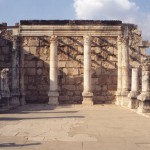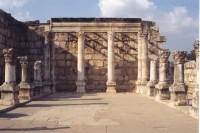

The early church had few buildings. When they did construct them, they were often patterned after the Jewish Synagogues, since Christianity was originally an offshoot of Judaism. But due to intense persecution from Jewish leaders and the influx of Gentile believers, the early Christians generally owned few church buildings or places for gathering.
Over the next couple hundred years, the Roman Empire began persecuting Christians as well. Christians were viewed as bad citizens of Rome because they did not swear loyalty to the Emperor or participate in pagan temple rituals. In a culture where there is no distinction between religion and politics, those who do not follow the religion of the Empire are political threats to the Empire. This is crucial for understanding the importance of what happened in the fourth century under three different Emperors.
 Emperor Constantine
In 312 A.D., as Emperor Constantine was preparing his troops for the Battle at Milvian Bridge, he saw a vision in the sky of a cross of light and the words, “In this sign, conquer!” So he had all the soldiers paint a Christian symbol (the Greek Chi-Rho) on their shields, after which time, they soundly defeated their enemy. After this, Constantine had himself baptized as a Christian and in 313 A.D., issued the Edict of Milan which essentially ceased all persecution against Christians and named himself as the patron of Christianity. Christianity became a “legal” religion in the Empire.
[Read more…]