Redeeming God

Liberating you from bad ideas about God

Join the discipleship group
  • Join Us!
  • Scripture
  • Theology
  • My Books
  • About
  • Discipleship
  • Courses
    • What is Hell?
    • Skeleton Church
    • The Gospel According to Scripture
    • The Gospel Dictionary
    • The Re-Justification of God
    • What is Prayer?
    • Adventures in Fishing for Men
    • What are the Spiritual Gifts?
    • How to Study the Bible
    • Courses FAQ
  • Forum
    • Introduce Yourself
    • Old Testament
    • New Testament
    • Theology Questions
    • Life & Ministry

Who is Our Enemy in Spiritual Warfare? (Ephesians 6:12)

By Jeremy Myers
1 Comment

Who is Our Enemy in Spiritual Warfare? (Ephesians 6:12)
http://media.blubrry.com/one_verse/feeds.soundcloud.com/stream/687809422-redeeminggod-168-who-is-our-enemy-in-spiritual-warfare-ephesians-612.mp3

When Paul embarked on his third missionary journey, Ephesus was the first city he visited. He had briefly visited Ephesus during his second missionary journey and had started a church there (Acts 18:19-20), but he now wanted to return and spend plenty of time teaching and training the Christians in Ephesus what it meant to follow Jesus and be the church in their community.

Acts 19:10 records that he spent about two years teaching them about Jesus. During this time, many miracles were performed, many people were healed, and many people were delivered from evil spirits (Acts 19:12).
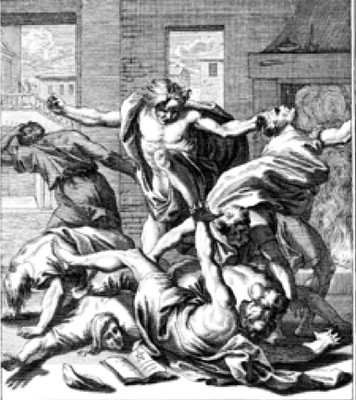
Near the end of Paulโ€™s time in Ephesus, some itinerant Jewish teachers came to town and heard what Paul was doing, and so decided to start their own little deliverance ministry by casting out demons in the name of Jesus.

This group developed a following and even had some success, so that some of them became known as the Seven Sons of Sceva. One day the Seven Sons of Sceva were holding one of their deliverance ministry crusades in a local household, and they commanded a demon to come out of a person โ€œin the name of Jesus whom Paul preachesโ€ (Acts 19:13-14).

โ€œThe evil spirit answered and said, โ€˜Jesus I know, and Paul I know, but who are you?โ€™โ€ (Acts 19:15). Then the man who had the evil spirit leaped upon the seven sons, overpowered them all, beat them up, stripped them naked, and chased them out of the house, wounded and bleeding.

Word about this spread among the town, and many people became Christians as a result. These Seven Sons of Sceva had attempted to wrestle wicked forces, and had suffered a humiliating defeat. But Paul was successful and so the message of the gospel spread and grew within Ephesus.

It is quite likely that many of the Christians to whom Paul writes the letter of Ephesians had become Christians as a result of this incident. Almost all of them undoubtedly knew about the incident.

And so when Paul writes in Ephesians 6:12 about wrestling wicked forces, all of his readers in Ephesus would have perked up their ears, because they know how serious it is to wrestle evil spirits in the wrong way. They donโ€™t want to end up like the Seven Sons of Sceva; they want to be successful like Paul.

Wrestling

Paul writes in Ephesians 6:12 that he wants his readers to wrestle against wicked spiritual forces. Some Bible translations use the word โ€œstruggleโ€ but the Greek word is palฤ“, which refers to the ancient sport of Greco-Roman wrestling, and so the word โ€œwrestlingโ€ is the best translation.

Initially, the word is a bit confusing. After all, four times in Ephesians 6:10-13, Paul wrote that we should stand against the devil. We must stand our ground, and make it our goal to just stand on the ground that Jesus has won for us. But now Paul writes about wrestling.

And when you think about wrestling as two men or two boys grappling with each other and rolling about on the ground trying to pin one another to the ground, it does get seem a bit confusing. The way most of us think about wrestling, there doesnโ€™t seem to be a whole lot of standing involved.

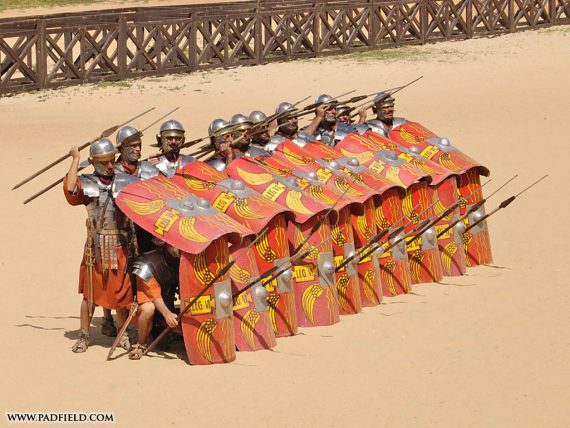
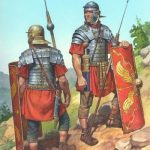
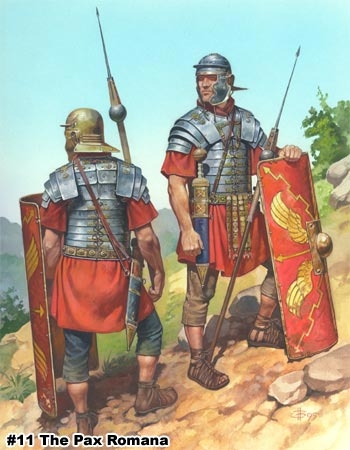
But Paul was not writing about modern wrestling. He was writing about how wrestling was performed in his day as practiced by the Roman soldiers.
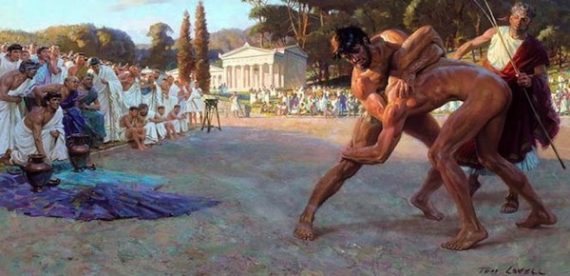
Greco Roman wrestling

One of the favorite pastimes of the Roman soldier was Greco-Roman wrestling.

Greco-Roman wrestling is the oldest sport on the planet, with ancient cave drawings suggesting that competitions may have been held as far back as 3000 BC. But the sport was not just a pastime for the Roman soldier, it also helped train them for battle.

The rules have changed a bit over the centuries, but in Paulโ€™s day, there was only one rule to winning in Greco-Roman wrestling. The only way to win in ancient wrestling was to stay on your feet. There werenโ€™t all the elaborate rules of points and pins. The goal was to stay on your feet and throw your opponent to the ground three times.

So Paulโ€™s description of wrestling against wicked forces is completely consistent with his instruction to stand our ground. The goal of wrestling was to stay on your feet, to stay standing, and so the two concepts are not contradictory, but complementary. Both phrases mean the same thing. When we wrestle wicked forces, we are to stand on our feet while we throw our foe to the ground.

In fact, the Greek noun for wrestling is palฤ“ and the verb form of the word is pallล. The verb means โ€œto throw or swing.โ€ So in wrestling, the goal is to throw the enemy down. This is similar to what the Bible teaches elsewhere. Over in 2 Corinthians 10:4-5, Paul writes that in this battle, one of our goals is to pull down strongholds, and to throw or cast down arguments and everything that is against God and the Word of God.

So that is what Paul had in mind here. Stand on your feet, and wrestle, struggle, throw down, cast down the enemy because he is trying to cast you down. He is trying to throw you down with his wiles, tricks, and traps, but as long as we are aware of what he is sending our way, we can stand our ground and throw him to mat instead.

The great thing about wrestling is that even if youโ€™ve been knocked down a few times, this doesnโ€™t mean the wrestling match is over. In ancient Roman wrestling, your opponent had to throw you down three times before you lost.
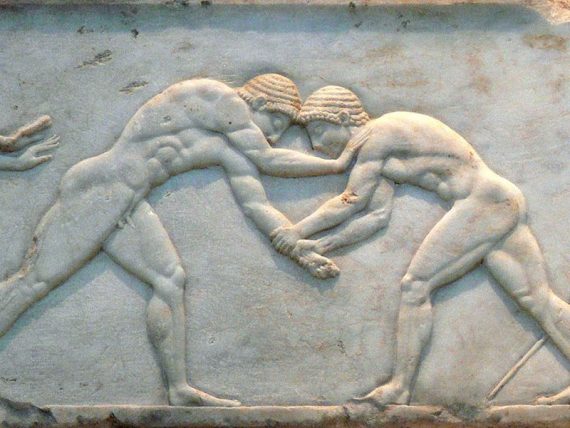
But in Christianity, due to Godโ€™s infinite grace, you can be thrown down any number of times, and as long as you get back up to continue the fight, you have not lost. Remember, Peter denied Jesus three times, and yet after Jesus rose from the dead, Jesus forgave Peter and restored him so that he could help lead the church in Jerusalem. So no matter how many times youโ€™ve been thrown down on the mat, make sure that you get up one more time than youโ€™ve been thrown down.

Victory in the Christian life only comes through great pain and sweat and effort. The Christian life lived correctly is not one of ease and comfort. If your life is one of ease and comfort, chances are, you are not living as a Christian should.

Do you ever feel like you canโ€™t go on? Take just one more step. Do you ever feel too tired, too weary, too beaten, too battered to continue standing? Just stand another minute more. Do you ever feel as if any moment, you might fall? Do not give up, for in due time, your enemyโ€™s foot will slip (Deut 32:35).

And if you do find yourself thrown on the mat by the enemy, stand back up, get in your defensive stance, and keep wrestling. Sometimes, the best wrestlers can struggle against one another for hours without either one gaining the upper hand. Back in the Olympics of 1912, held in Stockholm, Sweden, the silver medal wrestling bout lasted for 10 hours and 15 minutes. The match isnโ€™t over until the bell ringsโ€”or in our caseโ€”until the trumpet sounds.

And as you struggle and wrestle against the enemy, listen to the roars of the watching crowd. We are, after all, surrounded by a great cloud of witnesses who are cheering us on as we wrestle against our ancient foe.

And the bout is almost over. The Bible tells us that our enemy cannot place any hold upon you from which you cannot break free. There is always a way of escape (1 Cor 10:13).

So stand on your feet and wrestle, until you gain the victorโ€™s crown.

Let us turn now to learn everything we can about the wicked forces we wrestle against.

Wicked Forces

The wicked forces Paul mentions in Ephesians 6:12 want to make you think that they are a strong tower, or that they tower over you, but the Bible tells us, as we will see by the end of today, that although they seem to be a forbidding force, they have built on a faulty foundation, and so their tower will fall before the power of God and the army of the church.

We have nothing to fear from them.

The word against is found six times in Ephesians 6:11-12. Paul uses the word so frequently because he wants to remind us of the intensity of the battle. We are facing an enemy is completely against us and so we must be against them. There is no possibility of compromise or negotiation (cf. 1 Cor 6:14-17).
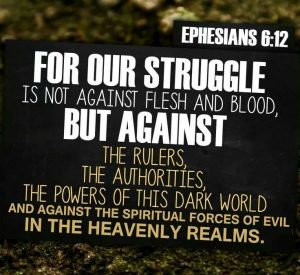
We must stand against the devil and his minions with every ounce of our effort and being. When it comes to this battle between the soldiers of Christ and our enemy of darkness, there is no common ground. There is no compromise. There is no peace process. The two sides are totally against one another.

Paul begins, not by telling us who we are struggling against, but by reminding us who we do not struggle against. Paul says we are not wrestling against flesh and blood. This is a reference to other humans. Throughout Scripture the term flesh and blood is used as a way of referring to other members of the human race (Gal 1:16; Heb 2:14).

This will be significant as we consider the other terms, for all the other terms in Ephesians 6:12 can refer to human beings. But Paul says, โ€œNo. As I list these titles that we struggle against, donโ€™t think of the human beings that you identify with these titles. Instead, recognize that there are powers or forces behind the human beings which have enslaved and captivated them. As we wrestle with the powers, our goal is not to defeat the human beings, but to liberate and free them.โ€

This is critical for us to recognize when we think of our foe on the field of battle. When most people think about their enemies, they think of humans. They imagine people of other countries, other religions, other races, other tribes, other economic classes, other families, other political parties, and other gangs. Some view the police as enemies, while the police view criminals as enemies. Whenever you wish that harm would fall upon someone else, you are thinking about them as your enemy.

But people are not our enemy.

It doesnโ€™t matter who they are, what they believe, and how they behave. Though we may fight against other people in the family room, argue with coworkers at our jobs, sue one another in a court of law, disagree with each other in the political arena, or even sometimes kill each other in the deadly combat of war, the people in these conflicts are not our enemies.

Yes, they may engage in violence against you and do all sorts of hateful and hurtful things toward you, but they only do such things because they are trapped and enslaved by the true enemy. And when we treat them like our enemy, we are showing that we too are enslaved and deceived by our true foe.

Yet donโ€™t be relieved. Though our struggle is not against flesh and blood, our true foe is much more fearsome and sinister. In the rest Ephesians 6:12, Paul writes that we wrestle โ€œagainst principalities, against powers, against the rulers of the darkness of this age, against spiritual hosts of wickedness in the heavenly places.โ€

Notice that Satan is not listed here. But the devil was listed with the very first use of against back in Ephesians 6:11, where we read that we are to stand against the wiles of the devil. So this is the first title we want to look at. The word devil is the Greek word diablos. The Hebrew equivalent is satan. The word mean accuser, adversary, slanderer, or one who stands against others. The titles often carry the connotation of a prosecuting attorney who seeks to condemn and accuse people in a court of law.

Satan, or the devil, is the spirit of accusation in this world. It is the spirit of condemnation and false judgment. It is the spirit that tempts us to judge between right and wrong, when such judgments belong to God alone.

But moving on from Satan, Ephesians 6:12 lists the four titles of spiritual forces we must stand against. They are the entities that carry out the work of the devil on earth.

Principalities

The first title listed in Ephesians 6:12 is principalities. This is the Greek word archฤ“, which literally means โ€œbeginning,โ€ but when used in connection with people, it refers to their rulers or principle leaders.

Indeed, the word refers to the authority figures of human groups. In numerous places throughout Scripture and other Greek literature (cf. Titus 3:1) the word is used to describe earthly rulers, kings, governors, or magistrates. Indeed, the term almost never refers specifically to evil spirits or demons, but instead to human leaders and rulers.

Now since the word most often refers to human leaders and rulers, it would be tempting to think that Paul is saying that we must struggle against evil human rulers.

But Paul has already told us that this is not the case. Our struggle is not against flesh and blood. We are not wrestling against human rulers. And yet, the word clearly refers to human rulers. So what does Paul mean?

He means that there are powers, systems, traditions, structures, laws, and permissions that lie behind every earthly ruler, and it is against these that we struggle. They are the spoken or unspoken rules and cultural norms by which we allow certain people, groups, or institutions to tell others what to do.

The human leaders are just as blindly enslaved to them as everyone else, and so as we struggle against these power structures, we seek to liberate both the ruler and the ruled from the set of crushing rules that enslave us all.

So as you think of the way some governments, rulers, kings, and authorities misuse, abuse, and subjugate the people under their rule for their own benefit, this is the power of the archฤ“, or principalities, at work. We are to struggle against such power structures as we seek to liberate and free people so that all can become who God wants them to be through liberty, love, and justice.

Powers

The second term in Paul list is powers. The Greek word is exousia, and powers is a fine translation, but it could also be translated as โ€œauthorities.โ€ It is a close synonym to archฤ“, refers to the permissions and structures which allow persons in power to rule.

It specifically has in mind the power of decision making and law making. Together, principalities and powers are โ€œhuman power arrangements,โ€ such as political, religious, and economic structures and leaders. The terms refer to both the power of the rulers and the way these rulers make laws and govern people.

Rulers

The third title is the rulers of the darkness of this age. The word for rulers is kosmokratoros, and is used only here in the New Testament. It is made up of two words, kosmos, meaning โ€œworld,โ€ and the verb krateล, meaning โ€œto control, seize, or rule.โ€ So the kosmokratoros are the world rulers, or world forces that dominate this world.

Interestingly, the verb krateล is related to the noun kratos, which was referenced back in Ephesians 6:10 (as โ€œmightโ€). Kratos was also the Greek god of war. So when Paul refers here to kosmokratoros, he might be thinking of the world forces and domination systems that lead humans toward warfare and violence.

Indeed, Paul goes on to describe these world rulers as being of the darkness of this age. The concept of darkness as it relates to this age has a rich imagery in Scripture, beginning with Genesis 1:2 (in the LXX) and the oppressive and ominous darkness that covered the face of the earth.

Metaphorically, the word refers to the moral and spiritual ignorance that darkens the minds of unbelievers (cf. Acts 26:18; 2 Cor 4:4-5; Eph 4:17-18; 5:8, 11). Scripture often equates this darkness with the human inclination toward violence and warlike behavior that leads to death (Matt 4:16; Luke 1:79; 22:53; John 3:19).

This theme of the darkness that blinds people about the ways of God and leading them instead toward violence against one another fits perfectly with the mythical imagery of Kratos, the god of war. Kosmokratoros is the world-dominating spirit of war and violence that rules this age.

We can think of Daniel 10:13, 20 which tells us that in Danielโ€™s day, the Persian and Greek empires were controlled by two angels who were attempting to prevent God from carrying out His plans. Both the Persian and Greek Empires wanted to control the world. Hitler and Napoleon both wanted to control the world, so they possibly could fall under this category.

But it is not just power hungry emperors and dictators who can be identified with this title, for once again, it is not the human leaders themselves who are identified by this title, but the violent power behind the rulers. This would include any political rule, economic policy, or educational system that exert power toward a stance of violence and war against the people of this world.

Religious institutions would be included in this as well. Even churches even be influenced and identified with the kosmokratoros. Any church that calls for violence, warfare, or hatred toward other religious groups of sets of people has fallen prey to this fallen and evil power.

As long as our minds are blinded to the truth of Godโ€™s love, forgiveness, grace, and mercy toward all, we will be tempted to encourage violence and wage war against others. Only when we learn the truth revealed by Jesus on the cross about ourselves and about God, and how to live in this world, will war end and violence cease. We, as followers of Jesus, must struggle and wrestle against all kosmokratoros that lead us toward hatred and violence against others.

Spiritual Hosts

The fourth and final term, spiritual hosts of wickedness in the heavenly places, reminds us that there are scores upon scores of these wicked enemies. The word hosts is not actually in the Greek text, but is provided for clarity. Since the theme of the text is about spiritual warfare, it might have been better to supply a militaristic word, such cohorts, legions, or battalions.

The term that is in the Greek is pneumatika. Curiously, pneumatika is usually related to spirit-filled people and their use of spiritual gifts in serving others (1 Cor 2:15; 9:11; 14:1). But here, the word is modified with the noun ponฤ“rias, which means โ€œwickednessโ€ or โ€œevilโ€ (cf. Matt 22:18; 1 Cor 5:8).

So while we, as spirit-filled people, are good pneumatika, these beings against whom we fight are evil pneumatika. While we fight with the power of the Holy Spirit, these beings fight with the power of evil spirits.

This contrast being our holy spirituality as Christians and the evil spirituality of our foe is further made with the descriptive term in the heavenly places at the end of Ephesians 6:12. As a result of this description, some people think that spiritual warfare is taking place in heaven itself, so that the hosts of wickedness are battling angels in the spiritual realm only.

Support for this idea is found in Job 1โ€“2 where Satan enters the courtroom of God to challenge God about the righteousness of Job, and in Revelation 12:7-17 which describes this war in heaven between the angel Michael, the dragon, and the two sets of angels that follow both. But this is not what this phrase in the heavenly places means.

The phrase has already been used several times in the letter to the Ephesians (cf. 1:20; 2:6), and in each case, it refers to the spiritual reality that consists of life with God here and now on this earth. The phrase does not refer to what occurs in heaven itself, but to what occurs when the rule and reign of heaven takes root upon this earth. It has in mind the words of Jesus from Matthew 6:10, where He prayed that Godโ€™s will would be done on earth, as it is done in heaven.

So while the phrase in the heavenlies does refer to a spiritual reality, it refers to the spiritual reality as it is seen can carried out in the physical realm, here on this earth, during our lives now.

Far too often, Christians focus so much on eternity and the afterlife, that they neglect the work that God has called us to do here and now in our lives. As someone once said, โ€œSome Christians are so heavenly minded, they are no earthly good.โ€ When this happens, we allow the spiritual hosts of wickedness to have their way on their earth.

As Christians, we are seated with Christ in heavenly places so that we can rule and reign with Christ here on earth, not only in the future, but also (primarily!) during our lives now. The battle is a spiritual battle, but it has far-reaching ramifications and consequences in the physical world.

We do battle in the spiritual world by seeking to help people in the physical world.

These spiritual hosts of wickedness are seeking to destroy peopleโ€™s lives, inhibit the truth of the gospel from spreading upon the earth, and hinder the effectiveness of the church. We struggle against these forces with all our might so that lives can be saved, the gospel can spread, and the church can serve others in this world. The struggle is spiritual in nature, but physical in how it manifests in this world.

Thankfully, Jesus, our Commanding Officer, fights with us in this battle, telling us where to go and what to do so that we can be successful against our foe. The truth of Ephesians is that we, as the followers of Jesus, have been specially called and gifted to carry out the will of God on earth, just as Godโ€™s will is carried out in heavenly places.

It remains the churchโ€™s task not only to proclaim to people that they have been redeemed from the darkness that once held them in bondage, but also to proclaim to the Powers that they are not supreme. That Christ is their sovereign.

Do you want to wrestle against wicked forces? We have learned a bit in this study about who these forces are. In previous studies, we have learned that our primary task in spiritual warfare is to stand our ground against these wicked forces.

One of the primary ways we do this is by putting on the full armor of God. It is to this idea we turn in the next study…
Do you want to learn about spiritual warfare and how to put on the full armor of God? If you want to defeat sin and gain victory in your life over temptation so you can better follow Jesus, take my course on the Armor of God as it is explained in Ephesians 6:10-20. This course costs $297, but when you join the Discipleship group, you can to take the entire course for free.
Affiliate Disclosure: As an Amazon Associate I earn from qualifying purchases. Thank you for supporting my work in this way!

God is Redeeming God, Redeeming Scripture, Redeeming Theology, z Bible & Theology Topics: armor of God, devil, Ephesians 6:10-20, Ephesians 6:12, One Verse Podcast, satan, spiritual armor, spiritual warfare

Advertisement

The Battle Plan (Ephesians 6:11,13)

By Jeremy Myers
4 Comments

The Battle Plan (Ephesians 6:11,13)
http://media.blubrry.com/one_verse/feeds.soundcloud.com/stream/684427809-redeeminggod-how-to-stand-up-in-spiritual-warfare-ephesians-611-13.mp3

Paul turns from the battle cry in Ephesians 6:10 to the battle plan in Ephesians 6:11, 13. We must not only prepare ourselves for battle by becoming strong, we must also protect ourselves in battle by having a plan.

The battle plan has three parts. We must put on the armor of God, stand our ground, and watch out for traps laid by the devil.

Let us consider each part of the plan.

Put on Your Armor (Ephesians 6:11a, 13a)

The first part of the battle plan is to put on the whole armor of God. Paul states this instruction twice in Ephesians 6:11, 13 when he writes, โ€œPut on the whole armor of Godโ€ and โ€œtake up the whole armor of God.โ€

When Paul wrote these words, he was in prison in Rome and was likely chained to a Roman soldier twenty-four hours a day. Being chained to an armed guard was one of the ways the Roman military put protection and extra security around important prisoners like Paul. He had a first-hand opportunity to study and understand the importance of armor. Maybe he even talked to the soldiers about their armor.

This will be important to remember when Paul goes on to describe the armor in Ephesians 6:14-17. For now, Paul just instructs us to put on the whole armor of God.

Note that Paul doesnโ€™t tell us that we are already wearing the armor. No, he tells us to take up and put on the armor. Though God has given His armor to us, we still need to take it up and put it on. These are commands. Christians are commanded to put on the armor. Obviously, armor sitting on the floor or stuffed the closet never did any soldier any good.

God has given His armor to each of us, by which we can protect ourselves from the enemy. But the armor does no good sitting in the closet. We must pick it up. We must put it on. We must wear it night and day until we feel naked and unprotected without it.

God has given us this wonderful gift to protect us from the enemy in this battle. Let us makes sure we use it. Take it the full armor of God and put it on.

As we discuss the various pieces of armor in future studies, we will discuss how to take it up and put it on.

Let us move on to the second part of the battle plan, which details our primary goal in this battle.

Stand Your Ground (Ephesians 6:11b, 13b, 14a)

Whenever we imagine a battlefield, we think of two opposing armies facing off against each other on the field of battle. Then, as the trumpets sound and the battle cry is shouted, the two armies charge across the field toward each other, where they meet in the middle with a clash of blood and steel. So in light of this, it would seem that Paul would tell us to โ€œCharge!โ€ into battle.

But he doesnโ€™t. Instead, he tell us simply to โ€œStand.โ€ In fact, Paul is so intent on making sure we know that all we are supposed to do is โ€œStand,โ€ he repeats the instruction four times.

In the middle of Ephesians 6:11, he says, โ€œโ€ฆ that you may be able stand โ€ฆโ€ Then in Ephesians 6:13, he writes โ€œโ€ฆ that you maybe be able to withstand โ€ฆ and having done all, to stand.โ€ Finally, at the beginning of Ephesians 6:14, he says, โ€œStand therefore โ€ฆโ€

This is surprising, isnโ€™t it? Most of us assume that the Christian life is all about doing things. Going places. Ministering. Serving. Teaching. Studying. Giving. Most Christians measure spiritual maturity by looking at spiritual activity. It even goes against what we sing. We like to sing the song, โ€œOnward Christian Soldiers,โ€ but Paul doesnโ€™t say, โ€œOnward!โ€ He says, โ€œJust stand there!โ€

This indicates that while Christian activity might be helpful in other arenas, when it comes to spiritual warfare, the most we should do and the best we can do, is to do nothing but stand there.

So these are the battle orders. We are to stand our ground. Donโ€™t give up. Donโ€™t retreat. But also donโ€™t try to advance. Just stand our ground.

Why does Paul do this?

Why does he tell us to do nothing but stand when it comes to spiritual warfare? Why can we walk in other areas of the Christian life, but only stand in spiritual battle?

The main reason is because this spiritual battle has already been won. We donโ€™t have to march out to meet the enemy, because the enemy is already defeated. The enemy has already been vanquished. We are the conquerors.

In fact, we are more than conquerors (Rom 8:37). Jesus Christ defeated the enemy for us. He is the victor (1 Cor 15:57; 2 Cor 2:14) and so we donโ€™t have to advance; we just have to stand on the ground that Jesus has already won.

Part of this is because we humans, on our own, could never defeat Satan. He is much stronger and powerful than any one of us. So thankfully, God has not called on us to march out and meet the enemy that is far superior to us. He has not called us to run out onto the battlefield. He has called us to do nothing but stand on the ground that Jesus has won for us.

Jesus Christ defeated Satan for us. He is the victor on this battlefield. And all we have to do is stand on the ground He has won (Col 2:15; 1 Cor 10:12).

Indeed, standing your ground was the single greatest key to the power and might of the Roman military. While the Roman Empire did conquer the world by sending its armies into other countries to do battle, the great strength of the Roman military was that once the armored Roman soldiers were on the field of battle, their primary goal was to do nothing but stand their ground.

They had various ways of doing this. For example, the Roman military historian Vegetius writes that the smallest Roman security force was a guard unit made up of 16 men. These 16 men were spaced evenly over 36 square yards, which means there was about one every six feet or so. The soldiers were trained to focus on one thing and one thing only: They must not let a single enemy soldier enter into their six-foot square section of the battle field. Each individual soldier was given a single command: Stand your ground. Do not let the enemy into your six-foot square area.

Now this is not very much ground to cover. If you were a soldier and you were told that all you had to do in any war was cover one little six-foot by six-foot section, that doesnโ€™t seem too hard. And it wasnโ€™t too hard. This was the part of the genius of the Roman military power. Vegetius tells us that when arranged in this way, and when each soldier understood that all he had to do was stand his ground, his little six-by-six foot section of ground, those 16 men could stand up against 500 attacking enemies!

It is helpful to think about spiritual warfare in a similar way. When we look at all that is wrong with the world, it can be overwhelming. There are so many problems. So many battles to be fought. There is so much sin, rebellion, and evil. How can one person do anything against all of that?

But you are not called to do anything against all of that! You are commanded to simply stand your ground. To keep standing when an enemy enters into your small area of the field. You donโ€™t need to worry about what is happening on the other end of the battle field.

All you need to focus on is what is happening in your little six-foot square area. God does not expect you to fight the swarming hoards all by yourself. It is not you against the spiritual realm of darkness.

You have been given a little tiny bit of ground. Stand in it and defend it. Thatโ€™s it. Do not let a single enemy enter into your space. That is the area God has entrusted to you, and He wants you to stand your ground.

What is your six-foot square area of land?

It is your own life and the people who are in it with you. Protecting your bit of ground requires you to watch what you see, what you say, and what you think.

We can make sure that the words that proceed out of our mouths are edifying and encouraging toward others.

We can speak with honesty and truthfulness.

We can avoid gossip that tears other people down.

We can be careful about what enters into our minds through the doorway of the eyes.

We can be careful what we watch and view.

We can take our thoughts captive so that we think on what is noble, right, pure, lovely, admirable, excellent, and praiseworthy (Php 4:8).

When we live in such ways, we are standing our ground that Jesus has won for us.

But standing our ground is not as easy as it sounds.

Standing our ground requires great vigilance. We must be alert and ready. For as the defeated enemies rush off with their tails between their legs, in shame and defeat, shrieking in humiliation, they still seek to wound and damage any of us that they can. We must be on our guard, because as they go to their destruction they would love to take a few of us out as they pass by.

That is why we need to be careful. If we try to advance, rather than stand our ground, it is almost certain we will walk into a trap of the devil. Standing our ground is the safest way to avoid the snares of Satan. This is the third and final part of the battle plan, to watch out for the traps of the devil.

Watch Out For Traps (Ephesians 6:11b, 13b)

The third and final element of our battle plan is to watch out for the traps of the devil. Paul calls these the wiles of the devil.

The Greek word for wiles is methodeia, which is where we get our English word โ€œmethods.โ€ So the wiles of the devil are the methods he uses to injure, wound, and ensnare soldiers of Jesus Christ.

In fact, Satan is so good at what he does, that sometimes, according to 1 Corinthians 11:3, 14, he appears as an angel of light. This means that sometimes, when people think they are following light and truth, they are actually following darkness and deception. It is even possible that some people think they are worshiping God, but are in fact worshiping the devil.

Therefore, it is critically important to become aware of the wiles of the devil, so that we can easily see his schemes and avoid his traps.

We must understand when these attacks come, what types of attacks the devil will throw at us, where he seeks to target us most often, and the tactics he uses with these attacks.

Though Satan has millions of specific temptations, there are only three main types.

Three Types of Traps

In 1 John 2:15-17, the Apostle John says that there are three types of traps that we can encounter in our life as Christians. He calls them the lust of the flesh, the lust of the eyes, and the pride of life. So although there are a wide variety of specific temptations and traps that the devil can throw our way, each and every one will fall into one of these three categories.

For example, in Genesis 3:6, Satan uses these same three traps on Eve. She saw that the tree was good for food (the lust of the flesh), that it was pleasing to the eyes (thatโ€™s the lust of the eyes), and that it was desirable to make one wise (thatโ€™s the pride of life).

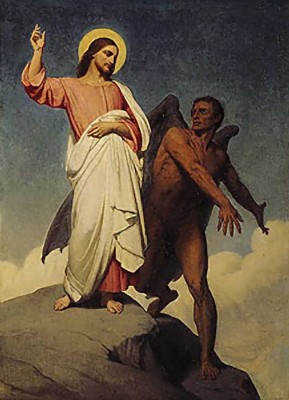
Similarly, when Satan tempted Jesus for forty days in the wilderness, the Gospel accounts tell us that he presented Jesus with three different temptations. Satan wanted Jesus to turn stone into bread (the lust of the flesh), then showed Him all the kingdoms of the world (the lust of the eyes), and tempted Jesus to throw Himself down from the pinnacle of the temple in order to easily declare Himself as the Messiah and prove that God was working for Him (the pride of life) (See further resources here: https://redeeminggod.com/sermons/luke/luke_4_1-4/ https://redeeminggod.com/sermons/luke/luke_4_5-13/ and https://redeeminggod.com/genesis-3-intro/)

This is helpful to recognize for it means that after youโ€™ve been a Christian for a day or two, there is no new temptation you will ever face that you have not faced before.

Oh yes, the specific details might be different, but all temptations will fall into one of these three categories. Therefore, when a temptation comes, rather than say, โ€œUh oh! Iโ€™ve never faced this specific temptation before!โ€ you can instead confidently say, โ€œOh, I recognize this as a temptation that tugs on the lust of the flesh. Iโ€™ve faced similar temptations before and stood strong against them, so I can stand up under this temptation as well.โ€

Once you recognize that every temptation will fall into one of these three types, and you remember that you have withstood various temptations in all of these types before, it will give you more confidence and faith to withstand similar temptations in the future.

Three Targets for Traps

Along with three main types of temptations, there are also three main targets for these temptations. There are three areas that Satan is constantly trying to undermine and destroy. These three targets are the church, the family, and your own personal life.

1. The church

There is a wide variety of ways that Satan seeks to destroy and undermine the church, but the primary method is to confuse people about what the church actually is.

Many people have fallen to this temptation, and are quite confused about what the church is. Some equate the church with a building, while others think of it as an event. If people ask you where you go to church or when you go to church, they have fallen prey to this confusion. Also, some people think that only a certain denomination is the true church, and everyone else is false. This way of thinking creates division and strife.

So what is the church? What does Satan not want you to recognize about the church?

He does not want you to know that the church is made up of people. The church is people. It is not a building. It is not a place. It is not an event. It is not a denomination. You cannot โ€œgoโ€ to church or โ€œattendโ€ church.

Instead, since you are the church, the church goes with you. The church exists regardless of whether or not there is a building. The church functions regardless of whether or not there is a Sunday morning โ€œserviceโ€ with four songs and a sermon.

Satan does not want the church to recognize what the church truly is, because as long as he can keep us deceived about the nature of the church, he can then lead us to argue about what type of building is best, and how long the Sunday service should be, and what type of music to play, and who gets to stand up front and preach, and all the other numerous types of issues that have split and divided the church for centuries.

But as soon as we recognize what the church truly is, the need for all of these arguments disappear, and we will start living as the church in our communities and towns, which is what Jesus has always wanted.

So donโ€™t be deceived about the church. Learn what the church is and how the church follows Jesus so that you can be the church in your community (If you want to learn more about the church, see my โ€œ(#AmazonAdLink) Close Your Church for Goodโ€ series of books, starting with (#AmazonAdLink) Skeleton Church).

2. The Family

Satanโ€™s second primary target is the family.

The family unit is Godโ€™s primary method of world evangelism and life transformation. The family is where people learn about love and relationships, and the importance of working together as a team. It is also through our human families that we learn about how to live within the family of God.

Therefore, the family unit is central to the church, central to the kingdom of God, and central to what God seeks to accomplish in this world.

Since the family is so important to Godโ€™s plan and purposes in this world, Satan does all he can to destroy the family. He tries to break up marriages, and get children to disobey their parents, and parents to neglect their children. This is why Paul spent so much space in Ephesians talking about marriage and family (cf. Ephesians 5:22โ€“6:4).

3. Personal Life

The third primary target of Satan is your own personal life. Each Christian is under nearly constant attack from the devil. He tries to ruin our lives by tempting us to sin, encouraging us to be selfish, and leading us toward activities that can stunt our spiritual growth and make us physically sick.

One Tactic for the Traps

While Satan has three types of traps, and three primary targets for these traps, there is only one tactic he uses when he targets us with these traps.

It is this: he challenges what God has said.

He raises doubts in our minds about the truth of Scripture. He twists and perverts what the Bible says. He makes subtle changes to the Word of God. He adds to the Word of God, or subtracts from the Word of God. He rips verses out of context from the Word of God. He exaggerates the strictness of the boundaries in Godโ€™s Word. He denies the consequences of disobeying Godโ€™s Word. He distorts the supreme revelation of God in Jesus Christ to make us think that Jesus reveals the opposite of what He actually did reveal.
All of Satanโ€™s temptations and traps revolve around misusing or abusing the revelation of God. The serpent tempted Eve in Genesis 3:1-5 by questioning and challenging the instructions of God regarding the Tree of the Knowledge of Good and Evil.

Satan tempted Jesus in the wilderness by challenging why Jesus came and what He was here to do (Matt 4:1-11; Luke 4:1-13). When tempting Jesus, Satan even quoted Bible verses to provide โ€œbiblical supportโ€ for what he was trying to get Jesus to do.

This shows that just because someone has a few Bible verses to support their beliefs or behavior, this does not mean they have properly understood or applied those Bible passages. Other than God Himself, Satan is probably the greatest Bible expert in existence. He knows how to quote and twist Scripture to support his temptations and provide cover for his traps.

Whenever you see someone being tempted in Scripture, it is because they are wondering if Godโ€™s Word can be trusted. This is how Satan tempted the Israelites in the wilderness, how he tempted the kings of Israel, how he tempted the apostles and the early church, and how he tempts you and me.

He not only invites us to believe wrong things or behave in wrong ways, he also loves to support and defend his temptations with fine-sounding arguments from Scripture, which, when carefully examined, prove to be nothing more than twisted perversions of Scripture. But these distortions of Godโ€™s Word are very effective in tricking Christians to follow the ways of Satan instead of the ways of God.

As we consider the Satanic traps, it is important to recognize that there are two secret powers that he claims to have, which in fact he does not.

Two Secret โ€œPowersโ€

Satan is a great deceiver, and he likes to make himself appear more powerful than he really is. Toward this end, he has invented two secret powers for himself. He does not actually have these powers, but he uses them to his advantage, to trip people up and trap people in sin.

The first fake secret โ€œpowerโ€ is invisibility. Yes, Satan is invisible. That is, you cannot literally see him with your eyes.

But Satan likes to more invisible than that. He likes to make people think that he doesnโ€™t really even exist at all. Modern minds love to explain Satan away. To say that he is thing of the past. A figment of imagination. A superstitious story to scare people into obedience. In our modern, scientific world, the โ€œnon-existenceโ€ of Satan is a popular wile of the devil.

One of the greatest lies of Satan is that Satan doesnโ€™t exist.

Satan does exist. Satan is real.

The second secret โ€œpowerโ€ of Satan is his invincibility. This fake power is sort of the opposite of invisibility. If Satan cannot convince people that he doesnโ€™t exist, he instead tries to convince them that he is so powerful, there is nothing we can do to stop him.

temptation of JesusWhen people recognize that Satan is real, Satan tries to get them to think that he is equal with God.


God is all-powerful, all-knowing, and all-present. Satan is not any of these things, but he wants people to think that he is.

Satan wants people to think that he all-powerful, and can make us sick, cause us to get in car accidents, kill our loved ones, and send tragedies into our lives. He wants us to think that he is all-knowing, and can read our thoughts, predict the future, and know what is going on in every corner of the world. Satan wants us to think he is all-present, and is following us around during out days to personally tempt us.

But Satan can do none of these things.

Yet many Christians give Satan too much power, making him almost equal with God. Some Christians see Satan behind every corner, under ever wrong, and at the root of every bad thing that happens in life. They think that Satan haunts their dreams, tempts them to sin, makes them sick, stops their car from running, and creates every bad thing that happens in their life.

Satan loves to credit for all such things, because it makes him nearly invincible. Most of all, this all-consuming focus on the power and presence of Satan in every aspect of our life causes us to take our eyes off Jesus and put them on Satan instead. It is so sad when some churches spend more time talking about Satan and trying to cast out Satan than they do talking about Jesus Christ and encouraging people to follow Jesus.

Satan would rather have people fear him than fear God. Satan would rather have people focus on him than focus on Jesus Christ. Satan likes people to think he is more powerful than he really is. But he is just a faker, an imitator, and a liar, as we will see in the next lesson.

So those are some of the tricks and traps of the devil that we must watch out for when we are standing our ground on the field of battle.ย Standing your ground is not an easy task, but it is easier when we realize that Christ has already won the battle for us, and though the entire world caves in on top of us, all we have to do is stand.

Do you want to learn about spiritual warfare and how to put on the full armor of God? If you want to defeat sin and gain victory in your life over temptation so you can better follow Jesus, take my course on the Armor of God as it is explained in Ephesians 6:10-20. This course costs $297, but when you join the Discipleship group, you can to take the entire course for free.

Affiliate Disclosure: As an Amazon Associate I earn from qualifying purchases. Thank you for supporting my work in this way!

God is Redeeming God, Redeeming Scripture, Redeeming Theology, z Bible & Theology Topics: accuser, armor of God, Books I'm Writing, Ephesians 6:10-20, Ephesians 6:11, Ephesians 6:13, One Verse Podcast, satan, sin, spiritual armor, spiritual warfare, temptation, wiles

Advertisement

Think you know what humility is? Think again. (An Interview with Dan Kent, author of Confident Humility)

By Jeremy Myers
2 Comments

Think you know what humility is? Think again. (An Interview with Dan Kent, author of Confident Humility)
http://media.blubrry.com/one_verse/feeds.soundcloud.com/stream/649701209-redeeminggod-165-interivew-with-dan-kent-author-of-confident-humility.mp3

(#AmazonAdLink) Dan Kent Confident HumilityI had the privilege of interviewing Dan Kent this week about his book, (#AmazonAdLink) Confident Humility.

I’ll be honest. When I first heard that he had written a book about humility, I thought “Booooring … we all know everything there is to know about humility.”

But then I read the book.

Mind. Blown.

It turns out I have been thinking and teaching about humility entirely wrong. Dan Kent’s book opened my eyes to what truly humility is, how humility works, and how to attain humility in my life.

If you want to understand what the Bible teaches about humility and how to become humble and live humbly in your life, listen to my interview with Dan Kent, and then go (#AmazonAdLink) buy a copy of his book on Amazon.

Let your view of humility get turned upside down!

Podcast Links:

  • (#AmazonAdLink) Confident Humility, by Dan Kent
  • Apologies and Explanations podcast with Greg Boyd
  • Totally Composed podcast, by Dan Kent
  • Dan Kent on Twitter
  • Dan Kent on Facebook

Watch the Interview with Dan Kent here:

Affiliate Disclosure: As an Amazon Associate I earn from qualifying purchases. Thank you for supporting my work in this way!

God is Redeeming God, Redeeming Theology, z Bible & Theology Topics: author, authors, Dan Kent, humility, interview, One Verse Podcast

Advertisement

Do the warning passages of Hebrews 6:7-8 and Hebrews 10:27 refer to Christians going to hell?

By Jeremy Myers
2 Comments

Do the warning passages of Hebrews 6:7-8 and Hebrews 10:27 refer to Christians going to hell?
http://media.blubrry.com/one_verse/feeds.soundcloud.com/stream/639695445-redeeminggod-164-do-the-warning-passages-of-hebrews-67-8-and-hebrews-1027-refer-to-christians-going-to-hell.mp3

(#AmazonAdLink) What is hell bookMy book, (#AmazonAdLink) What is Hell? is now available (#AmazonAdLink) on Amazon. I am doing a series of podcast studies that focus on some of the content from the book. The studies look at the eight key terms that are often equated with hell, and about a dozen key passages that are thought to teach about hell.

If you want to learn the truth about hell and what the Bible actually teaches about hell, make sure you get a copy of my book, (#AmazonAdLink) What is Hell?

Also, if you are part of my discipleship group, there will be an online course about hell as well.

In this study, we will consider two of the warning passages in Hebrews to see if they are warning Christians about the possibility of going to hell. We will look at Hebrews 6:7-8 and Hebrews 10:27.

Does Hebrews 6:7-8 warn about hell?

For the earth which drinks in the rain that often comes upon it, and bears herbs useful for those by whom it is cultivated, receives blessing from God; but if it bears thorns and briers, it is rejected and near to being cursed, whose end is to be burned.

The book of Hebrews contains five warning passages (Heb 2:1-4; 3:7-19; 5:11โ€“6:12; 10:19-39; 12:14-29). The warning passage in Hebrews 6 is both the most severely worded and also the most widely misunderstood.

The author of Hebrews uses the imagery of a plot of land which is cultivated and planted so that a harvest might be gained from it. If the land produces crops, it receives blessing from God, but if it does not produce crops, it will get burned.

In the context, the land refers to the lives of Christians (Hebrews 5:11; Hebrews 6:3-4), and so it is upon Christians that the potential blessings or curses can fall. If, therefore, the cursing and burning refers to the fires of eternal hell, then this passage means that some Christians could end up in hell.

But is that what it means? No.

A careful consideration of three key terms in this text helps the meaning become clear. These words are โ€œrejected, cursed, and burned.โ€

All three terms are parallel, and therefore help explain each other.

The word “Rejected”

The word rejected (Gk., adokimos) could also be translated as disapproved or disqualified. This word has nothing to do with whether or not a person has eternal life, but instead has to do with whether or not God finds a person useful and honest in their dealings with others.

Due to this, the word โ€œusefulโ€ is a good synonym for the Greek word dokimos, while โ€œuselessโ€ would be a good synonym for adokimos.

Therefore, if a Christian is adokimos, they still have eternal life, but God considers their โ€œplot of landโ€ to be useless for planting. (See the lesson on the word “Approved” in my Gospel Dictionary Online Course)

Rather than being fit for planting, the field of their life is only full of thorns and briars, which are the cares, riches, and pleasures of this world, so that any seed which is planted would get choked rather than produce a harvest (cf. Luke 8:4-15).


The word rejected is also found in Hebrews 12:17ย (along with the word blessing which was mentioned in 6:7) in reference to Esau. Esau sold the blessing of his earthly birthright for a meal, and even though he sought to regain it afterwards with repentance and tears, he was rejected.

So the word rejected refers to the loss of earthly and temporal blessings and inheritance that God gives to those who obey and honor Him. Those who disobey God will not receive the blessings, but will be rejected and turned away from them.

This is not about going to hell, or getting turned away from the proverbial โ€œgates of heaven,โ€ but is instead about being rejected as a useful part of Godโ€™s plan here on earth.

The word “Cursed”

The word cursed (Gk., katara) is similar. The word does not refer to an action, but to a verbal, imprecatory declaration about something or someone.

In the context, this word cursed is the exact opposite of the blessing which was mentioned in Hebrews 6:7. The word for blessing is eulogia, and means โ€œverbal praise,โ€ and so the cursing is also verbal. It is a negative declaration that something is useless.

The word cursed is also used in Galatians 3:10, 13ย to refer to the curse of the law and the curse of being crucified.

It is used in James 3:10ย to refer to the curses that a person can utter with the mouth.

And it is used in 2 Peter 2:14ย to describe the behavior and characteristics of false prophets (cf. 2 Pet 2:1). On this last text, it is important to note that in the context, Peter writes about the burning of Sodom and Gomorrah (cf. Jude 7), which is similar to how the author of Hebrews goes on to describe the burning of this worthless field.

And just as the burning of Sodom and Gomorrah is not equivalent to burning in the fires of hell, so also, the burning of the field is also not referring to hell.

The word “Burned”

The third key term is the word burned (Gk., kausis). The word is not the normal word for fire (Gk., pur), but is the noun kausis, which is the only time this noun is used in Scripture.

The verbal form is found in 2 Peter 3:10ย in reference to how, at the end of the age, this world will be burned with fire. This Petrine parallel reveals that the word does not refer to hell, but instead to some sort of temporal discipline and judgment in this life.

Indeed, in real life, the burning of a field is actually a way to prepare it for harvest. Often, when a field is full of thorns and briars, the quickest and easiest way to prepare it for plowing and planting is to burn the field.

This does not destroy the soil, but instead prepares the ground for future harvest. The burning of the field is a form of discipline and correction to change a useless field into a useful field, making it ready to be planted.

Putting the Three Terms Together

When the meaning and significance of these three terms are considered together, we learn that Hebrews 6:7-8ย is not saying anything about how God will send some people to burn in hell.

Quite to the contrary, the author is saying that when a Christian fails to live as God wants and desires, and as a result of this failure becomes useless, God might โ€œcurse the groundโ€ and burn over the field of their life, so that the field can be properly plowed and planted in the future.

This is a passage which explains the disciplinary and restorative work of God in helping unfruitful Christians become fruitful again.

This passage is not talking about Christians who lose their eternal life and end up in hell.

Just the opposite.

This passage affirms our eternal security because it is a passage about the discipline that God gives to His own children when they fall away and stagnate in their lives due to the riches and pleasures of life (cf. Rev 3:19).

The author of Hebrews states elsewhere that the Lord disciplines those He loves (Hebrews 12:6), and that is what the author writes in Hebrews 6 as well.

One of the other warning passages in Hebrews also contains a reference to fire, so it too is worth considering, especially since it seems to be more strongly worded than the imagery of the burning field in Hebrews 6:8. This other text is Hebrews 10:27.

Does Hebrews 10:27 warn Christians about hell?

โ€ฆ but a certain fearful expectation of judgment, and fiery indignation which will devour the adversaries.

Hebrews 10:19-39ย is another of the five warning passages in the book of Hebrews (Heb 2:1-4; 3:7-19; 5:11โ€“6:12; 10:19-39; 12:14-29).

In the middle of this warning passage, the author reminds the readers what will happen to them if they reject the truth revealed in Jesus. The author writes that those who disregard what they had previously learned about Jesus will face the judgment of fiery indignation and punishment (Hebrews 10:27, 29).

Many see this as a clear reference to torment in the flames of hell, but once again, several key insights from the context reveal an entirely different understanding.

Fiery Indignation does NOT come from God

First, note that Hebrews 10:27 does not say that the fiery indignation comes from God. Instead, this indignation appears to be self-inflicted. That is, it comes from within the person to consume and devour them.

How do we know this?

The word indignation (Gk., zฤ“los) could also be translated as โ€œzealโ€ or โ€œjealousyโ€ (cf. Rom 13:13; 1 Cor 3:3). The word itself usually refers to a sinful attitude (2 Cor 12:20; Gal 5:20; Jas 3:14, 16), though there is a form of godly jealousy (2 Cor 7:11; 11:2).
So how can one determine whether or not the zeal or jealousy in question is sinful or godly? The word is often accompanied with a modifying adjective or a descriptive noun which helps determine whether the zฤ“los is sinful jealousy or godly jealousy. Here, the modifier is the word fire (Gk., pur).

As we have seen over and over from Scripture, fire is often a symbol of judgment, discipline, and destruction. Even when used in a positive way to describe the fires of purification (cf. 1 Cor 3:15), the fire itself is still a destructive fire that burns away all that is undesirable.

The context of Hebrews 10 reveals something similar here. Phrases such as โ€œfearful expectation of judgmentโ€ (Hebrews 10:27), โ€œworse punishmentโ€ (Hebrews 10:29), and โ€œdraw back to perditionโ€ (Hebrews 10:39) reveal that the fire is to be understood in this negative, destructive sense.

Therefore, since the fire is a negative experience, the zฤ“los can also be understood as the negative, destructive, sinful form of jealousy.

If this is the sinful form of indignation or jealousy, then it cannot be Godโ€™s. Since it is sinful, human jealousy, it cannot be godly jealousy.

The jealousy, indignation, or zeal which the author of Hebrews is describing is not from God, but from the sinful heart of human beings.

This insight provides great help in understanding this fourth warning passage.

Don’t Reject the Truth!

The author is warning the readers to not reject the knowledge of the truth they have received through Jesus Christ (Hebrews 10:26).

For if they reject what Jesus revealed, then there is nothing for them to return to except the old religious system of sacrifices, which never did anything to help them with their sin. Indeed, the sacrifices themselves were sinful (Myers, (#AmazonAdLink) Nothing but the Blood of Jesus).

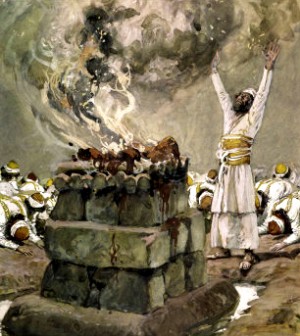
sacrificial systemThe sacrificial system was based on fear, accusation, blame, and scapegoating, and Jesus came to set us free from all such things. But if one rejects the revelation in Jesus, then the only other option is to return to that broken and sinful system.

And what did Jesus reveal?

He showed us that we have nothing to fear from God. It is as John writes, the perfect love we have seen in Jesus casts out all fear, because fear has to do with punishment (1 John 4:18).

In Jesus we have learned that God does not punish, and therefore, we have nothing to fear.

Yet those who have not yet seen or understood this revelation of God in Jesus Christ, still live in fear of God. They do not know what God is like and so are afraid of God and live in fear of His judgment.

This explains the fiery indignation that the author of Hebrews has in mind.

Fear makes people feel that they are being unjustly judged. Fear causes a person to feel that the one whom they fear will not judge them correctly or justly.

Only when a person knows they are loved by the one doing the judging will they feel that this judge has their best interests at heart and will make sound judgments.

So when people fear the judge, they become indignant and resentful of the judgment they receive. They feel that all the facts were not properly considered or that extenuating circumstances were not factored in.

And so when people fear God, they become indignant and upset that God will judge them for the actions which they feel they were forced to commit by lifeโ€™s circumstances. They become upset, thinking that God only wants to punish them, regardless of the reasons for their actions. They develop a raging indignation against God, or a fiery zeal based on incorrect ideas about God (cf. Rom 10:2).

This inner indignation consumes them. It devours them from the inside out.

The author of Hebrews is warning the readers that if they reject what is revealed in Jesus, then they also reject the love and forgiveness of God that is revealed in Jesus.

If they reject this, then there is nothing left but the inner turmoil of fiery jealousy and indignation which consumes people from within.

This is not eternal torment in the flames of hell, but the inner, psychological turmoil that comes from having an incorrect view of God.

But what about Hebrews 10:29, 31, and 39?

These verses contain references to punishment, perdition, and how fearful it is to fall into the hand of the living God. Do these references prove that some sort of punishment from God is in view?

They do not.

What is the “Punishment” of Hebrews 10:29?

In Hebrews 10:29, the Greek word for punishment is timลria. This is the only time this word is used in the New Testament.

church growth through loveIn other Greek literature, it most often refers to helping someone who has been wronged by assisting them against those who committed the wrong. It is giving the offender what he deserves by doing to him what he did to others.

In other words, it carries the idea of a sin against someone else coming back and falling upon the person who committed it. This idea is nearly identical to the concept of indignation from Hebrews 10:27.

The fiery indignation was not from God, but was from inside a person who misunderstands God, and therefore, the indignation is a sin that consumes and devours the person who commits it. The word for punishment here has the same idea. Sin bears its own punishment with it.

What is the “fearful thing” of Hebrews 10:31?

Similarly, when Hebrews 10:31ย says that โ€œIt is a fearful thing to fall into the hands of the living God,โ€ the author has in mind the exact same concept that was expressed in Hebrews 10:26-27.

When people reject the revelation of God in Jesus Christ, that God is only loving and always forgives, then the only alternative view of God is that God is out to judge and destroy them.

And for those who have this view of God, for them, it is a fearful thing to fall into the hands of a God who wants to judge and kill. But for the rest of us, who have seen God in Jesus Christ, we need not fear God in such a way.

Yes, God is a judge (Hebrews 10:30), but Jesus shows us what kind of judge God is. Yes, vengeance belongs to God and God alone will repay people for what they have done (Hebrews 10:30), but in Jesus, we see that divine vengeance looks like mercy and that repayment for sin looks like forgiveness.

When we have this view of God, then we see that God is love (1 John 4:8), and the knowledge of this love casts out all fear (1 John 4:18).

What about the “Perdition” of Hebrews 10:39?

Finally, we must consider the word perdition in Hebrews 10:39. The Greek word is apลleia, which means โ€œdestructionโ€ (cf. Matt 7:13; Rom 9:22; Php 1:28; 3:19; 2 Pet 2:1, 3; 3:16) or โ€œwasteโ€ (Matt 26:8; Mark 14:4).

The word itself refers to utter loss or complete ruin. It does not have anything to do with eternal damnation (2 Pet 2:3 in the KJV is poorly translated).

It simply means that a person is inviting destruction into their life, and into the lives of those who follow them and their teachings. This is exactly what happened with Judas, and what will happen with the antichrist, both of whom are called โ€œthe son of perditionโ€ (John 17:12; 2 Thess 2:3).

The phrase โ€œsaving of the soulโ€ in Hebrews 10:39ย also does not refer to escaping hell and going to heaven, but to delivering your life from premature physical death (cf. Jas 1:21; 5:19-20; 1 Pet 1:9).

What is Hebrews 10:19-39 warning about?

So although Hebrews 10:19-39ย is indeed a dark and ominous text, it is not teaching that some Christians can end up in eternal hell.

It is teaching that those who abandon Jesus after believing in Him and receiving the knowledge of the truth that He reveals will experience many negative and harmful consequences in their life.
They will become indignant toward God, feeling that He has unjustly judged them, and this fiery indignation will consume them from the inside out.

They will live in fear of God, rather than in the experience of His unconditional love.

And ultimately, if they continue on this path, they will bring destruction and utter ruin into their life. It is indeed a serious mistake to reject the revelation of God in Jesus Christ, for He alone brings love, hope, and encouragement into our earthly lives (cf. Hebrews 10:19-25).

what is hellDo you have more questions about hell? Are you afraid of going to hell? Do want to know what the Bible teaches about hell? Take my course "What is Hell?" to learn the truth about hell and how to avoid hell. This course costs $297, but when you join the Discipleship group, you can to take the entire course for free.

Affiliate Disclosure: As an Amazon Associate I earn from qualifying purchases. Thank you for supporting my work in this way!

God is Redeeming God, Redeeming Scripture, Redeeming Theology, z Bible & Theology Topics: fire, Hebrews 10:27, Hebrews 6:7-8, hell, perdition, warning passages, warnings, what is hell

Advertisement

Does 2 Thessalonians 1:8-9 teach about hell?

By Jeremy Myers
7 Comments

Does 2 Thessalonians 1:8-9 teach about hell?
http://media.blubrry.com/one_verse/feeds.soundcloud.com/stream/636267321-redeeminggod-163-does-2-thessalonians-18-9-teach-about-hell.mp3

(#AmazonAdLink) What is hell bookMy book, (#AmazonAdLink) What is Hell? is now available (#AmazonAdLink) on Amazon. I am doing a series of podcast studies that focus on some of the content from the book. The studies look at the eight key terms that are often equated with hell, and about a dozen key passages that are thought to teach about hell.

If you want to learn the truth about hell and what the Bible actually teaches about hell, make sure you get a copy of my book, (#AmazonAdLink) What is Hell?

Also, if you are part of my discipleship group, there will be an online course about hell as well.

In this study, we will be looking at 2 Thessalonians 1:8-9, which refers to flaming fire of vengeance and everlasting destruction coming upon those who do not obey the gospel. This certainly sounds like a punishment of everlasting torture, doesn’t it? So what is Paul referring to?

Let’s begin by looking at the passage.

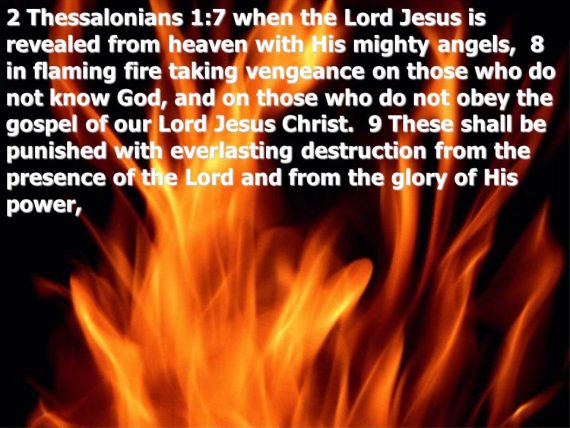
2 Thessalonians 1:8-9

โ€ฆ in flaming fire taking vengeance on those who do not know God, and on those who do not obey the gospel of our Lord Jesus Christ. These shall be punished with everlasting destruction from the presence of the Lord and from the glory of His power โ€ฆ

2 Thessalonians 1:8-9When considered by itself out of context, 2 Thessalonians 1:8-9 seems to conclusively state that God punishes and destroys people forever with flaming fire.


As such, this text may be the strongest passage in Scripture to support the concept of eternal torment in fire for the unregenerate dead.

But an entirely different understanding emerges after a careful analysis of the text in its context and the numerous intertextual allusions to other passages in Scripture.

And since our previous studies on the topic of hell and everlasting fire have already considered numerous texts with similar terms and has shown that they do not refer to everlasting torture in the fires of hell but to some sort of temporal destruction, we are well-prepared to see what Paul meant when he wrote this text.

Paul is Alluding to Numerous other passages in Scripture

The first thing to consider is the numerous allusions and references in these verses to other passages of Scripture. When Paul wrote these words, he expected his readers to bring to mind the images of fire and destruction that are found in various prophetic texts and the teachings of Jesus.

For example, the terminology and imagery used in the preceding verse about Jesus being โ€œrevealed from heaven with His mighty angelsโ€ (2 Thessalonians 1:7) brings to mind the similar imagery used by Jesus in Matthew 13:36-43ย and Matthew 25:31-46. Both of those passages refer to the destruction of nations and countries that ignore the ways of God and the plight of the needy in their midst. Since Paul is using similar imagery, he must have similar ideas in mind.

Furthermore, when Paul writes about โ€œthe presence of the Lord and โ€ฆ the glory of His power,โ€ he likely has texts such as Isaiah 2:19-21ย (cf. Revelation 6:15-16) and Isaiah 66:15-16, 24ย in view.

This first text refers to the โ€œterror of the Lord and the glory of His majestyโ€ while the second refers to the destruction that comes upon those who sin against God. Yet it is critical to note that while the Isaiah text refers to the โ€œterrorโ€ of the Lord, Paul removes the reference to terror and inserts the โ€œpresenceโ€ of the Lord instead.

This change is significant.

What does “from the presence of the Lord” mean?

The phrase โ€œfrom the presence of the Lordโ€ is key to understanding Paulโ€™s point. Many books and articles focus primarily on the first word of this phrase. It is the preposition โ€œfromโ€ (Gk., apล), and can refer to location or separation (away from), source or origin (comes from), instrument or cause (caused by), and time (from ages past).

But since the preposition introduces a longer phrase, we can know the proper meaning of the preposition by first understanding the phrase it introduces.

So what does the phrase โ€œthe presence of the Lordโ€ mean?

In English, it appears to refer to that which is in proximity to God, or that which is near God. Therefore, to be in the presence of the Lord is to be near God. But the Greek terminology (and the Hebrew on which it is based) is much more vivid.

The phrase Paul uses could literally be translated as โ€œbefore the face of the Lordโ€ (Gk., prosลpou tou kuriou). This was a specific Hebrew idiom which referred to the honor of God.

The honor of the Lord

In biblical times, the greatest cultural value was honor. People sought to gain and keep honor for themselves, their family, their country, and their god(s) while avoiding shame. In honor-shame cultures such as that of the ancient Mediterranean world, honor and shame are often symbolized by certain body parts.

The head, face, and right hand were symbols of honor, while the left hand, feet, and buttocks were symbols of dishonor (Malina, (#AmazonAdLink) The New Testament World, 37-39; Neyrey, ed. (#AmazonAdLink) The Social World of Luke-Acts, 34.)

When Paul (or any biblical author) refers to โ€œthe presence of the Lord,โ€ or more literally, โ€œbefore the face of the Lord,โ€ they are not referring to Godโ€™s presence, but to Godโ€™s honor (cf. Jon 1:3; Acts 3:19). See my podcast study on Jonah 1:3 for a detailed explanation of this idea.

Further support for this idea is found in the fact that Paul also writes about the power and glory of God (2 Thess 1:9-12), which are closely connected with honor.

Therefore, when Paul puts the preposition โ€œfromโ€ in front of this phrase, he is not writing about something that is located with God or comes from God but is instead referring to Godโ€™s care for His own honor.

Paul is writing about the negative consequences that come โ€œfromโ€ neglecting the honor of God.

In other words, the preposition โ€œfromโ€ is causal, but God is not the cause. We humans are the cause of the destruction, for we despised the Lordโ€™s honor and suffered the consequences.

It is our responsibility and calling as the people of God to bring honor and glory to God through obedience to Him. If we fail in this, and bring shame upon God instead, we can expect to suffer for it.

The Suffering We Experience does not come from God

But note that the suffering and consequences which come upon humans for neglecting Godโ€™s honor do not come from God Himself, but โ€œfrom the honor of God.โ€

That is, for the sake of His own honor, God has given instructions to humans about how to live and function in this world. These instructions are for our own good and to help us live life in the best way possible.

When we ignore these instructions, thereby forsaking the honor of God, we suffer the consequences, not because God sends the consequences upon us, but because wrong choices and bad decisions naturally lead to devastation and destruction.

And indeed, according to Paul, destruction is exactly what comes upon those who do not know God and who do not obey the instructions within the gospel about how to live (2 Thessalonians 1:8).

Three phrases in the context carry this idea. They are โ€œrepay with tribulationโ€ (2 Thessalonians 1:6), โ€œin flaming fire taking vengeanceโ€ (2 Thessalonians 1:8), and โ€œpunished with everlasting destructionโ€ (2 Thessalonians 1:9).

All three of these phrases are in parallel, containing an action and an instrument of that action. So each explains and amplifies the other two.

Here they are again in parallel format for comparison:

Repay with tribulation
Vengeance with flaming fire
Punishment with everlasting destruction

Let us consider each phrase.

Repay with tribulation

First, in 1:6, Paul says that God will โ€œrepay with tribulation those that trouble you.โ€

The word for tribulation (Gk., thlipsis) does not refer to hell, but to temporal calamity. It refers to negative outward circumstances and troubles in this life. Not anywhere in Scripture does it refer to eternal sufferings or torment.

So when Paul writes about this, he is saying that when others seek to bring trouble upon us for following Jesus, God will turn these troubles back around upon them. This is not a form of punishment or violence, but simply the principle that โ€œHe who lives by the sword, dies by the sword.โ€

Vengeance with flaming fire

Second, Paul writes that this repayment will come โ€œin flaming fire taking vengeanceโ€ (2 Thessalonians 1:7).

The concept of vengeance is parallel to the idea of repayment from 1:6, and so the idea of flaming fire is parallel to tribulation. And just as the tribulation is in this world, so also is the flaming fire.

Paul is not referring to torment in the fires of hell.

The image of fire, as seen nearly everywhere else in Scripture, refers to the devastation and destruction that comes upon people in this life as a consequence of disobeying God.

This fire destroys their plans and goals for this life, leaving only emptiness behind. Vengeance is something that God reserves for Himself (Romans 12:19; Hebrews 10:30), but according to 1 Peter 2:14, God often carries out this vengeance through governors and rulers.

So once again, this second phrase is about the temporal consequences.

Punishment with everlasting destruction

The third and final phrase is parallel to the first two, and can be understood similarly. Paul writes that these people will be โ€œpunished with everlasting destructionโ€ (2 Thessalonians 1:9).

punishment everlasting destruction 2 Thess 1:8-9The word โ€œpunishmentโ€ is not a good translation of what Paul wrote. A better translation would be โ€œpay the penaltyโ€ (Gk., dikฤ“n tisousin). God does not punish people for their sin, but sin bears its own punishment with it. And this punishment of sin can come in the form of a penalty that must be paid or exacted.
In sports, a player can get sidelined, put in the penalty box, or even ejected from the game if they break the rules. They are not being โ€œpunished,โ€ but are simply paying the price for their bad behavior in the game. They made a choice, and the penalty is the consequence.

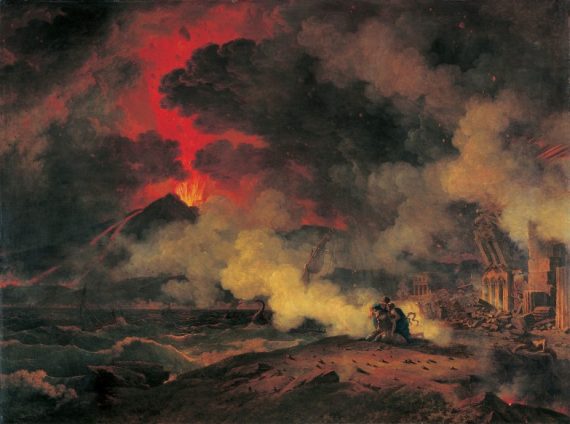
Similarly, the โ€œeverlasting destructionโ€ (Gk., olethron aiลnon) does not refer to annihilation or everlasting torture in hell.

As with the parallel concepts in the preceding verses, this destruction is an event that takes place in this life which brings to ruin all the plans and goals of the people and nations upon whom this destruction comes.

In fact, โ€œruinโ€ is a good translation of olethron and better carries Paulโ€™s meaning. It carries the idea of plans coming to ruin, or of instruments and tools being of no further use. It does not carry the idea of everlasting torture or a cessation of existence.

When a car is โ€œtotally destroyedโ€ in an accident, it still exists; it just exists in pieces and parts. It no longer functions.

The same is true of โ€œruin.โ€ If I prepare a meal, and then accidentally drop it on the floor, my meal has been ruined. It is all still there, but it is no longer edible. It cannot be enjoyed for the purpose to which it was prepared.

So the term does not require that the object of ruin or destruction be annihilated, or cease to exist. It also has no implication of ongoing destruction or ruination, and especially no implication of torture or infliction of pain.

Now, in the case of 2 Thessalonians 1:9, the word โ€œdestructionโ€ or โ€œruinโ€ is modified with the adjective โ€œeternalโ€ (Gk., aiลnon), and so some believe that this is ongoing destruction.

And it is, but not in the sense that the activity of destruction itself continues.

If a car is โ€œtotally destroyedโ€ it is beyond repair, and will be eternally destroyed. It cannot be fixed. Similarly, if a meal is dropped on the floor, it is eternally ruined. It cannot be salvaged. I cannot go back in time and catch the meal before it hits the floor. A new meal will have to be made.

So โ€œeternal destructionโ€ means that something has come to ruin, and it cannot be salvaged, restored, fixed, or repaired.

In regards to the people about whom Paul is writing, their plans and goals will be ruined and come to nothing.

The word olethros in the LXX is most often used in reference to foreign nations who seek to destroy and subjugate Israel. God tells them that because they have made plans against Israel, it is actually their plans that will come to nothing, and in fact, they themselves will be destroyed (cf. 1 Kings 13:33-34; 15:28-29; Prov 1:26-27; 21:7; Jer 25:31; 48:3, 8, 32; 51:55; Ezek 6:14; 14:16; Hos 9:6).

This is also similar to what Paul writes later about the man of lawlessness (2 Thessalonians 2:8), and which is discussed in numerous other biblical texts (cf. Psa 18:8, 15; Isa 30:27-33; Jer 7:31-33), some even by Paul himself (cf. 1 Cor 5:5; 1 Thessalonians 5:3; 1 Tim 6:9).

When God opens His mouth and speaks truth to worldly power, the plans of those who disobey God and rebel against Him are ruined. The people themselves might continue to live, and indeed, some of them might even be Christians, but their plans which are contrary to the ways of God and the gospel will have no eternal significance and will even be forgotten in the memories of mankind. Their plans come to ruin, come to nothing for eternity, experience everlasting failure, and have no eternal significance or consequences (cf. John 6:27).

So what is everlasting destruction in the flames of fire?

It is the ruination in this life of the plans and goals of the people and nations who array themselves against God and His goals. God has set up this world to bring honor and glory to Himself. When we pursue Godโ€™s honor, we will also experience the best possible life in this world.

But if we live contrary to the honor of the Lord, rejecting His glory and power, then our lives will not bring forth joy, satisfaction, and fulfillment, but only emptiness and failure.

These flames of fire and eternal destruction can come in many forms.

It can come temporally in the lives of people, as it did with many of the people in Jerusalem and the Roman Empire after the days of Paul.

It can occur in human history, as the lives and work of people, nations, and rulers fade from memory and have no lasting impact on others.

flames of vengeance everlasting destructionIt can even come upon believers at the Judgment Seat of Christ when they see everything they have worked for and sought after get burned up as wood, hay, and stubble (1 Cor 3:12-15; cf. โ€œthe Dayโ€ of 2 Thessalonians 1:10).

But one thing that is not in view with Paulโ€™s words here is the everlasting torture of people by flames of fire in a place called hell.

So what is 2 Thessalonians 1:8-9 teaching?

2 Thessalonians 1:8-9ย is not about a future general judgment where unbelievers are consigned to eternal hell.

It is explaining that the ways of this world are not the end of the matter, for a day is coming (and has come) when Jesus will vindicate His afflicted people, so that affliction comes upon the afflicters.

But even then, this affliction is not everlasting torture, but is the sad reality of seeing their lifeโ€™s work and actions come to nothing for eternity, have no lasting significance on world history or events, and fade away from memory among people.

For those of us who want to be remembered and to make an impact on this world, this is a dire warning indeed.

So even the strongest potential passage in the Bible which is often used to support the idea of everlasting punishment in the fiery flames of hell turns out to be teaching nothing of the sort. Contextual and cultural insights about the text reveal that Paul is saying the same thing that every other passage of Scripture says about fiery judgment coming upon people.

Such texts are not referring to everlasting torture in hell, but to a temporal judgment in this life.

what is hellDo you have more questions about hell? Are you afraid of going to hell? Do want to know what the Bible teaches about hell? Take my course "What is Hell?" to learn the truth about hell and how to avoid hell. This course costs $297, but when you join the Discipleship group, you can to take the entire course for free.

Affiliate Disclosure: As an Amazon Associate I earn from qualifying purchases. Thank you for supporting my work in this way!

God is Redeeming God, Redeeming Scripture, Redeeming Theology, z Bible & Theology Topics: 2 Thessalonians 1:8-9, everlasting destruction, everlasting fire, fire, hell, punishment, sin, what is hell

Advertisement

  • « Previous Page
  • 1
  • …
  • 10
  • 11
  • 12
  • 13
  • 14
  • …
  • 82
  • Next Page »

My New Book is Out!

Get your copy on Amazon today!
Learn about the gospel and how to share it

Take my new course:

The Gospel According to Scripture
Best Books Every Christian Should Read
Study Scripture with me
Subscribe to my Podcast on iTunes
Subscribe to my Podcast on Amazon

Do you like my blog?
Try one of my books:

Click the image below to see what books are available.

Books by Jeremy Myers

My New Book is Out!

Get your copy on Amazon today!

Theological Study Archives

  • Theology – General
  • Theology Introduction
  • Theology of the Bible
  • Theology of God
  • Theology of Man
  • Theology of Sin
  • Theology of Jesus
  • Theology of Salvation
  • Theology of the Holy Spirit
  • Theology of the Church
  • Theology of Angels
  • Theology of the End Times
  • Theology Q&A

Bible Study Archives

  • Bible Studies on Genesis
  • Bible Studies on Esther
  • Bible Studies on Psalms
  • Bible Studies on Jonah
  • Bible Studies on Matthew
  • Bible Studies on Luke
  • Bible Studies on Romans
  • Bible Studies on Ephesians
  • Miscellaneous Bible Studies

Advertise or Donate

  • Advertise on RedeemingGod.com
  • Donate to Jeremy Myers

Search (and you Shall Find)

Get Books by Jeremy Myers

Books by Jeremy Myers

Schedule Jeremy for an interview

Click here to Contact Me!

Follow me on X

© 2026 Redeeming God · All Rights Reserved · Powered by Knownhost and the Genesis Framework