
 In my Gospel Dictionary course, one of the words we look at is the word anathema, which is often translated as “cursed” or “accursed” in the Bible. One of the places this word is found is 1 Corinthians 16:22, where, at the end of his letter, Paul writes this: “If anyone does not love the Lord Jesus Christ, let him be accursed.”
On first glance, this sounds like a rather harsh statement, even coming from Paul. Is Paul really pronouncing a death wish on all who are not Christians and do not love Jesus?
Such a sentiment seems so unlike Paul, and yet of all the words in 1 Corinthians, these are among those he claims to have penned himself (1 Cor 16:21). The rest of the letter was dictated to a scribe (or amanuensis).
So what is Paul saying in 1 Corinthians 16:22?
It is the final word of this statement in 1 Corinthians 16:22 that helps sort out Paul’s words.
In English, it says “O Lord, come!” but the Greek is maranatha (which is actually Aramaic).
The final two words of this verse sound like this: anathema maranatha. You can very clearly hear the repeated sound of anatha in both words. And of course, one word ends with ma while the other begins with ma.
So what we have in 1 Corinthians 16:22 is a typical Pauline play on words. Paul, more than any other New Testament author, loved to make theological points through word play.
In Philemon, for example, Paul uses the words achrēston (useless) and euchrēston (useful) as a way of making a point about Onesimus (whose name means “Useful”) and his relation to Paul and Philemon in Christ (Christos).
A play on words helps us understand 1 Corinthians 16:22
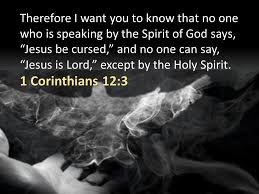
Paul knows that some of the Christians in Corinth have been saying that Jesus was accursed (We we discussed previously in our discussion of 1 Corinthians 12:3).
 So he now makes the ironic and pun-filled statement that we have a choice between anathema and maranatha.
One can either look eagerly for the Lord’s coming, maranatha, and so reveal their love for Jesus Christ, or one can believe that Jesus was anathema, and therefore want nothing to do with Him and so be anathema themselves.
Those are the choices which Paul masterfully, ironically, and playfully lays out here at the end of this letter to the Corinthian church.
But even still, being anathema is not about being cursed to hell. That is not what the word means. I discuss the meaning of the word more (along with 51 other words and various passages related to each) in my online course, “The Gospel Dictionary.” Start taking the course today and learn along with others.
 Understanding the Gospel requires us to properly understand the key words and terms of the Gospel. Take my course, "The Gospel Dictionary" to learn about the 52 key words of the Gospel, and hundreds of Bible passages that use these words.
This course costs $297, but when you join the Discipleship group, you can to take the entire course for free.

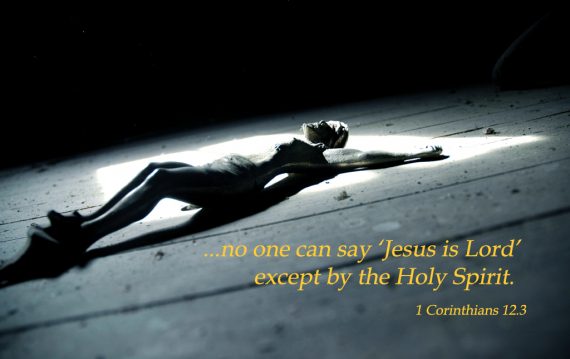
 The letter of 1 Corinthians is focused around some issues and questions that had arisen in the Corinthian church. When Paul sets out to address the other issues and questions, he begins with a short summary of what the issue or question was (cf. 1 Cor 7:1; 8:1; 16:1). Chapters 12–14 deal with the issue of spiritual gifts, and ultimately, the gift of speaking in tongues (1 Cor 14), and so 1 Corinthians 12:1-3 is apparently the opening summary statement of what issue or question the Corinthian Christians were facing.
 Paul spends much of his time in his letter arguing the exact opposite. In fact, this is partly why Paul goes on in 1 Corinthians 15 to argue about the physical resurrection of Jesus. Paul wanted to show that the physical world, and our physical bodies, were not inferior to the spiritual, but were partnered with the spiritual to accomplish God’s will in this world (John argues against similar beliefs in 1 John).

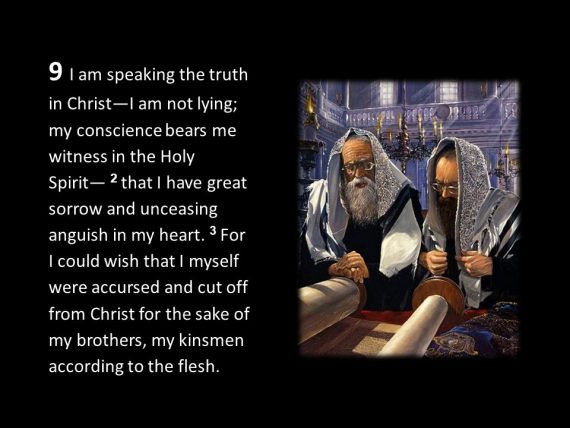
 When Paul writes about being anathema from Christ, he is not stating a desire to be eternally cut off or separated from Jesus, but is instead stating his desire, if it were possible, to give up his life and his ministry within the Kingdom of God if such a sacrifice would help Israel come to the knowledge that Jesus is the Messiah.

 The book of 1 John is a battleground book regarding the issue of good works and sin. I remember in Bible college listening to a student debate with a professor about what 1 John teaches about whether or not a Christian can commit sin. Here is how the debate went (I am quoting this debate verbatim):

 A similar understanding can be drawn from 1 John 2:17.