Redeeming God

Liberating you from bad ideas about God

Join the discipleship group
  • Join Us!
  • Scripture
  • Theology
  • My Books
  • About
  • Discipleship
  • Courses
    • What is Hell?
    • Skeleton Church
    • The Gospel According to Scripture
    • The Gospel Dictionary
    • The Re-Justification of God
    • What is Prayer?
    • Adventures in Fishing for Men
    • What are the Spiritual Gifts?
    • How to Study the Bible
    • Courses FAQ
  • Forum
    • Introduce Yourself
    • Old Testament
    • New Testament
    • Theology Questions
    • Life & Ministry

John 3:3 Does Not Teach Total Inability

By Jeremy Myers
7 Comments

John 3:3 Does Not Teach Total Inability

John 3:3 is one of the verses used by Calvinists to defend the idea that regeneration precedes faith.

Jesus answered and said to him, โ€œMost assuredly, I say to you, unless one is born again, he cannot see the kingdom of Godโ€ (John 3:3).

According to Calvinists, when Jesus says that โ€œunless one is born again, he cannot see the kingdom of God,โ€ this means that unbelievers are spiritually blind, and cannot even see the offer of the kingdom of God, or see their need for grace and everything else that comes with the kingdom of God, unless and until they are born again.

In other words, according to Calvinists, one must be born again before he or she can see anything related to the kingdom of God, including the gospel, the forgiveness of sins, and Godโ€™s offer of eternal life through faith in Jesus Christ.
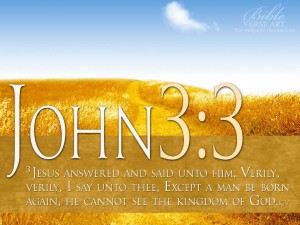
John 3:3

What Did Jesus Mean in John 3:3?

From the statement of Jesus in John 3:3 about people not being able to see the kingdom of God,ย it would be difficult to know what Jesus meant.

Certainly, as Calvinists claim, He could mean that people cannot even observe their need of grace and forgiveness, or see anything at all related to spiritual matters. The Greek word for โ€œseeโ€ (Gk., eidon) can refer to seeing, perceiving, or understanding something.

Yet this is not the only way this Greek word can be understood. It can also refer to experiencing something (1 Pet 3:10; Luke 2:26; Heb 11:5), or of visiting a place or person (Luke 8:20; Acts 16:40, 1 Cor 16:7) (BAGD, 220-221). With these various interpretations, how can we know what Jesus meant when He said that unless one is born again, he cannot see the kingdom of God? By looking in the context.

John 3:3 in Context

John 3:3 is found near the beginning of a conversation Jesus has with Jewish religious leader named Nicodemus about how to be born again. After Jesus makes the statement in John 3:3 about being born again, Nicodemus gets confused, and asks Jesus to clarify (John 3:4).

So in John 3:5, Jesus rephrases His statement. He tells Nicodemus that there are two births, the first birth is physical, and consists of being born of water, that is, from a motherโ€™s womb. The second birth is spiritual, which requires being born of the Spirit. We have physical life from our mother by being born of water, but we also need spiritual life by being born of the Spirit.

But Jesus does not stop with clarifying what it means to be born again. He also clarifies His statement about seeing the kingdom of God.

Following this clarifying statement about being born again, Jesus says that unless one is born again, they cannot โ€œenter the kingdom of God.โ€ In this way, Jesus clarifies exactly what He meant earlier when He spoke of seeing the kingdom.ย Jesus meant that only those who are born again may enter the kingdom.

John 3:3 Does Not Teach Total Inability

In other words, John 3:3 is not a verse at all about humanityโ€™s total inability to understand, comprehend, or even see anything related to the kingdom of God, but is rather a statement about humanityโ€™s inability to enter into or experience the rule and reign of God in the life (which is what the kingdom of God is) unless they have first been born again (BAGD, 221).

John 3:3 is not a verse which defends the Calvinistic teaching that regeneration precedes faith, but is rather a verse which teaches the biblical idea that regeneration precedes life in the kingdom of God.

To enter into the kingdom of God, we must first be born of God. To experience the life of joy, fulfillment, satisfaction, and purpose that God wants for us, we must first be born of the Spirit so that Godโ€™s new life dwells within us.

Jesus goes on to explain this very clearly to Nicodemus in John 3:15-18. Jesus does not say that unless a man is born again, he cannot believe in Jesus for eternal life (Vance, The Other Side of Calvinism, 225).ย He says that unless a man is born again, he cannot โ€œsee the kingdom of God,โ€ that is, he cannot enter into and experience the rule and reign of God in his life.

So there is nothing in John 3:3 about mankindโ€™s inability to see or comprehend anything about the gospel or the kingdom of God unless they are first regenerated by God.

To the contrary, as seen by Jesusโ€™ own example with Nicodemus in this very text, the call of the gospel and the offer of life with God in His kingdom is one of the primary ways by which we can point unregenerate people to Jesus so that they might believe in Him and find life.

It is because people can understand the hope, grace, love, and mercy found the gospel of Jesus Christ that so many people find the gospel compelling.

It is because the biblical teaching about the kingdom of God promises joy, contentment, and significance to those who live under the rule and reign of God that the invitation to enter into the kingdom by faith in Jesus Christ has such persuasive power.

When the gospel, the kingdom of God, and the offer of eternal life are rightly proclaimed, they have great drawing power to all who are unregenerate, for they contain the light and life that people have been searching for, but not finding.

If you want to read more about Calvinism, check out other posts in this blog series: Words of Calvinism and the Word of God.
Affiliate Disclosure: As an Amazon Associate I earn from qualifying purchases. Thank you for supporting my work in this way!

God is Redeeming Theology Bible & Theology Topics: Books by Jeremy Myers, Calvinism, John 3:3, sin, Theology of Salvation, Theology of Sin, Total Depravity, total inability, TULIP

Advertisement

Are People Born in Sin? (Psalm 51:5)

By Jeremy Myers
31 Comments

Are People Born in Sin? (Psalm 51:5)

Psalm 51:5 is often used to defend the idea that humans are sinners before they are born.

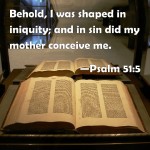
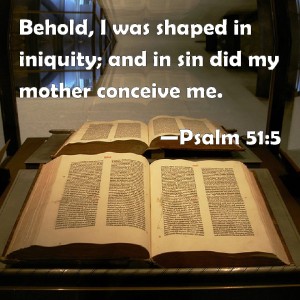
Behold, I was brought forth in iniquity, And in sin my mother conceived me (Psalm 51:5)

In his commentary on this text, John Calvin wrote that this proves that David was a transgressor before he ever saw the light of the world (Calvin, Calvin’s Commentaries, Psalms v2: 290).

in sin my mother conceived me Psalm 51:5

This sort of idea is then used to prove that people are totally depraved, even from conception, not because of what they do but because depravity is part of who we are.

There are, however, several other ways of understanding this statement of David in Psalm 51:5.

Born in Sin = Learn to Sin

First, David could be saying that since he was born as a human, he learned to sin, in the same way that infants and toddlers learn to talk. It is not uncommon for the Biblical authors to speak of being โ€œborn intoโ€ something in just this way.

For example, Acts 2:8 refers to people who were born into a language, but clearly, they were not born already knowing this language, but had to learn it just like everyone else. If this is how to understand Psalm 51:5, David is saying that since he was born in sin, he learned to sin just like everyone else.

Born in Sin = Born in a Sinful World

Second, it could be argued that what David meant was that he was born into a world of sin. The phrases โ€œin iniquityโ€ and โ€œin sinโ€ would thus be understood as metonymy for โ€œa world full of sin.โ€ Metonymy, where a word or phrase is used in place of a different word or phrase with which it is associated, is frequently used in Scripture, and even in modern everyday speech (e.g., โ€œthe White Houseโ€ is often used to refer to the President of the United States, his staff, and the decisions and policy that come from them).

So in the case of Psalm 51:5, David could be referring to the world of sin in which he was conceived and subsequently born.

Born in Sin = Poetic Exaggeration

born in sin Psalm 51 5Third, we could simply say that Psalm 51:5 is poetic hyperbole. David is, after all, confessing his sin of committing adultery with Bathsheba, and so in the midst of this confession, he my seek to exaggerate his own sinfulness by saying that he has always been sinning, even from conception.
The Psalms are full of such exaggeration, as are the rest of Scriptures. In one place, the Psalmist writes that he drowns his bed with a single tear (Psalm 6:6; the Hebrew word for โ€œtearsโ€ is singular), and even Paul writes that he is the chief of sinners (1 Timothy 1:15).

Even today, people often use hyperbole in exactly the same way. It is not uncommon to hear a child who misses several problems on a math test to cry out in despair, โ€œI never get any problems right!โ€ In reality, they get most of the problems right most of the time, and in fact, got most of the problems right on that very test. So this is a possible explanation for Davidโ€™s statement as well.

Born in Sin = David’s Mother Was Accused of Adultery

One final possibility is based on a traditional Jewish reading of Psalm 69.

According to various Jewish historical writings, Davidโ€™s father and brothers thought that Davidโ€™s mother, Nizbeth, had committed adultery and borne him out of wedlock (See my post yesterday on David’s Mother Nizbeth for more on this).

They thought David was a bastard (the word โ€œstrangerโ€ in Psalm 69:8 has the same Hebrew root as muzar, meaning โ€œbastardโ€). The truly guilty one was Davidโ€™s father, Jesse, who, as a result of having Moabite blood (from Ruth) and due to some strange twists of Jewish law, believed that his marriage to Nizbeth was illegitimate and stopped having sexual relations with her to keep her from sinning. Yet he also feared that his seven sons were illegitimate, and so he had sought to gain a legitimate heir for himself by sleeping with his wifeโ€™s maidservant (Yes, it sounds strange, but you have to understand Jewish law for it to make sense).

Anyway, Nizbethโ€™s maidservant loved her mistress dearly, and so switched places with her before Jesse entered her bed, much like Leah and Rachel had switched places so many years before on Jacobโ€™s wedding night. So Jesse ended up sleeping with his wife, even though he thought it was his wifeโ€™s servant. Nizbeth became pregnant, but never told her family how she had become pregnant, because she wanted to protect Jesse from public shame. The result, however, was that Jesse, their seven sons, and the entire community came to believe that Nizbeth was an adulterer. The town urged Jesse to stone his wife for adultery, but out of love for her, he refused, and several months later, David was born.

So David grew up in a family in which he was despised, rejected, shunned, and outcast. He was treated with scorn and derision (Psalm 69:7-8). The community followed the example of the family, and assumed that David was full of sin and guilt (Psalm 69:11-12). If something turned up missing, they believed he stole it, and forced him to replace it (Psalm 69:4). He was often the object of jokes and pranks, filling his plate with gall and his cup with vinegar (Psalm 69:20-21).

There are numerous other details to this story, but the point for our purposes here is that this may be what David is referring to in Psalm 51:5. If this Jewish history is true (and we have no good reason to believe otherwise), then almost everybodyโ€”including Davidโ€™s own father and brothersโ€”believed that David was born as a result of adultery, which is why David writes, โ€œI was brought forth in iniquity; and in sin my mother conceived me.โ€

What does Psalm 51:5 mean?

No matter which of the views above we adopt, the view that is most unlikely is the Calvinistic idea that David is making some sort of theological statement in Psalm 51:5 about the universal total depravity of all humans.

This sort of theologizing was not Davidโ€™s intention and it does not fit the context of the chapter. There are numerous other explanations for this verse which make much better sense of the verse itself and the context as a whole.

If you want to read more about Calvinism, check out other posts in this blog series: Words of Calvinism and the Word of God.

Affiliate Disclosure: As an Amazon Associate I earn from qualifying purchases. Thank you for supporting my work in this way!

God is Redeeming Theology Bible & Theology Topics: Books by Jeremy Myers, Calvinism, Psalm 51:5, Psalm 69, sin, Theology of Salvation, Theology of Sin, Total Depravity, total inability, TULIP

Advertisement

Calvinists Believe that Regeneration Precedes Faith

By Jeremy Myers
73 Comments

Calvinists Believe that Regeneration Precedes Faith

According to the Calvinistic teaching of Total Depravity (and total inability), the unregenerate person cannot do anything goodโ€”they cannot even have faith in Jesus.

Therefore, even if God graciously gave faith to an unregenerate person, it would not matter because the personโ€”as an unregenerateโ€”would not be able to believe! Godโ€™s gift of faith to the person would be ineffectual.

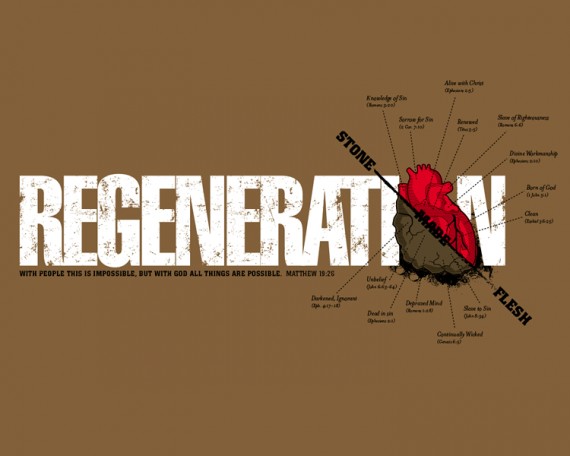
To get around this, Calvinists often teach that regeneration precedes faith. That is, before God gives a person the gift of faith so that they can believe in Jesus for eternal life, God knows that He must first remove the problem of โ€œtotal inability.โ€ So God sovereignly regenerates the person before He gives them the gift of faith so that they are now able to believe when God gives them faith.

regeneration precedes faith

To say that regenerationย precedesย faith means that God gives new life before He grants the gift of faith. Only in thisย way can the newly regenerated person exercise the gift of faith they have been given.

Sound a little strange? Let us hear how Calvinists explain it:

When Christ called to Lazarus to come out of the grave, Lazarus had no life in him so that he could hear, sit up, and emerge. There was not a flicker of life in him. If he was to be able to hear Jesus calling him and to go to Him, then Jesus would have to make him alive. Jesus resurrected him and then Lazarus could respond. [Similarly,] the unsaved, the unregenerate, is spiritually dead (Eph. 2). He is unable to ask for help unless God changes his heart of stone into a heart of flesh, and makes him alive spiritually (Eph. 2:5). Then, once he is born again, he can for the first time turn to Jesus, expressing sorrow for his sins and asking Jesus to save him (Palmer,ย Five Points, 18-19).

Abraham Kuyper observed that, prior to regeneration, a sinner โ€˜has all the passive properties belonging to a corpse โ€ฆ [Therefore] every effort to claim for the sinner the minutest co-operation in this first grace destroys the gospel, severs the artery of the Christian confession and is anti-scriptural in the highest degree.โ€™ Like a spiritual corpse, he is unable to make a single move toward God, think a right thought about God, or even respond to God โ€“ unless God first brings this spiritually dead corpse to life (Boice and Ryken,ย Doctrines of Grace, 74).

Man is dead in trespasses and sins (Eph. 2:1). He cannot make himself new, or create new life in himself. He must be born of God. Then, with the new nature of God, he sees Christ for who he really is, and freely receives Christ for all that he is. The two acts (new birth and faith) are so closely connected that in experience we cannot distinguish them. God begets us anew and the first glimmer of life in the newborn child is faith (Piper, Five Points, 35).

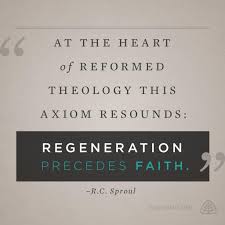
The Reformed view โ€ฆ teaches that before a person can choose Christ โ€ฆ he must be born again โ€ฆ one does not first believe and then become reborn. โ€ฆ A cardinal doctrine of Reformed theology is the maxim, โ€œRegeneration precedes faith” (Sproul,ย Chosen by God, 10, 72).

A man is not regenerated because he has first believed in Christ, but he believes in Christ because has been regenerated (Pink, The Sovereignty of God).

The Calvinist says that life must precede faith, and is logically the cause of faith. Faith did not cause the new birth, the new birth caused faith (Cole, โ€œWhich Comes First In Conversionโ€“Life or Faith?โ€).

Calvinists put the new birth before faith, since they believe that spiritually dead humans cannot exercise faith and, therefore, need to be born again before they can believe (Olson,ย Beyond Calvinism and Arminianism, 39).

โ€ฆ Regeneration logically must initiate faith (MacArthur, Faith Works, 62).

Reformed theologians โ€ฆ place regeneration before faith, pointing out that the Holy Spirit must bring new life before the sinner can by Godโ€™s enabling exercise faith and accept Jesus Christ (Killen, โ€œRegeneration,โ€ 1449).

The reformed view of predestination teaches that before a person can choose Christ his heart must be changed. He must be born again โ€ฆ one does not first believe, then become reborn. โ€ฆ In regeneration, God changes our hearts. He gives us a new disposition, a new inclination. He plants a desire for Christ in our hearts. We can never trust Christ for our salvation unless we first desire Him. This is why we said earlier that regeneration precedes faith (Sproul, Chosen by God, 72, 118).

A man must be born again in order to exercise faithย (Wells,ย Faith,ย 58).

The Reformers taught not only that regeneration does precede faith but also that it must precede faith. Because of the moral bondage of the unregenerate sinner, he cannot have faith until he is changed internally by the operative, monergistic work of the Holy Spirit. Faith is regenerationโ€™s fruit, not its cause (Sproul,ย Willing to Believe,ย 23).

regeneration precedes faithAnd a long quote from R. C. Sproul:

After a person is regenerated, that person cooperates by exercising faith and trust. But the first step is the work of God and of God alone.

The reason we do not cooperate with regenerating grace before it acts upon us and in us is because we can- not. We cannot because we are spiritually dead. We can no more assist the Holy Spirit in the quickening of our souls to spiritual life than Lazarus could help Jesus raise him for the dead.

When I began to wrestle with the Professor’s argument, I was surprised to learn that his strange-sounding teaching was not novel. Augustine, Martin Luther, John Calvin, Jonathan Edwards, George Whitefield – even the great medieval theologian Thomas Aquinas taught this doctrine. Thomas Aquinas is the Doctor Angelicus of the Roman Catholic Church. For centuries his theological teaching was accepted as official dogma by most Catholics. So he was the last person I expected to hold such a view of regeneration. Yet Aquinas insisted that regenerating grace is operative grace, not cooperative grace. Aquinas spoke of prevenient grace, but he spoke of a grace that comes before faith, which is regeneration.

These giants of Christian history derived their view from Holy Scripture. The key phrase in Paul’s Letter to the Ephesians is this: “…even when we were dead in trespasses, made us alive together with Christ (by grace have you been saved)” (Eph. 2:5). Here Paul locates the time when regeneration occurs. It takes place ‘when we were dead.’ With one thunderbolt of apostolic revelation all attempts to give the initiative in regeneration to man are smashed. Again, dead men do not cooperate with grace. Unless regeneration takes place first, there is no possibility of faith.

This says nothing different from what Jesus said to Nicodemus. Unless a man is born again first, he cannot possibly see or enter the kingdom of God. If we believe that faith precedes regeneration, then we set our thinking and therefore ourselves in direct opposition not only to giants of Christian history but also to the teaching of Paul and of our Lord Himself (R. C. Sproul, โ€œRegeneration Precedes Faithโ€).

What are your thoughts on the idea that regeneration precedes faith? Have you encountered this idea before? Do you believe it matches up with what Scripture teaches? Weigh in below!

If you want to read more about Calvinism, check out other posts in this blog series: Words of Calvinism and the Word of God.

Affiliate Disclosure: As an Amazon Associate I earn from qualifying purchases. Thank you for supporting my work in this way!

God is Redeeming Theology Bible & Theology Topics: Books by Jeremy Myers, Calvinism, faith, regeneration, Theology of Salvation

Advertisement

Calvinists Believe Faith is a Gift from God

By Jeremy Myers
34 Comments

Calvinists Believe Faith is a Gift from God

Yesterday we learned about the Calvinistic idea that faith is a work. I briefly mentioned that as a result of this idea, Calvinists believe that people cannot on their own place faith in Jesus Christ for eternal life.

faith is a gift from GodYet if faith is something good that we do, if faith is a work, why does God call people to place faith in Jesus for eternal life (John 3:16; 5:24; 6:47)? Why does God seem to hold people responsible for something which they are not able to do? The Calvinistic answer to this is that faith itself is a gift of God.


Since God requires faith in Jesus, and since God knows that it is impossible for the unregenerate person to place faith in Jesus, the Calvinist argues that God Himself gives faith to the person so that they can then believe. So then, faith becomes a gift from God.

Again, let me allow Calvinists to explain this idea that faith is a gift in their own words:

Genuine faith โ€ฆ is granted by God โ€ฆ faith is a supernatural gift of God โ€ฆ faith is not something that is conjured up by the human will but is a sovereignly granted gift (cf. Php 1:29) (MacArthur,ย The Gospel According to Jesus, 172-173).

Faith is Godโ€™s gift. In no degree could a natural man produce faith. It is utterly beyond him. Let us adore the God who gives it (Wells,ย Faith, 55).

Faith and repentance are divine gifts and are wrought in the soul through the regenerating work of the Holy Spirit (Steele,ย The Five Points of Calvinism).

Faith is a gift from God โ€ฆ it is permanent โ€ฆ the faith that God gives begets obedience โ€ฆ God gave it to you and He sustains it โ€ฆ May God grant you a true saving faith, a permanent gift that begins in humility and brokenness over sin and ends up in obedience unto righteousness. Thatโ€™s true faith and itโ€™s a gift that only God can give, and if you desire it, pray and ask that He would grant it to you (MacArthur, Transcribed Tape GC 90-21).

Have you encountered this idea in any other writings? If so, where? What are your thoughts on the idea that faith is a gift from God?ย 

If you want to read more about Calvinism, check out other posts in this blog series: Words of Calvinism and the Word of God.

Affiliate Disclosure: As an Amazon Associate I earn from qualifying purchases. Thank you for supporting my work in this way!

God is Redeeming Theology Bible & Theology Topics: Books by Jeremy Myers, Calvinism, faith alone, faith and works, Theology of Salvation

Advertisement

Calvinists Believe Faith is a Work

By Jeremy Myers
61 Comments

Calvinists Believe Faith is a Work

faith is a workOne of the central ramifications to the Calvinistic understanding of Total Depravity as total inability is the idea that people are not even able to believe in Jesus for eternal life. The reason Calvinists have this idea is because they view faith as a meritorious act of the will. They believe that faith is a work, and therefore, since people cannot do any good works, people cannot have faith.
In other words, due to their emphasis on the inability of mankind to do anything good at all, and because of the impression that faith is something we do, Calvinists conclude that humans cannot believe in Jesus for eternal life. Calvinists argue that if people were able to believe in Jesus for eternal life, then this is something that they are doing, and therefore, their faith is meritorious before God. All of this is because of their view that faith is a sort of good work.

But don’t take my word for it. Here is what some leading Calvinists have to say about the idea that faith is a work:

Faith itself is man’s act or work and is thereby excluded from being any part of his justifying righteousness. It is one thing to be justified by faith merely as an instrument by which man receives the righteousness of Christ, and another to be justified FOR faith as an act or work of the law. If a sinner, then, relies on his actings of faith or works of obedience to any of the commands of the law for a title to eternal life, he seeks to be justified by works of the law as much as if his works were perfect. If he depends either in whole or in part, on his faith and repentance for a right to any promised blessing, he thereby so annexes that promise to the commands to believe and repent as to form them for himself into a covenant of works. Building his confidence before God upon his faith, repentance and other acts of obedience, he places them in Christ’s stead as his grounds of right to the promise and so he demonstrates himself to be of the works of the law and so be under the curse (Colquhoun,ย A Treatise).

According to the Reformed doctrine, total depravity makes man morally incapable of making a virtuous choice [of faith] โ€ฆ If total depravity does anything, it renders a man totally unable because he is indisposed to respond to the overtures of grace. If [a person] maintains that man is morally able to respond to the gospel, then [that person] does not believe that man is totally depraved at all (Gerstner,ย Wrongly Dividing, 109).

The Arminian acknowledges that faith is something a person does. It is a work, though not a meritorious one. Is it a good work? Certainly it is not a bad work. It is good for a person to trust in Christ and in Christ alone for his or her salvation. Since God commands us to trust in Christ, when we do so we are obeying this command. But all Christians agree that faith is something we do. God does not do the believing for us. โ€ฆ Then why say that Arminianism โ€œin effectโ€ makes faith a meritorious work? Because the good response people make to the gospel becomes the ultimate determining factor in salvation. I often ask my Arminian friends why they are Christians and other people are not. They say it is because they believe in Christ while others do not. Then I inquire why they believe and others do not? โ€œIs it because you are more righteous than the person who abides in unbelief?โ€ They are quick to say no. โ€œIs it because you are more intelligent?โ€ Again the reply is negative. They say that God is gracious enough to offer salvation to all who believe and that one cannot be saved without that grace. But this grace is cooperative grace. Man in his fallen state must reach out and grasp this grace by an act of the will, which is free to accept or reject this grace. Some exercise the will rightly (or righteously), while others do not. When pressed on this point, the Arminian finds it difficult to escape the conclusion that ultimately his salvation rests on some righteous act of the will he has performed (Sproul,ย Willing to Believe, 25-26).

To rely on oneself for faith is no different in principle from relying on oneself for works, and the one is as un-Christian and anti-Christian as the other (Packer,ย Bondage of the Will,ย 59).

We will discuss this concept in great detail in later posts, and even look at several of the key texts they use to defend the idea that faith is a work, but for now, what are your thoughts on this Calvinistic teaching that faith is a work? Share your thoughts in the comments below!

If you want to read more about Calvinism, check out other posts in this blog series: Words of Calvinism and the Word of God.

Affiliate Disclosure: As an Amazon Associate I earn from qualifying purchases. Thank you for supporting my work in this way!

God is Redeeming Theology Bible & Theology Topics: Books by Jeremy Myers, Calvinism, faith, faith and works, Theology of Salvation, works

Advertisement

  • « Previous Page
  • 1
  • …
  • 48
  • 49
  • 50
  • 51
  • 52
  • …
  • 82
  • Next Page »

My New Book is Out!

Get your copy on Amazon today!
Learn about the gospel and how to share it

Take my new course:

The Gospel According to Scripture
Best Books Every Christian Should Read
Study Scripture with me
Subscribe to my Podcast on iTunes
Subscribe to my Podcast on Amazon

Do you like my blog?
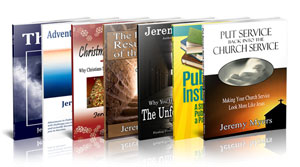
Try one of my books:

Click the image below to see what books are available.

Books by Jeremy Myers

My New Book is Out!

Get your copy on Amazon today!

Theological Study Archives

  • Theology – General
  • Theology Introduction
  • Theology of the Bible
  • Theology of God
  • Theology of Man
  • Theology of Sin
  • Theology of Jesus
  • Theology of Salvation
  • Theology of the Holy Spirit
  • Theology of the Church
  • Theology of Angels
  • Theology of the End Times
  • Theology Q&A

Bible Study Archives

  • Bible Studies on Genesis
  • Bible Studies on Esther
  • Bible Studies on Psalms
  • Bible Studies on Jonah
  • Bible Studies on Matthew
  • Bible Studies on Luke
  • Bible Studies on Romans
  • Bible Studies on Ephesians
  • Miscellaneous Bible Studies

Advertise or Donate

  • Advertise on RedeemingGod.com
  • Donate to Jeremy Myers

Search (and you Shall Find)

Get Books by Jeremy Myers

Books by Jeremy Myers

Schedule Jeremy for an interview

Click here to Contact Me!

Follow me on X

© 2026 Redeeming God · All Rights Reserved · Powered by Knownhost and the Genesis Framework