Redeeming God

Liberating you from bad ideas about God

Join the discipleship group
  • Join Us!
  • Scripture
  • Theology
  • My Books
  • About
  • Discipleship
  • Courses
    • What is Hell?
    • Skeleton Church
    • The Gospel According to Scripture
    • The Gospel Dictionary
    • The Re-Justification of God
    • What is Prayer?
    • Adventures in Fishing for Men
    • What are the Spiritual Gifts?
    • How to Study the Bible
    • Courses FAQ
  • Forum
    • Introduce Yourself
    • Old Testament
    • New Testament
    • Theology Questions
    • Life & Ministry

I believe in the Five Solas of the Reformation

By Jeremy Myers
22 Comments

I believe in the Five Solas of the Reformation

Last week I announced that I needed to take a break from my series on the violence of God, and that I was considering doing a series on Calvinism instead. I ran a survey to see if people were interested in this, and 98% of you said “Yes!” So here is the first post… (Some of these posts on Calvinism ended up in my book, The Re-Justification of God which can be found on Amazon.

I believe in the Five Solas

five solasThe rallying cry of the Reformation centers around five solas (or in proper Latin, the five solae): Sola Gratia, Sola Fide, Solus Christus, Sola Scriptura, and Soli Deo Gloria.

Though not actually stated in quite this fashion until the 20th century, these five statements summarize what the Reformation was about. The Reformation was about authority, tradition, and justification, and the leaders of the Reformation believed and taught that everything we have from God, is Sola Gratia, Sola Fide, Solus Christus, Sola Scriptura, and Soli Deo Gloria.

In English we might say that what we have from God is “by grace alone, through faith alone, in Christ alone, according to the authority of Scripture alone, for the glory of God alone.”

I affirm all five statements. I consider myself to be a child of the Reformation.

I am Neither Calvinist nor Arminian

Yet I do not identify with either of the two main groups that came out of the Reformation; I am neither a Calvinist nor an Arminian. (I am not Lutheran either, for those Lutherans who see themselves as a group apart.)

Certainly, there are many things I appreciate about John Calvin, Jacobus Arminius, Martin Luther, and the other Reformers, but I have too many differences with the main theological arguments of each man to be comfortable identifying myself with the theological systems that bear their names.

Ironically, my main area of disagreement with Calvinism and Arminianism is that they do not take the five solas far enough.

That is, the Reformers and their followers stopped short of fully reforming their theology around the five solas. Having begun with the revolutionary truths of the five solas, they failed to follow through on the full theological ramifications of these five statements. As a result, the Reformation sputtered to a halt and—in my opinion—ultimately failed.

How can I say this?

The Failure of the Reformation

If you were to compare the typical writings of the average Calvinist, Arminian, Lutheran, and Catholic theologians, you would discover that when it comes to the issues of faith, grace, the accomplished work of Jesus Christ, the authority of tradition over Scripture, and the goal of glorifying God in all of life, there is very little distinguishable difference (See the journal article I wrote on this several years ago).

It is not just me saying this. There have been talks in recent decades between prominent leaders of these various groups to all reunite into one group. The primary sticking points, it seems, have nothing to do with the five solas, but center instead on issues like Mariology, the veneration of the Saints, and papal authority.

I believe that if the Reformers and their followers had resolutely held to the five solas, the spiritual landscape of the world today would be much different. The Reformation would have continued to do its work, so that grace, faith, love, and freedom would flow out of the church today in ways that have not been seen since the church began nearly 2000 years ago.

Of course, one cannot blame Luther, Calvin, Arminius, or any of the other Reformers for not fully following through on the ramifications of their own theological insights. Theological development is a multi-generational endeavor.

We can, however, challenge both the contemporary and historical followers of the Reformers to advance upon the teachings of their forebears. No Reformer, I believe, ever thought that his beliefs were perfect and that nobody could ever improve upon his teachings or take his ideas further.

The Reformers would agree, I think, with what some people say about the Reformation: “Always reforming; never reformed.” The reformation of church and theology is never over.

Just as the Reformers sought to reform the church of their day, so also, they would want those who came after them to continue the reforms “till we all come to the unity of the faith” (Ephesians 4:13).

five solas and faith alone

Let the Reforming Continue!

That is the purpose of this series on Calvinism. I hope that the information contained within these posts will build upon the reformations that began during the Reformation and will lead to further reformation in the future. Specifically, I want to provide Calvinists and non-Calvinists with a perspective on certain passages of Scripture which will hopefully allow people to see that there are viable alternatives to Calvinism and it’s theological opposite, Arminianism.

There is a balanced middle ground between Calvinism and Arminianism.

Though there are numerous avenues that one might take in seeking to provide a non-Calvinistic perspective on Scripture, the route I have chosen is to emphasize the biblical teaching on “faith alone” and contrast it with what is often taught in Calvinism. I want to show how Calvinism, though it claims to defend sola fide, actually undermines it with every point of its theological system.

Related to this, the book will also contain a heavy emphasis on radical, outrageous, shocking, scandalous grace. Of course, I cannot write about faith or grace without mentioning Jesus Christ. All of this discussion will revolve around what the Scripture says, rather than on human or religious tradition, and ultimately, the entire discussion is for the glory of God as I seek to help others see the radiating grace of God in the face of Jesus Christ as He died on the cross for the sins of the whole world.

Hopefully, as these posts progress, you can proclaim the five solas aloud with me: Sola Gratia! Sola Fide! Solus Christus! Sola Scriptura! Soli Deo Gloria!

If you want to read more about Calvinism, check out other posts in this blog series: Words of Calvinism and the Word of God.

Affiliate Disclosure: As an Amazon Associate I earn from qualifying purchases. Thank you for supporting my work in this way!

God is Redeeming Theology Bible & Theology Topics: Arminianism, Books by Jeremy Myers, Calvinism, five solas, Jacobus Arminius, John Calvin, Martin Luther, reformation, sola fide, sola gratia, Theology of Salvation

Advertisement

Is God Angry at Us? Kind of…

By Jeremy Myers
33 Comments

Is God Angry at Us? Kind of…

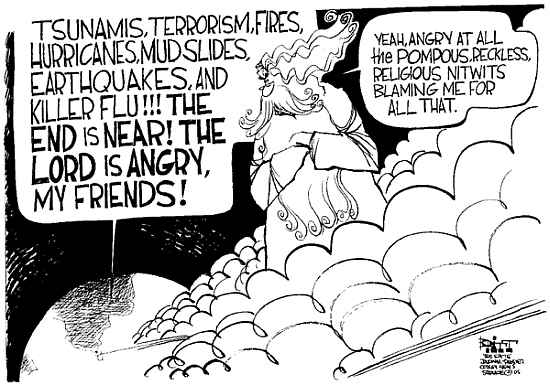
After I wrote my post about we human commit evil and then blame God for it, I found this image online. I laughed because it’s true. If God is angry at us, He is angry because we Christians keep blaming Him for everything that goes wrong in the world.

blaming God

Affiliate Disclosure: As an Amazon Associate I earn from qualifying purchases. Thank you for supporting my work in this way!

God is Redeeming Theology Bible & Theology Topics: blaming God, Discipleship, humor, laugh, violence of God

Advertisement

Did God Drown the Egyptian Army?

By Jeremy Myers
59 Comments

Did God Drown the Egyptian Army?

The following post contains a proposal about how to understand the violence of God in drowning the Egyptian army. I am publishing it for your input and feedback. I think that maybe what I have presented is a bit of a stretch, but if I am going to maintain some bit of sense of the inerrancy of this text, I can see no other way of reading about the drowning of the Egyptian army in Exodus 14 through the lens of Jesus Christ dying on the cross for His enemies.

In other words, the question I am trying to answer in this post is this: “Why would Jesus die for His enemies on the cross, but God drowns the enemies of Israel in the Red Sea?” Doesn’t something seem “wrong” in that picture? It does to me… This is my attempt to provide a solution…

Please provide your input in the comment section below….

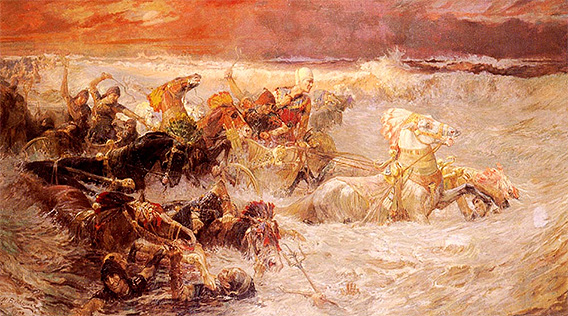
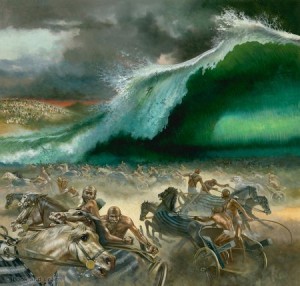
drowning Egyptian Army in Red Sea


One almost feels bad for Pharaoh.

After experiencing the crushing humiliation of the ten plagues which culminated in the anguishing loss of his firstborn son, Pharaoh damages the economy and productivity of Egypt by finally allowing the Israelites to leave Egypt, only to change his mind and chase after them in hot pursuit, which leads to the decimation of his army in the Red Sea.

If there is any lesson at all in the sad tale of Pharaoh in Exodus 1–14, it is that pride goes before destruction, and a haughty spirit before a fall (Proverbs 16:18).

Nevertheless, it seems from various clues in Exodus and other texts in Scripture dealing with the Israelite exodus from Egypt that it was never God’s intention to break Pharaoh or destroy Egypt. Instead, God wanted Pharaoh to recognize His sovereignty over all things.

If at any time during the ten plagues, Pharaoh had submitted to the will of God and let the Israelites go, the nation of Egypt would not have suffered the way it did. Although it is a popular Christian teaching to say that God sent the plagues with the express purpose of hardening Pharaoh’s heart so that God could destroy Pharaoh and the Egyptian army, this way of reading the exodus event is probably not the best and does not reflect the heart and love of Jesus (See Forster and Marston, God’s Strategy in Human History, 63-69).

Despite God’s warnings to Pharaoh and repeated signs that God wanted Pharaoh to let the Israelites go, Pharaoh continued to disregard God’s warnings and rush headlong toward his own destruction.

This is not only seen in the events of the ten plagues, but also when Pharaoh’s army drowned in the Red Sea.

The Drowning of Pharaoh’s Army in the Red Sea

There is something quite strange about the drowning of Pharaoh’s army which needs to be pointed out as we seek to understand the violent descriptions of God in the Old Testament in light of Jesus Christ.

While few would consider the drowning of Pharaoh’s army one of the more violent actions of God in the Bible—for didn’t Pharaoh bring this destruction upon himself?—there are a couple things in the text which helps us understand God’s involvement in human violence.

God’s Power over Chaos

First, it is important to remember that from an Old Testament Hebrew perspective, the forces of rebellion and chaos arrayed against God were often identified with the sea, and especially with the storms and waves that often rage across the sea. This concept was considered in previous posts as part of the discussion of the flood.

So once again, just as the ten plagues put on display the power by God over the impotence of the various Egyptian deities, so also, the crossing of the Israelites through the waters of the Red Sea showed that God even had dominion and power over the threats of chaos, storms, and destruction that were identified with the sea.

The parting of the Red Sea is not just a miracle to give to the Israelites a path through the waters of death and destruction, but is primarily intended to show the Israelites that not even the raging gods of chaos and destruction can overcome God’s hand of protection over the Israelites.

However, this does not mean that God’s hand of protection is without limits.

The Limits to God’s Control

The entrance of the Egyptian army into the path through the Red Sea demonstrates that if a group of people persists in rebelling against God, there comes a time when not even God can hold back the consequences of such rebellion.

Destructive decisions must eventually lead to destruction, even though God has pled with people to turn back and warned them about where their decisions will lead.

Pharaoh had been warned ten times already to let God’s people go, yet by sending his army after Israel, Pharaoh revealed that he still had not learned. He still could not let go. He still persisted in rebellion against God. The Red Sea crossing was not a trap set by God for Pharaoh, but was a form of deliverance for God’s people Israel, and Egypt, in their rebellion, tried to use God’s protection as a method by which to destroy.

As a result, destruction came upon Egypt instead.

God’s Attempt to Deliver Egypt

But it is critical to note that even prior to destruction falling upon the Egyptian army, God attempted to deliver and turn the army back so as to avoid the devastating consequences of their sin.

Red Sea Egyptian ArmyIn Exodus 14:24-25, after the Egyptian army had followed the Israelites into the Red Sea, the text says that God sought to turn the Egyptian army back by bringing trouble upon them. He caused the chariot wheels to fall off, and brought confusion among the ranks.
It appears that through such actions, God was trying to non-violently warn the Egyptian army that destruction was about to fall upon their heads, and they should turn back while they still had time. The Egyptian army received the message loud and clear, and in fact, did attempt to turn back. Exodus 14:25 says that they sought to flee from the face of Israel. They stopped pursuing Israel through the Red Sea and turned back toward the shore from which they had come.

Yet the text takes a troubling turn at this point. One would think that if God was bringing troubles upon the Egyptian army so that they would turn back, that once they did turn back He would let them escape the Red Sea and live. The point was to deliver Israel; not destroy Egypt. And once the Egyptian army turned back, as the text says they did, what reason could God have for drowning the Egyptian army?

And yet that seems to be what occurs in Exodus 14:26. Just as the Egyptians were seeking to flee from the sea (cf. Exodus 14:27), the text says that God instructed Moses to stretch out his hand over the waters so that they might collapse back down upon the army. And so all the horses and men of Pharaoh’s army drowned beneath the waves (Exodus 14:30).

This confusing and somewhat contradictory series of events seems to indicate something going on behind the scenes, which is not fully evident in the text itself.

Behind the Scenes of the Drowning of the Egyptian Army

It seems that while God’s protection was upon Israel, this protection did not extend to the Egyptian army because of their continued refusal to heed God’s warnings and submit to God’s sovereignty.

As such, the Egyptians were in rebellion against God and had departed from God’s hand of protection. Through the use of the pillar of cloud and fire and by causing confusion among the army ranks when the chariot wheels fell off, God continued to try to keep the army out of the danger of drowning in the Red Sea.

But once Israel had passed fully through the Red Sea, the forces of chaos and destruction could no longer be held back, and they swept away the Egyptian army into death.

But What About God’s Command to Moses in Exodus 14:26?

The command of God to Moses in Exodus 14:26 to allow the waters to fall back upon the heads of the Egyptians can be understood as God taking the blame for that which He did not prevent.

Though God repeatedly warned the Egyptians about their rebellion and tried to get the Egyptians to turn back from the Red Sea crossing, they responded too late and destruction fell upon them, just as it had in the tenth plague.

In Exodus 14:26-31, God takes the blame for this event and bears responsibility for it because it is something that happened on His watch and seemingly by the hand of His prophet, Moses. But really, the fault lies with the Egyptians, and specifically with Pharaoh, who consistently and rebelliously walked in the way of destruction.

“Having cast off every God-given opportunity to repent, Egypt under Pharaoh succumbed fully to the destroyer’s jurisdiction” (Campbell, Light through the Darkness, 72).

God’s Involvement in Drowning the Egyptian Army

God’s action in the miraculous Red Sea crossing was not in drowning the Egyptian army, but in holding back the waters for Israel as they passed through on dry land.

God’s actions were for deliverance and protection first from the invading army and second from the drowning waters. Though God did not desire that the Egyptian army be killed, their refusal to repent and refusal to abide by their promise to let Israel go meant that they had departed from God’s hand of protection.

So once the Egyptian army stepped foot into the Red Sea, God was not able to hold back the waters any longer. Due to their sin and rebellion, the Egyptian army was no longer under God’s jurisdiction, but was under that of the destroyer.

The waves of chaos and the forces of the sea swept over the Egyptian army and carried them down into death. The destroyer destroyed the Egyptian army; not God.

What are your thoughts on the drowning of the Egyptian army in Exodus 14? Did God really do it? If so, how do you reconcile the enemy-loving, self-sacrificing Jesus with the enemy-drowning, vengeful God of Exodus 14? 

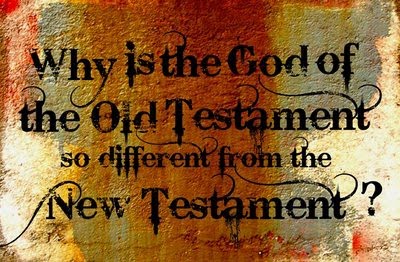
God of the Old Testament and JesusHow can a God who says "Love your enemies" (Matthew 5:44) be the same God who instructs His people in the Old Testament to kill their enemies?

These are the sorts of questions we discuss and (try to) answer in my online discipleship group. Members of the group can also take ALL of my online courses (Valued at over $1000) at no charge. Learn more here: Join the RedeemingGod.com Discipleship Group I can't wait to hear what you have to say, and how we can help you better understand God and learn to live like Him in this world!

Affiliate Disclosure: As an Amazon Associate I earn from qualifying purchases. Thank you for supporting my work in this way!

God is Redeeming Theology Bible & Theology Topics: Egyptian army, Exodus 14, Theology of God, violence of God, When God Pled Guilty

Advertisement

Why Atheists are the True Worshipers of God … (and a Call for Christian Atheists)

By Jeremy Myers
58 Comments

Why Atheists are the True Worshipers of God … (and a Call for Christian Atheists)

Atheists are right about God being wrongPeople often assume that we must determine whether or not God exists before we can raise the question of what this God is like.


In other words, why bother with the question of the nature, attributes, and characteristics of God until and unless we first determine the existence of God?

But this exactly what we must do. The question of the existence of God must be secondary to the question of the nature and attributes of God.

Why?

Well, for one reason, how can a person look for God if they don’t know what God looks like? If a person doesn’t know what to look for in God, they cannot very well look for God.

Furthermore, if we begin with the question of the existence of God without first seeking to understand what this God would be like (if he existed), we run the danger of looking for a God who does not actually exist.

And in fact, this is what I think has happened to most atheists.

God-Worshiping Atheists

Many atheists, I believe, have rightly declared their non-belief in a god that truly does not exist.

They have gone looking for a god that does not exist, and, having failed to find him (and how could they?), have declared that god does not exist. Christians take offense to this, and come up with all sorts of arguments for the existence of God, but fail to recognize that they too are arguing (in many cases) for the existence of a god that does not actually exist.

In such cases, it is the atheists who are the true worshipers of the true God, for they have recognized the non-existence of the non-god.

The Christians who seek to defend the existence of the god who is not God are the idolaters, for if they are seeking to call people to believe in a god who is not God, they are calling people to believe in an idol. In such a case, the rejection of this false god by the atheist is an act of pure worship.

Let me get real concrete and specific.

The vast majority of atheists I know today have rejected a god which is believed in by the majority of Christians, namely, a god who hates people of other religion, hates homosexuals, hates democrats, and hates “sinners.” This god of popular Christianity commanded Israel to commit acts of genocide, drowned millions of people in a flood because they sinned too much, and is planning to send the vast majority of the people of this world to an everlasting torment in flames and boiling lava.

Since the God which Jesus revealed to us is nothing like this sort of violent, blood-thirsty, people-torturing god, the atheistic rejection of such a god is an act of true worship of the God revealed in Jesus Christ.

If God is not like what we have been taught, then when we declare, “God does not exist,” we are not denying the God who does truly exist, but the god who is nothing more than a figment of human imagination, philosophical speculation, sociological superstition, and religious wish-fulfillment.

To deny a god who does not exist is to say nothing about the God who does.

When atheists deny a god who does not exist, this is an act of pure worship to the God who does.

A Call for Christian Atheists

So this bring us back to the idea I began with: Before we can discuss whether or not God exists, it might be best to discuss what sort of God we are looking for.

I propose we invite people to look for the God revealed in Jesus Christ, for this is a God who not only exists, but this is a God who can be found.

I believe that if those people who have rightly denied the existence of a god who does not exist were properly introduced to the God who does, they would no longer deny the existence of God.

In my experience, it seems that the vast majority of atheists have not rejected the God revealed in Jesus Christ, but the false god of popular, power-based, political religion.

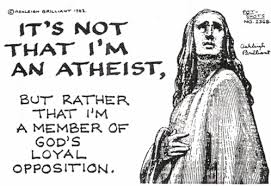
I reject and deny the existence of that god too … Does that make me a Christian atheist?

So Christians, let us follow our atheist friends in denying the existence of this false god of power, money, bloodshed, and violence, and instead call people to believe in the enemy-loving, all-forgiving God who is found in Jesus Christ dying on the cross.

Only once we present God as what He is like in Jesus Christ can we expect people to “find God” as He truly is, because the God who looks like Jesus is the only God who can be found.

Affiliate Disclosure: As an Amazon Associate I earn from qualifying purchases. Thank you for supporting my work in this way!

God is Redeeming Theology Bible & Theology Topics: atheists, existence of God, Jesus, Theology of God, violence of God

Advertisement

4 Shocking Reasons the Bible is Unique (Reason 4)

By Jeremy Myers
15 Comments

4 Shocking Reasons the Bible is Unique (Reason 4)

humans are violentWe are looking at 4 reasons the Bible is unique. Here is a brief summary of where we have been so far:

  1. The Bible is unique because it reveals mimetic rivalry and the scapegoat mechanism.
  2. The Bible is unique because it reveals how Jesus fulfills not just Scripture, but all religious writings
  3. The Bible is unique because it is the most violent religious text in the world

This leads us to the fourth reason the Bible is unique:

4. The Bible is unique because it is uniquely human.

Yes, every book in the world is a human book, but the Bible is a uniquely human book. Let me explain what I mean.

Usually when theologians say that the Bible is a human book, they mean that the Bible has human authors who use human words to discuss human ideas to human readers with human ways of thinking. When speaking this way about Scripture, most theologians are about to say that as a result of the Bible being a human book, it should not surprise us to discover that the Bible has errors.

I intend to make no such claim.

I do, however, agree that the Bible is a human book.

It is not that the Bible is in error. No, quite to the contrary, the Bible accurately reveals to us what is in the heart of man. God knows what is in the heart of men (Jer 17:10; 1 Cor 2:11), and He reveals it to us through Scripture. It is my conviction that Scripture does not so much reveal God to us as it reveals us to us. Scripture is a mirror which God puts up to our own hearts to reveal what is in man (Jas 1:23).

And what does Scripture reveal? It reveals that evil is in our human hearts. “It mirrors our best and worst possible selves” (Stark, The Human Faces of God, 218).

Humans Love to Blame God for our Evil

But more than that, Scripture reveals that when humans act upon the evil that is in our hearts, we like to blame God for our actions.

blaming god for violeneWhen we are violent, we make God the scapegoat for our violence. We learned this practice from the father and mother of humanity, Adam and Eve. After they ate the forbidden fruit in the Garden of Eden, Adam blamed Eve, and Eve blamed the serpent, but both inferred blame upon God. In blaming Eve, Adam said “the woman whom You gave to be with me, she gave me of the tree, and I ate” (Gen 3:12). Adam implies that if God had not given the woman to him, Adam never would have sinned. It was God’s fault. Eve’s attempt to blame God is not so obvious, but in blaming the serpent, it seems that she implies that if the serpent had not been in God’s Garden (for didn’t God create all the animals?), or if God had given to Eve the same instructions He had given to Adam (for didn’t God only give His instructions about the forbidden fruit to Adam?) Eve would not have been deceived.

Adam and Eve’s descendants learn the blame game well. Cain becomes angry when God accepts Abel’s sacrifice rather than his own (Gen 4:5), and after he kills Abel, claims that it is not he who is supposed to take care of Abel, that he is not his brother’s keeper (Gen 4:9). The implication once again is that if God wanted to protect Abel, God should have done so. Following this example, after Lamech killed a man for wounding him, Lamech says that he had more right to commit murder than Cain did, and therefore, God shouldn’t punish him, but should protect and avenge him (Gen 4:23-24).

This sort of pattern continues throughout the entire Bible, even if the human tendency to blame God is not always so evident.

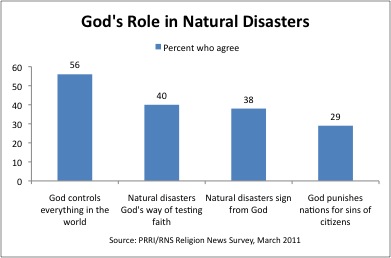
This tendency to blame God continues all the way up into our own day as well. When bad things happen to us, we say, “Why is God doing this to me?” When we observe evil occurring elsewhere in the world, we wonder, “Why isn’t God stopping that evil?” When natural disasters like floods, earthquakes, and hurricanes come upon neighborhoods, towns, cities, and countries so that homes are destroyed and lives are taken, we call these horrible events “acts of God.” When people commit crimes of lust or passion against others, they often explain their actions by saying, “God made me this way. He gave me these desires. I cannot help myself.”

History reveals that humans love to blame God for the evil that is in their own hearts.

This tendency is laid bare in nearly every violent event in the Bible, which is one reason why the Bible can be said to be inspired by God. The Bible reveals to humans what we are really like. In this way, the text is also inerrant. Much of the Hebrews Bible inerrantly records not what God has done for mankind, but what mankind has tried to do for God using the weapons and ways of the world. These “failed attempts to act on behalf of God” (Stark, The Human Faces of God, 232) were done with evil in our hearts and the name of God on our lips, and thus reveal to us not so much of what is in the heart of God, but what is in the heart of men.

In this way, we can say that the Hebrew Scriptures are more of a revelation about man than a revelation about God. Though we have often thought that the Bible reveals God to us, it more accurately reveals man to us. 

The Old Testament is not primarily a sourcebook for “Theology Proper,” the study of God, but is primarily a sourcebook for “Anthropology,” the study of man. The Bible reveals to man what is in the heart of man more than it reveals to man what is in the heart of God. Certainly, there is revelation about God in the Old Testament—and this is especially true once we get to the New Testament where Jesus perfectly reveals God to us—but for the most part, the Old Testament contains inspired and inerrant records of what God wants us to know about ourselves.

What does the Old Testament reveal?

The Bible reveals that we are sick, twisted, evil, and hell-bent toward violence. 

But more than that, it reveals that when we lash out in violence and bloodshed toward others, we love nothing more than to blame God for this violence. We kill others and say, “God told me to.” We murder others and say, “It’s because they were evil and God wanted them dead.” When natural disasters occur, we shrug our shoulders and say, “If they hadn’t sinned so much, God wouldn’t have killed them.” 

blaming God for violence

This is what we find over and over again within the pages of the Hebrew Scriptures, and which, if we are honest, we find in our own hearts as well. God is not violent; we are. But when we act upon the violence in our hearts, we make ourselves feel better by blaming God for it. These texts “remind us of the kind of monstrous people we always have the potential to become in the name of some land, some ideology, or some god” (Stark, The Human Faces of God, 232).

This is what the Old Testament texts reveal to us, and it is this perspective that Jesus affirms over and over through His own life and ministry. 

Jesus not only reveals to humanity once and for all the depth of depravity that is within the hearts of men, but in Jesus, we finally see what it means to be truly human, and therefore, truly divine. While it is true that Jesus reveals God to us, we must also recognize that before Jesus can reveal God to us, we must allow Him to reveal us to us. In this way, by the most shocking of theological twists, we learn what God is truly like only after we have learned what a human is truly supposed to be. And both are revealed in Jesus Christ. 

Affiliate Disclosure: As an Amazon Associate I earn from qualifying purchases. Thank you for supporting my work in this way!

God is Redeeming Theology Bible & Theology Topics: anthroplogy, bible, inspiration of Scripture, revelation, Theology of God, Theology of Man, Theology of the Bible, violence of Scripture, When God Pled Guilty

Advertisement

  • « Previous Page
  • 1
  • …
  • 50
  • 51
  • 52
  • 53
  • 54
  • …
  • 82
  • Next Page »

My New Book is Out!

Get your copy on Amazon today!
Learn about the gospel and how to share it

Take my new course:

The Gospel According to Scripture
Best Books Every Christian Should Read
Study Scripture with me
Subscribe to my Podcast on iTunes
Subscribe to my Podcast on Amazon

Do you like my blog?
Try one of my books:

Click the image below to see what books are available.

Books by Jeremy Myers

My New Book is Out!

Get your copy on Amazon today!

Theological Study Archives

  • Theology – General
  • Theology Introduction
  • Theology of the Bible
  • Theology of God
  • Theology of Man
  • Theology of Sin
  • Theology of Jesus
  • Theology of Salvation
  • Theology of the Holy Spirit
  • Theology of the Church
  • Theology of Angels
  • Theology of the End Times
  • Theology Q&A

Bible Study Archives

  • Bible Studies on Genesis
  • Bible Studies on Esther
  • Bible Studies on Psalms
  • Bible Studies on Jonah
  • Bible Studies on Matthew
  • Bible Studies on Luke
  • Bible Studies on Romans
  • Bible Studies on Ephesians
  • Miscellaneous Bible Studies

Advertise or Donate

  • Advertise on RedeemingGod.com
  • Donate to Jeremy Myers

Search (and you Shall Find)

Get Books by Jeremy Myers

Books by Jeremy Myers

Schedule Jeremy for an interview

Click here to Contact Me!

Follow me on X

© 2026 Redeeming God · All Rights Reserved · Powered by Knownhost and the Genesis Framework