Redeeming God

Liberating you from bad ideas about God

Join the discipleship group
  • Join Us!
  • Scripture
  • Theology
  • My Books
  • About
  • Discipleship
  • Courses
    • What is Hell?
    • Skeleton Church
    • The Gospel According to Scripture
    • The Gospel Dictionary
    • The Re-Justification of God
    • What is Prayer?
    • Adventures in Fishing for Men
    • What are the Spiritual Gifts?
    • How to Study the Bible
    • Courses FAQ
  • Forum
    • Introduce Yourself
    • Old Testament
    • New Testament
    • Theology Questions
    • Life & Ministry

CHRIST and the Six Principles of Non-Violence

By Jeremy Myers
16 Comments

CHRIST and the Six Principles of Non-Violence

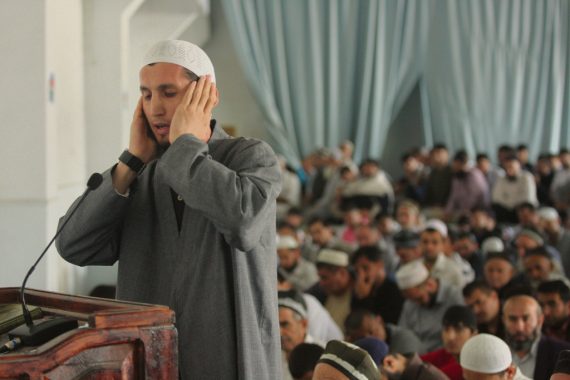
Jumah prayerIt was Friday afternoon, around 12:30. The Muslim Friday Jumah prayer was supposed to begin, and 107 Muslims had gathered. But as they were washing their feet and faces, and laying out their prayer rugs, the authorities called me on the phone and told me to cancel the Jumah prayer.

I am a white Christian pastor. I work in a prison as a chaplain.

But due to a looming security concern, I had no other choice, and went and informed the gathering Muslims that Jumah had been canceled for that day.

The seething anger directed my way was palpable. All 107 Muslims stood up, glared at me, and started to gather around. I sensed that how I responded in the next few seconds would determine whether I lived or died that day.

โ€œYou canโ€™t cancel the Jumah prayer,โ€ said the Imam of the group. โ€œItโ€™s mandatory. Itโ€™s required.โ€

โ€œYes, I know,โ€ I calmly responded. โ€œBut there is a security concern, and until itโ€™s resolved, everybody is required to return to their housing units.โ€ In a prison, security takes precedence even over religion, but even still, nobody likes to have their religious service cancelled.

โ€œSo what are we supposed to do, Chaplain?โ€ asked the Imam. โ€œAllah demands that we pray, but you are demanding we not pray. Who do you think we should obey?โ€

The crowd of Muslims pressed in closer to hear how I would respond. My mind raced, and I knew that the security concern could quickly escalate into a security crisis (and possibly a riot) depending on the next words out of my mouth.

It is very difficult to practice nonviolence in a system that is inherently and purposefully built upon the principles of violence. The central principal of violence is that you get what you want by having a bigger stick. You may not always use the stick; sometimes having it is enough. This idea was immortalized in Teddy Rooseveltโ€™s famous explanation of his foreign policy: โ€œSpeak softly, and carry a big stick.โ€ As long as your stick is bigger than your enemyโ€™s, this should be enough to deter him from war.

The prison system, in which I work, is founded on this principal. By their very nature, prisons take people who have engaged in various forms of violence and put them in a situation where they have very few sticks at their disposal, while all the guards and prison staff have much larger sticks. The big stick principal is what keeps the prison relatively safe and secure.

But the big sticks are not what you think. Despite the common perception, most prison staff in the west no longer carry weapons of any kind. Guards do not have guns or even billy clubs. They typically are โ€œarmedโ€ only with a radio. Outmanned and overpowered, the modern prison guard is trained to use their minds and their mouths to maintain peace inside a prison.

But it doesnโ€™t always work. And when it doesnโ€™t, riots break out, people are killed, and yes, this is when the guns are brought in. Though even then, only non-lethal munitions are used.

Working in the prison system as I do, I have found a โ€œweaponโ€ that is even more powerful than the radio. And it is the constant โ€œradio connectionโ€ I have with God.

So in that moment, as the Muslims angrily waited for my answer, I quickly asked God for wisdom on what to say. And He showed me.

โ€œYou should pray,โ€ I said.

There was a collective gasp by the Muslims.

I could sense their thoughts. Was the chaplain mocking them? Or was he actually telling prison inmates to disobey an order?

But I continued. โ€œNobody is demanding that you not pray. I invite you to pray. I want you to pray. I ask you to pray. I hope that you will pray. But today, because of the security concern, you are going to have to pray down in your housing units. Allah is powerful, is he not? He will hear your prayers there just as well as he will hear them in this place. So pray to Allah that this situation would be resolved quickly and peacefully. Then maybe we can get you back up here to the chapel a little later this afternoon for your communal Jumah prayer.โ€

They started at me, still trying to decide how to respond.

I waited.

Finally, the Imam turned to the gathered Muslims and said, โ€œThe Chaplain is right. Allah can hear our prayers and work to resolve this situation quickly. We will return to our housing units.โ€

Later that afternoon, I was indeed able to make arrangements for the Muslims to return to the Chapel for their afternoon Jumah prayer. It was late, but at least it was done. The Muslims praised Allah for hearing and answering their prayers, and I praised Jesus for answering mine.
non-violence and peaceDuring my years of working as a prison chaplain, I have found six principles that help me navigate the tricky and treacherous waters of practicing nonviolence in a system built on violence. The six principles form an acrostic for โ€œCHRISTโ€ because they are founded upon the teachings and example of Jesus Christ.

Here are the six principles, with a brief explanation of each.

Creativity.

Our world trains us that when we are faced with violence, the best response is greater violence. We use violence to fight violence. But violence always and only leads to more violence, so those who would practice non-violence must start to find alternative, creative solutions out of violent situations.

This is easier said than done, however, and so our attempts at creative responses must be bathed in prayer for God, the Creator, to guide us into creative non-violent responses as well. There is no โ€œone size fits allโ€ response to violence, for each situation is different and requires a different response. So creativity is required.

Honesty.

non-violent resistanceIt takes two to tango. It also takes two to fight. And have you ever noticed that in nearly every violent engagement, both sides think the other one โ€œstarted itโ€? Even in the case of terrorists flying planes into skyscrapers, they thought that they were righteously responding to the unjust treatment of their people by the United States. Even Hitler believed he was responding to the unjust treatment of Germany after their losses in World War I.

So in any sort of violent engagement, we must be brutally honest with how we ourselves contributed to the problem. We must not and cannot place all the blame on the other person, for this will only cause greater problems.

Realism.

Letโ€™s be realistic: non-violence doesnโ€™t always end violence. We live in an evil world, and sometimes, evil wins. So we must not think that non-violence always โ€œworksโ€ and is the magic cure-all for everything that ails the world. It isnโ€™t. It doesnโ€™t always work. In fact, maybe we could say that it rarely works.

So why practice non-violence? Because even if non-violence rarely works, this is still better than violence, which never works. Violence always and only creates more violence. But sometimes, non-violence creates peace, and therefore, it has a better success rate. But we must be realistic and recognize that a non-violent response will not always bring an end to violence. It often wonโ€™t.

Jesus and non-violence

Incarnation.

If we want to practice non-violence, we must understand that we are incarnating Jesus to the world, just as He incarnated God to us. It is not we who are out there all on our own standing up for love, patience, forgiveness, and peace, but it is Jesus in us who is standing up for these things. Furthermore, a recognition that we are the incarnation of Jesus on earth encourages us to live as He lived and love as He loved.

Strength.

It is very easy to respond to violence with violence. People often talk about the courage and bravery of war, and indeed, it does take courage to charge onto the field of battle, not knowing if you will make it back off.

Similarly, it does indeed take courage and bravery to pull a knife or a gun on an assailant. However, it takes greater strength and courage to stand up against violence without violence. We must not think that non-violence is the weak way out. It is the bravest and strongest way out.

It is much harder to take the blows that fall on your back without retaliating than to lash out and trade blow for blow. Non-violence is not weakness or cowardice, but takes the greatest strength and courage.

Trust.

If God is non-violent, and calls us to practice non-violence as well, then we must trust God to work in us and through us, even though our minds, wills, and bodies scream out in protest at the ways of non-violence.

It is only when we trust in God to bring a solution to a bad situation that God will step in to do exactly that. And related to this, in light of the previous five principles, it important to know that even if we die while practicing non-violence, we can still trust God to use our death to create peace, just as He did in Jesus. A resolute trust in God reminds us that sometimes it is better to die than to kill.
Peace in Jesus Christ

Conclusion

Jesus modeled the way for us to live with non-violence toward others. Yes, we must resist evil wherever it is found, and we must stand up for righteousness and justice, but we must do so in the ways of Jesus, through non-violent resistance.

What methods and practices have you found which help you resist non-violently? Do you think that such forms of resistance can help solve the problems of violence that the world faces today? Why or why not? Which of the six CHRIST principles outlined above will be most challenging for you to practice? Let us know in the comment section below!

[Note: This blog post is part of the 2018 Blogging Carnival for Nonviolence. Go here to see the other posts.]

Affiliate Disclosure: As an Amazon Associate I earn from qualifying purchases. Thank you for supporting my work in this way!

God is Redeeming Life, Redeeming Theology, z Bible & Theology Topics: creativity, humility, incarnation, islam, Jesus Christ, non-violence, non-violent resistance, peace, violence, war

Advertisement

It’s not Personal; it’s Just War

By Jeremy Myers
11 Comments

It’s not Personal; it’s Just War

Have you ever heard someone say, “It’s not personal; it’s just business”? This statement is usually said in the context of one person destroying the livelihood of another person through a hostile corporate takeover, or pushing a company out of business, or some sort of other action which ruins that other person’s company or income stream.

Of course, the person who is losing their livelihood, income, or business nearly always takes this attack personally. It is impossible not to. Each person is intimately connected with what they do and how they earn their income and provide for themselves and their family. It is deeply โ€œpersonalโ€ when someone else tries to take that away.

Which brings me to the concept of โ€œJust War.โ€ Just War theory is the idea that some wars are good, right, holy, and just. When such wars are waged, the attacking army often views their actions as good and godly, so that many of those on the receiving end of these attacks should be pleased and happy about the bombs falling out of the sky and the bullets whizzing by their heads because they are being set free and liberated from some form of evil that had enslaved them.

In other words, some proponents of โ€œJust War theoryโ€ give the impression that as our armies march off to kill others in Godโ€™s name, we can be saying, โ€œItโ€™s not personal; itโ€™s Just War,โ€ and they expect people to say โ€œThank you!โ€ as bombs fall on their heads.

Yes, this is a caricature of the Just War position, but when you listen to advocates of Just War theory, this caricature is not too far off the mark. They see themselves as liberators and freedom fighters who use war to set others free.

just warLet us look briefly at Just War theory, and how it is defined. Following this, I will suggest an alternative method to accomplishing Godโ€™s will in this world.

Rules of Just War

The rules for Just War were first developed by Thomas Aquinas (c1225-74) and Francisco de Vitoria (c1483-1546) and are still referred to by Christians today. They are as follows:

-it must be fought by a legal recognized authority, eg, a government
-the cause of the war must be just
-the war must be fought with the intention to establish good or correct evil
-there must be a reasonable chance of success
-the war must be the last resort (after all diplomatic negotiations have been tried and failed)
-only sufficient force must be used and civilians must not be involved

Stated differently:

  1. A just war can only be waged as a last resort. All non-violent options must be exhausted before the use of force can be justified.
  2. A war is just only if it is waged by a legitimate authority. Even just causes cannot be served by actions taken by individuals or groups who do not constitute an authority sanctioned by whatever the society and outsiders to the society deem legitimate.
  3. A just war can only be fought to redress a wrong suffered. For example, self-defense against an armed attack is always considered to be a just cause (although the justice of the cause is not sufficient–see point #4). Further, a just war can only be fought with “right” intentions: the only permissible objective of a just war is to redress the injury.
  4. A war can only be just if it is fought with a reasonable chance of success. Deaths and injury incurred in a hopeless cause are not morally justifiable.
  5. The ultimate goal of a just war is to re-establish peace. More specifically, the peace established after the war must be preferable to the peace that would have prevailed if the war had not been fought.
  6. The violence used in the war must be proportional to the injury suffered. States are prohibited from using force not necessary to attain the limited objective of addressing the injury suffered.
  7. The weapons used in war must discriminate between combatants and non-combatants. Civilians are never permissible targets of war, and every effort must be taken to avoid killing civilians. The deaths of civilians are justified only if they are unavoidable victims of a deliberate attack on a military target.

The Primary Problem with Just War Theory

Just War theory initially seems like a good approach. After all, how else are we to stop evil and violence in this world?

But the truth is that when you talk to any group or government that is engaging in war, they ALL think that their cause is just and that their actions will right a wrong. I challenge you to find a war in human history where one of the sides in the war thought that their involvement in that war was evil and wrong, or that their cause was unjust.

When people and nations march off to war, everybody thinks their cause is righteous, that they are defending themselves against evil and tyranny, and that God is on their side. Go ask Muslim Jihadist, and he will tell you that the violence they engage in against others is holy, right, and just. Jihad, after all, is โ€œHoly War.โ€ Just War, Holy War, Jihad, theyโ€™re all the same thing. I wrote about this here: All War is Holy War.

The truth is that all wars are โ€œJust Warsโ€ โ€ฆ or none of them are.

And since we know that most wars are not โ€œJust Wars,โ€ this means that no war is a Just War. We just deceive ourselves into thinking that our war is just while โ€œtheirโ€ war is evil.

The only real difference between a โ€œJust Warโ€ and an evil war is that the people who engage in โ€œJust Warโ€ have come up with some excuses to justify their actions in the war. And since every group and government justifies their own, this means that every war is a โ€œJust Warโ€ from that groupโ€™s perspective.

To put it another way, we could say that โ€œA Just War is a war I engage in, while an evil war is one you engage in. All my wars are just, while all your wars are evil.โ€ But of course, our opponents in war think the same thing. They think their actions are just while ours are evil.

So you see? There is no such thing as a Just War; there are just wars that we justify in our own minds.

So โ€ฆ. Pacifism is the Answer?

No. Pacifism is not the answer either.

Both Pacifism and Just War are inherently self-defeating and impossible to practice.

pacfismThere is no such thing as a true pacifist. Pacifists want to do no harm, to engage in no violence, to kill nothing and hurt nothing. Many pacifists are vegetarians, or even vegans, because they do not want to participate in the killing of animals. And yet few pacifists have difficulty with taking antibiotic medicine or spraying their counter with Lysol to ward off germs and bacteria. But germs and bacteria are living microorganisms. So it is okay to kill them, but not larger organisms? At what point does killing become wrong?

How about bugs and insects? Almost all pacifists drive cars. When you drive a car, you will kill insects every single time. Your tires will run over ants and beetles, bees and butterflies will be crushed against your windshield. I once spent a few hours in the woods with a pacifist, and he was swatting mosquitos right along with the rest of us.

People say that Jesus was a pacifist, but it appears to me from Scripture that He ate lamb at the Passover, and fish on the shore of Galilee. People point out that the text doesnโ€™t actually say he ate meat. Fine. But He certainly caught it, killed it, cooked it, and served it. Several times in the Gospels, for example, He gives His disciples a miraculous catch of fish. So many, the boat threatened to sink. And He knew that these fish would be killed and eaten. And in John 21:9, after one of these miraculous catches, when the disciples reach shore, Jesus already has a fire going with fish cooking on the fire.

The point is that true and complete pacifism is inherently impossible to perfectly practice in this world.

So how do we stop evil?

In order to discover how best to respond to evil, let us look at the foundational motivation of both Just War Theory and Pacifism.

Proponents of Just War theory believe that we must stand up for what is right. We must stand up against evil. They are absolutely correct in this belief.

Proponents of Pacifism believe that violence is wrong; especially the violence that takes human life. They are absolutely correct in this belief.

But if we hold to Just War, then (as we have seen), there is no end to violence. Violence always and only begets more violence. Everybody thinks their war is just, and so a โ€œJust Warโ€ only leads to a retaliatory โ€œJust War.โ€ There is no end to this cycle.

Similarly, if we hold to Pacifism, then we will often let evil win because we fail to properly stand up to violence and evil, thereby allowing ourselves or others to get steamrolled by violence. People who are pacifists sometimes no nothing but sit there (or shout at) evil while it is occurring, when they should be taking an active stand against it.

just war vs pacifism

The Third Way

Thankfully, Just War and Pacifism are not the only two options. There is a third way, which is the way of Jesus, Martin Luther King Jr., Ghandi, and numerous others.

This third way approach to evil and violence takes the strengths of both Just War and Pacifism while avoiding the weaknesses and drawbacks. This โ€œThird Wayโ€ is called Non-Violent Resistance.

It stands up to evil wherever it is found, but with a commitment to doing so non-violently.

The difficulty with this approach is that since we live in a world that is bathed in violence, we have trouble seeing how a non-violent approach can stop the flood of violence. It is difficult to imagine how non-violent resistance can be effective in stopping the spread of evil and violence.

How, for example, would non-violent resistance have stopped Hitler? The truth is that I do not know. (Although part of the answer involves never waging World War I. Hitler was a product of Germanyโ€™s loss in World War I. So if World War I had never happened, then World War II would not have happened either. And when you look at the events which started World War I, it was a war that never should have been waged.)

The greatest difficulty with non-violent resistance, however, is that there are no formulas to follow or steps to carry out. The rules to violence are easy: If you are going to engage in violence, make sure your weapons and army are bigger than those of your enemy. There are no such rules with non-violent resistance. Each situation is unique, and requires a unique response.

Responding to Hitler non-violently requires a whole different set of actions than responding to a man on the street who wants to rob you and gunpoint.

Nevertheless, there are six principles I would like to suggest for all non-violent resistance.

The Six Principles of Non-Violent Resistance

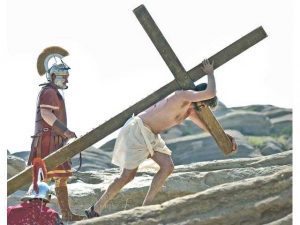
Jesus Christ Roman soldierThe six principles of non-violent resistance form an acrostic which spells CHRIST. Jesus Christ was the perfect example of how to respond non-violently to evil, and so it is appropriate that His title, Christ, helps guide us into our own way of non-violence.

Here are the six principles. Non-Violent resistance requires:

  • Creativity (bathed in prayer) in the face of evil.
  • Honesty about yourself, and how you contributed to the problem.
  • Realism about the world situation and the reality of evil. Violence will often โ€œwin.โ€
  • Incarnation of the love, patience, and forgiveness of God as seen in Jesus.
  • Strength and courage to stand while not retaliating.
  • Trust in God to work, and to recognize that sometimes it is better to die than kill.

Note that as we carry out these principles in our live, we are not seeking revolution, but revelation. The key to non-violent resistance is to reveal the character and nature of God as revealed in Jesus Christ.

the way to peaceWe change the world by showing it a different and better way to peace than the way it knows, which is the way of war and bloodshed.

The world has never imagined that there can be another way, but Jesus has revealed it, and now our task is to reveal it as well. We cannot force change upon the world, but we can change how we ourselves live in response to others, and when they see this, they might be inspired to live differently as well. As such, our lives are prophetic. Through our words and actions, we reveal who God is and how God wants us to live.

So do you see some evil situations in the world that need to be fixed? Do you see some violent actions that need to be stopped? Follow the way of Jesus in seeking to stand up to these situations and actions with truth, love, forgiveness, courage, and strength, and then see how God works to bring about peace through you.


This post was part of theย July 2018 Synchroblog on the topic of Just War and Pacifism. Here are links to others who contributed this month. Go read them all!

  • K. W. Leslie โ€“ย Just War: Vengeance Disguised as Righteousnessย 
  • What God May Really Be Like โ€“ย Is God a Warmonger or a Pacifist?
  • Layman Seeker โ€“ย Disarmed and Harmonious
  • Tim Nichols โ€“ย If you Love Sheep โ€ฆ
  • Scott Sloan โ€“ย Holy War and Manifest Destiny in Light of the Cross
  • Done With Religion โ€“ย For God and Country
  • Justin Steckbauer โ€“ย Should Christians Fight in a War?

Affiliate Disclosure: As an Amazon Associate I earn from qualifying purchases. Thank you for supporting my work in this way!

God is Redeeming Life, Redeeming Theology, z Bible & Theology Topics: just war, non-violence, non-violent resistance, pacifism, peace, synchroblog

Advertisement

LAST DAY to get $250 of teachings on prayer for $2.99

By Jeremy Myers
Leave a Comment

LAST DAY to get $250 of teachings on prayer for $2.99

What is PrayerMy book on prayer came out last week. Right now, you can get the eBook version for $2.99 on Amazon.

If you buy the book today (December 19, 2017) I will send you an additional $250 worth of teaching materials about prayer.

Bonus Materials on Prayer

Here is what you get:

  • 4.5 Hours of teaching about prayer (from my course on prayer)ย – Value: $197
  • 4 Hour audiobook recording of the book – Value $30
  • PDF version of the book – Value $10
  • Several Videos of me answering questions about prayer – Value $5
  • The ability to receive further instruction about prayer via email – Value $10

To get these additional resources about prayer, just follow these two steps:

  1. Buy the book at Amazon
  2. Send an email to pr********@**********od.com saying you bought the book.

That’s it! I will send you the bonus materials later this week.

Questions about Prayer

What People are Saying about the Book

There have already been some great reviews of the book. Here are a few:

I highly recommend this book to help anyone wanting to learn how to comfortably pray and actually enjoy prayer time. -Jim Maus

The book appears to be too simple but as you progress Jeremy covers many aspects of prayer in a way that is like a breath of fresh air. -Pete Nellmapius

I especially enjoyed section on praying before a meal, always felt something wrong about that in the back of my mind, good to see expressed on print for first time. -Jon Albeanu

It is a book that can change your life. J.D.Myers has the gift of making Jesus and his teachings very simple for every man in any christian denomination. -Nikos Varalis

This is a must-read! People make prayer out to be something mystical, hard-work, and even frustrating. After reading this book you might even stop using the word prayer. You might just tell people that you are “talking to my very good friend, God.” -Michael Wilson

If you wonder what praying means, if you wonder what praying should be like, or even if you wonder why on earth people should even pray, READ THIS. This is, so far, my favorite Jeremy Myers book. -B. Shuford

This is not your typical book on prayer. Jeremy has written something truly helpful that bypasses the religious mumbo jumbo we have attached to prayer and made it something simple, joyous and easy to do. -Wesley Rostoll

Each chapter has some great ideas that can put us on the path to exploring how praying can be more natural and less confusing or frustrating. -Mike Edwards

Always stressing God’s love for us, he shows us how we can have honest, meaningful conversations with God. While he doesn’t claim to have all the answers, with humor and compassion, Myers instructs and inspires. -Imani42

Have you ever wondered how Paul can tell us to pray without seizing? Do you think it is possible? I challenge you to read this book and find out for yourself how easy it is. -Wickus Hendriks

Don’t expect to pray and stay the same, as most of the time you are the answer to your prayer. -ThePilgrimm

J.D Myers presents a practical and very clear understanding of who God is ,who we are and how life looks in prayer. Easy to understand concepts with shackle breaking power this book is a must read. -David DeMille

You too can experience what these reviewers are talking about above. You too can gain freedom and confidence in your prayers, and also begin to see more answers to your prayers.

Get this book today for $2.99, and then receive $250 in additional teaching on prayer absolutely free.

Affiliate Disclosure: As an Amazon Associate I earn from qualifying purchases. Thank you for supporting my work in this way!

God is Redeeming Books, Redeeming Life Bible & Theology Topics: answers to prayer, Books I'm Writing, dangerous prayer, impossible prayers, Lord's Prayer, questions about prayer, unanswered prayer, What is prayer

Advertisement

My new book, What is Prayer?, is now available

By Jeremy Myers
Leave a Comment

My new book, What is Prayer?, is now available

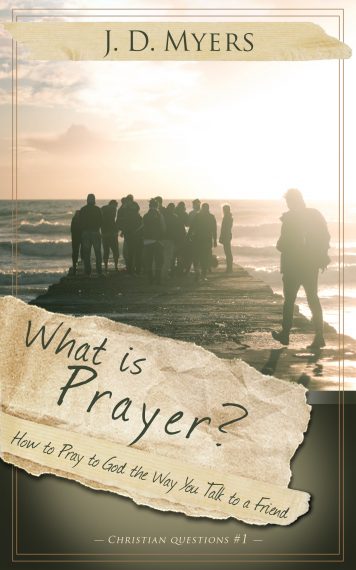
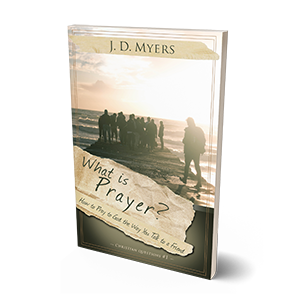
My new book is out! It is titled, What is Prayer? You can get the book on Amazon as an eBook or Paperback, or at Apple iBooks, Kobo, and Barnes & Noble. Here is the cover:

What is Prayer?

What is Prayer? seeks to answer some of the main questions that Christians have about prayer. It does this by providing one key suggestion about how to pray, and then answers the various questions you might have about prayer through the lens of this suggestion.

Here is the Table of Contents to What is Prayer?

Foreword by Mark Karris

1. How to Talk with God
2. What Should You Pray For?
3. How Did Jesus Pray?
4. How to Get Answers to Prayer
5. 10 Dangerous Prayers
6. Praying Powerful Prayers
7. What About Unanswered Prayers?
8. Other Questions About Prayer

The Foreword to the book by Mark Karris

I was blessed to get Mark Karris to write the foreword to What is Prayer? He has an EXCELLENT book on prayer coming out in January (I think). Here is what he wrote for the book:

I remember when I was new to the Christian faith. I was unable to wrap my head around the sacred practice of prayer. Others had God on speed-dial while Godโ€™s number always seemed to be changing for me. Over the years, doubts and questions kept piling up.

I didnโ€™t understand why we had to be so loud. Is God deaf? Does God consider us more spiritual if we are passionate and yell our prayers to Him? I didnโ€™t understand why we repeated Godโ€™s name over and over again as if we were going into a trance-like state. Or did God forget His name?

I didnโ€™t understand what posture I needed to take for God to accept my prayers. Would God hear me better if I were on my knees? Would God like my prayers more, or even be fonder of me as His child, if I raised my hands?

And why did friendsโ€™ prayers for God to give them parking spots at malls and convenience stores get answered, but not mine for my ailing and addicted mother? Is God cruelly selective in answering prayer?

I had tons of questions. Those haunting questions kept me stuck, stagnant, and stale in my prayer life. Where was J. D. Myersโ€™ book What is Prayer? when I needed it?

I consider it an incredible privilege and honor to write a few words in support of this superbly written and enlightening book. J. D. Myers tackles the complexity and conundrum of prayer with a pastoral and prophetic heart, a brilliant and wise mind, and a courageous spirit obviously in touch and in tune with both God and Godโ€™s people.

The good news is there is no conundrum in how to pray to Godโ€”at least not anymore. J. D. Myers sheds the religious and superstitious garb off of prayer and makes a simple, provocative, and liberating claim: Prayer is talking to God as you would talk to a friend.

I highly recommend this book not only to new Christians who want to learn how to pray but also to the experienced and inquisitive God-lover who still has many questions. Thank you, J. D., for such a gift to the Christian community!

Mark Karris
Author of Divine Echoes: Reconciling Prayer with theย Uncontrolling Love of God
MarkGregoryKarris.com

If you have questions about prayer, I think you will really enjoy the book. There are several reviews of the book already, and people really seem to appreciate what the book teaches them about prayer. Go here to read the reviews on Amazon to see if you might benefit from the book as well.

Affiliate Disclosure: As an Amazon Associate I earn from qualifying purchases. Thank you for supporting my work in this way!

God is Redeeming Books, Redeeming Life Bible & Theology Topics: Books I'm Writing, how to pray, prayer, What is prayer

Advertisement

What the Gospel says about Plants and Animals

By Jeremy Myers
5 Comments

What the Gospel says about Plants and Animals

Just as relationship with people were central to the original creation in the Garden of Eden and are central to all of Godโ€™s work in the world, so also, we must never forget that there could be no relationship in this world if there was no world to begin with.

People and the planet are intimately connected. So much so, that in the beginning, when God created the man and the women, one of the very first things He told them to do was to tend the earth and take care of the animals (Gen 1:28-29; 2:15).

We will be doing similar things in the new heavens and new earth as we continue to take care of Godโ€™s new creation.

This means that environmental concern and care for animals is part of living according to the gospel.
gospel environmentalism

Environment

As people who are called to take care of Godโ€™s earth, one area of concern in this regard will be the earthโ€™s environment.

Environmentalism is a Christian cause.

We do not need to worship creation has some have done, but instead manage and tend to creation as God has called us to do as an act of worship to Him.

Among other things, this will involve taking care of our natural resources such as the water, the air, the forests, and the minerals. It means working to keep the earth beautiful and clean. It means living in a way so that we protect this earth rather than pollute it. Recycling efforts, renewable energy, and restorative ecology are all ways that the gospel can be lived out in this world as we tend and keep that which God has created for our use.

Animals

Tending and caring for the animals of this earth is also one way we can live out the gospel.

caring for animalsAnimals were not put here just for our enjoyment or to be our slaves. They are in many ways our companions in life on earth. God made them and put them under our care.

Since the gospel is about all of life, and since the gospel invites us to live as though the new heavens and new earth were already here, then the gospel also invites us to live as if we never left the Garden of Eden.

In the Garden, Adam and Eve were instructed to tend the animals and provide for them. As those who continue this work on the earth, we too must care for the animals. We can make sure their habitats are protected, that they are given adequate food and resources to grow and reproduce, that they are not hunted and killed into extinction, and that they are not taken advantage of or overworked as we tame them and train them to work alongside us on earth.

Since all creation is groaning in eager expectation for the revealing of the sons of God (Rom 8:19-23), we can live right now in a way to alleviate some of that groaning and ease the pain that the human plunge into sin has caused.

When we work on this earth as the stewards and protectors of the plants and the animals, we are fulfilling a large part of our gospel calling and vocation.

The Gospel According to ScriptureWant to learn more about the gospel? Take my new course, "The Gospel According to Scripture."

The entire course is free for those who join my online Discipleship group here on RedeemingGod.com. I can't wait to see you inside the course!

Affiliate Disclosure: As an Amazon Associate I earn from qualifying purchases. Thank you for supporting my work in this way!

God is Redeeming Life Bible & Theology Topics: biblical living, creation, following Jesus, good news, gospel

Advertisement

  • « Previous Page
  • 1
  • 2
  • 3
  • 4
  • 5
  • …
  • 35
  • Next Page »

My New Book is Out!

Get your copy on Amazon today!
Learn about the gospel and how to share it

Take my new course:

The Gospel According to Scripture
Best Books Every Christian Should Read
Study Scripture with me
Subscribe to my Podcast on iTunes
Subscribe to my Podcast on Amazon

Do you like my blog?
Try one of my books:

Click the image below to see what books are available.

Books by Jeremy Myers

My New Book is Out!

Get your copy on Amazon today!

Theological Study Archives

  • Theology – General
  • Theology Introduction
  • Theology of the Bible
  • Theology of God
  • Theology of Man
  • Theology of Sin
  • Theology of Jesus
  • Theology of Salvation
  • Theology of the Holy Spirit
  • Theology of the Church
  • Theology of Angels
  • Theology of the End Times
  • Theology Q&A

Bible Study Archives

  • Bible Studies on Genesis
  • Bible Studies on Esther
  • Bible Studies on Psalms
  • Bible Studies on Jonah
  • Bible Studies on Matthew
  • Bible Studies on Luke
  • Bible Studies on Romans
  • Bible Studies on Ephesians
  • Miscellaneous Bible Studies

Advertise or Donate

  • Advertise on RedeemingGod.com
  • Donate to Jeremy Myers

Search (and you Shall Find)

Get Books by Jeremy Myers

Books by Jeremy Myers

Schedule Jeremy for an interview

Click here to Contact Me!

Follow me on X

© 2026 Redeeming God · All Rights Reserved · Powered by Knownhost and the Genesis Framework