Redeeming God

Liberating you from bad ideas about God

Join the discipleship group
  • Join Us!
  • Scripture
  • Theology
  • My Books
  • About
  • Discipleship
  • Courses
    • What is Hell?
    • Skeleton Church
    • The Gospel According to Scripture
    • The Gospel Dictionary
    • The Re-Justification of God
    • What is Prayer?
    • Adventures in Fishing for Men
    • What are the Spiritual Gifts?
    • How to Study the Bible
    • Courses FAQ
  • Forum
    • Introduce Yourself
    • Old Testament
    • New Testament
    • Theology Questions
    • Life & Ministry

When Was Jesus Born? What the Bible Says About the Date of Christmas

By JD Myers
Leave a Comment

When Was Jesus Born? What the Bible Says About the Date of Christmas

Every December, someone asks me, โ€œWhen was Jesus born?โ€ Most Christians already suspect that it was not on December 25. The Bible never gives us a date. Scholars cannot even agree on the year. But Luke and John left us a few clues about the time of year, and when we put those clues together with the feasts of Israel, the picture that emerges is far richer than a date on the calendar.

I should say up front that I hold this loosely. Years ago I preached a whole sermon on the date of Jesusโ€™ birth, and I later laughed at myself for thinking it would make us better Christians. Knowing the date will not make you more like Jesus. But I still find the clues fascinating, because they show how carefully God wove the birth of His Son into the story of His people. So let us look at what the Bible says about when Jesus was born.

Was Jesus Born on December 25?

Almost certainly not. The first clue is in Luke 2:8: โ€œNow there were in the same country shepherds living out in the fields, keeping watch over their flock by night.โ€

People who are familiar with shepherds in that part of the world know that shepherds do not keep their flocks out in the fields at night in the dead of winter. Sheep are out in the fields from roughly May to October. In winter, they are led down to the lowlands to shelter in caves. Even here in the United States, people rarely let sheep out of the barn in winter, because young sheep can freeze to death. The ranchers I have talked to agree that the shepherds of Luke 2 were most likely not out in the fields in December.

This does not mean the Bible is wrong. It means our dating is wrong. Jesus was born at some other time of year. (If you are wondering how December 25 became the traditional date, and whether that makes Christmas a pagan holiday, I answer that question in Is Christmas Pagan?)

What Zacharias Tells Us About When Jesus Was Born

We can narrow down the time of year further by looking at the father of John the Baptist. Luke tells us that Zacharias was a priest โ€œof the division of Abijahโ€ (Luke 1:5). The priests of Israel were divided into twenty-four divisions, and each division took its turn serving in the temple in Jerusalem. The division of Abijah was the eighth (1 Chr 24:10), and history tells us that it served in the month of June.

So Zacharias was in Jerusalem in June when he was chosen by lot to burn incense before the Lord. It was then that an angel appeared to him and announced that his wife Elizabeth would have a son, and that they should name him John (Luke 1:8-17). When his time of service was complete, Zacharias went home, and Elizabeth conceived in her old age (Luke 1:23-24).

If Elizabeth conceived in late June, then John was born about nine months later, in late March. And Luke tells us that Gabriel visited Mary in the sixth month of Elizabethโ€™s pregnancy (Luke 1:26, 36). Maryโ€™s pregnancy was six months behind Elizabethโ€™s. So if John was born in late March, then Jesus was born six months later, in late September.

Jesus and the Feasts of Israel

The Jewish feasts did not only look back to what God had done for His people in the past. They also looked forward to what God had promised to do in the future. Many Bible teachers point out that the spring feasts were fulfilled at the first coming of Jesus. He was crucified at Passover, when the Passover lambs were being slaughtered. He rose from the dead as โ€œthe firstfruits of those who have fallen asleepโ€ (1 Cor 15:20). And the Holy Spirit was poured out on the day of Pentecost (Acts 2). The fall feasts of Trumpets, Atonement, and Tabernacles are often seen as awaiting their full fulfillment when Jesus returns.

But some parts of these feasts were also foreshadowed at the birth of Jesus. Two of them stand out.

John and Passover

Passover usually falls in late March or early April on our calendars, which is right when John the Baptist would have been born. At Passover, Jewish families still set an empty place at the table, called the Seat of Elijah, because Malachi 4:5 promised that Elijah would come before the Messiah. Jesus said that Elijah did come, in the person of John (Matt 17:10-13). We do not know which day John was born, but it is interesting to think that he may have been born at Passover, as the Elijah who prepared the way for the Lord.

Jesus and the Feast of Tabernacles

Six months after Passover comes the Feast of Tabernacles, usually in late September or early October. And listen to how John describes the birth of Jesus: โ€œAnd the Word became flesh and dwelt among usโ€ (John 1:14). The Greek word for โ€œdweltโ€ is skฤ“noล, which means โ€œto pitch a tentโ€ or โ€œto tabernacle.โ€ Just as God dwelt in the tabernacle in the wilderness, in Jesus He came to tabernacle among His people again, this time in human flesh. If Jesus was born in late September, then His birth may well have taken place during the very feast that celebrates God dwelling with His people.

Why Was There No Room in the Inn?

This also helps explain one of the most familiar lines in the Christmas story. Mary โ€œlaid Him in a manger, because there was no room for them in the innโ€ (Luke 2:7). The Greek word translated โ€œinnโ€ is kataluma. It usually refers not to a hotel, but to the guest room of a house, where traveling relatives would stay.

But kataluma can also refer to a temporary tent or booth. In the Greek translation of the Old Testament, God says that He had been moving about in a kataluma, a temporary dwelling, rather than living in a house (2 Sam 7:6; 1 Chr 17:5). If Jesus was born during the Feast of Tabernacles, it makes sense that there was no room. Hundreds of thousands of pilgrims had come to Jerusalem and the surrounding towns to live in temporary booths for the feast, and Bethlehem is only a few miles away. Every guest room and every booth would have been packed with people.

So where was Jesus born? The text does not say, except that there was a manger, a feeding trough for animals. It could have been a nearby cave used to shelter animals, or the lower level of a house, where many families kept their animals at night. I explore this more in Was Jesus Born in a Barn?

God With Us

During the Feast of Tabernacles, Jewish fathers would sit with their children in their booths and tell them the story of the wilderness. They would remind them that even when Israel wandered for forty years, God did not abandon them. โ€œGod took care of us,โ€ they would say. โ€œGod was with us.โ€ And they would tell their children that even though they now lived under Roman rule, God would one day come to set them free and dwell with His people forever.

And while those fathers were telling stories of hope to their wide-eyed children, there in Bethlehem, the city of David, Jesus was born, the One whose name is Immanuel, โ€œGod with usโ€ (Matt 1:23).

So What About December 25?

If Jesus was born in late September, then He was conceived about nine months earlier. The median length of a human pregnancy is about 278 days. Count back 278 days from late September, and you land in late December. So while December 25 is probably not the day Jesus was born, it may be close to the day He was conceived in Mary by the Holy Spirit.

That date also falls near Hanukkah, the Festival of Lights. Hanukkah is not one of the feasts commanded in the Old Testament. It remembers the cleansing and rededication of the temple after the Maccabean revolt, when, according to tradition, one dayโ€™s worth of oil burned in the temple menorah for eight days. Yet the Gospel of John mentions Jesus going to Jerusalem for โ€œthe Feast of Dedication,โ€ which is another name for Hanukkah (John 10:22). And John begins his Gospel by calling Jesus the light that โ€œshines in the darknessโ€ (John 1:5) and โ€œthe true Light which gives light to every man coming into the worldโ€ (John 1:9). Jesus also called Himself โ€œthe light of the worldโ€ (John 8:12; 9:5).

Could it be that God sent His Son into the womb of Mary during the Festival of Lights, to bring light into a dark world? I cannot prove it. But I love the idea that Jesus took even a holiday that God never commanded and pointed it to Himself. I write more about this in Did Jesus Fulfill Hanukkah? and in an earlier post on the date of the birth of Jesus.

Does It Matter When Jesus Was Born?

Not in the way we might think. Your faith does not depend on knowing the day, and you are free to celebrate it on December 25 with all the lights, trees, gifts, and carols you want. But the question of when Jesus was born reminds us that His birth was not random. God wove it into the story of His people, so that the feasts which looked back to God dwelling with Israel in the wilderness also looked forward to the day when God would dwell with us in the flesh.

That is the message of Christmas. God did not stay far away. He came near, pitched His tent among us, and became one of us. If you want to think about what that means for how we live, you might enjoy 4 Subversive Truths from the Birth of Jesus.

Learn More About the Date of Jesusโ€™ Birth

Cover of Christmas Redemption by Jeremy Myers

If you want to go deeper, I walk through all of these clues in my short book, Christmas Redemption: Why Christians Should Celebrate a Pagan Holiday. It also covers Saturnalia, Christmas trees, and even Santa Claus, and shows how Jesus redeems all of it. Get Christmas Redemption on Amazon and enjoy celebrating the birth of Jesus this year.

And if you want to keep studying questions like this with other people who are tired of religion and hungry for the grace of God, join the RedeemingGod.com Discipleship group. Members get access to the online discipleship community, free eBooks, audio lessons, and my online Bible and theology courses.
Affiliate Disclosure: As an Amazon Associate I earn from qualifying purchases. Thank you for supporting my work in this way!

God is Redeeming Books, Redeeming Life, Redeeming Scripture Bible & Theology Topics: advent, birth of Jesus, Christmas, Christmas Redemption, December 25, hanukkah, incarnation, Luke 1, Luke 2, Theology of Jesus

Advertisement

Why did God wait thousands of years to send Jesus?

By Jeremy Myers
82 Comments

Why did God wait thousands of years to send Jesus?

I have been working my way through dozens of Bible and theology questions which people have submitted through that “ask a question” area in the sidebar. Here is one about why God delayed to send Jesus.

Why did God wait so long to send Jesus?

I have answered similar questions before regarding the apparent “delays” in God’s timetable. For example, we have previously considered the question, “Why did Jesus wait three days to rise from the dead?” and “Why is Jesus waiting so long before He comes again?” Obviously, those questions are different than this particular question, but the answers are similar, which is why I reference them here.

Why did God wait to send Jesus

So why did God wait to send Jesus?

As with many of the Bible and Theology questions I answer, I find it helpful to step back a little bit and get the big picture for this question.

The question is not just about why God waited so long to send Jesus, but about all the seeming delays in the redemptive plan of God. That is, why does God “wait” to do anything?

Why Does God delay in anything?

I mean, if we pray for something, and God knows He is going to give us what we prayed for, why does He sometimes make us wait weeks, months, or even years before granting the request?

There are, of course, a thousand possible answers to this question. Maybe God’s apparent delay had something to do with God’s perfect timing. Maybe God did immediately answer our prayer request, but Satan temporarily stopped us from receiving God’s answer (cf. Daniel 10:12-13). Maybe God was waiting for us to be an answer to our own prayer, and we were the ones who slowed Him down.

There are other possibilities as well, but these go to show that when it comes to delays in God’s timetable, there is really almost no way to know why God does what He does when He does it.

God’s Strange Order of Events

Here is a basic timetable of God’s major redemptive works in history, counting from the fall of Adam and Eve in the Garden.  Note that in between each major event, there are larger periods of relatively uneventful history. (The number of years listed below is based on the the most conservative estimates. Obviously, there are more liberal estimates which extend these periods of time out to tens of thousands of years.)

  1. The Fall of Adam and Eve
  2. Wait 2000 years
  3. The Call of Abraham
  4. Wait 500 years
  5. Giving the Law to Moses at Mt. Sinai
  6. Wait 1500 Years
  7. Ministry of Jesus
  8. Wait 2000+ Years
  9. (in the Future) The Second Coming of Jesus
  10. The New Heavens and New Earth

Obviously, God is not silent and is not inactive during these waiting periods, but this outline of events is simply to show that God’s plan of redemption does seem to occur in small steps spread out over long lengths of time.

Rather than that order of events, we often think it would have been nice for the order of events to follow this outline:

  1. The Fall of Adam and Eve
  2. Wait 20 minutes
  3. The Death and Resurrection of Jesus
  4. Eternal Bliss

Honestly, from a human perspective, this second order of evens would have saved a lot of horrible grief, bloodshed, death, sorrow, and sadness. Nobody would have ended up in hell. There never would have been wars, or famines, or diseases. Adam and Eve would have sinned, Jesus would have immediately shown up to fix it, and that would have been that.

No Flood. No Hitler. No Atomic bombs. No raping of little girls.

That sounds like a much better plan, does it not?

So why indeed was there a delay in God’s redemptive plan? Why did He wait so long to choose Abraham? Why did He wait so long to give His law? Why did God wait so long to send Jesus? Why is He waiting so long to send Jesus back?

Some Traditional Answers to Why God Waited Thousands of Years to Send Jesus

People have often wondered why God waited so long before sending Jesus. Here are three of the more common answers:

1. It only seems long to us

The first answer some provide is really a non-answer. It is one of those pat answers to difficult theological questions which really does nothing to answer the question. It is a Christian cliche: “God’s timing is not our timing.”

Those who use this first answer quote 2 Peter 3:8 which says that with God, a day is like a thousand years, and a thousands years is like a day. So in other words, though it seems like God took thousands of years to send Jesus, from His perspective, it only seemed like a couple days.

Peter’s point is valid in the context, but I don’t think we can say that just because God is not restricted by time, this means that God doesn’t comprehend time, or that God doesn’t care that we struggle with how long His plan takes. I know that this is not what people mean when they say this, but to many, that is how it comes across.

To me, here is how this answer sounds:

“Oh, life is hard and you are wondering why God is taking so long to answer your prayers and set things right? Well, God’s timing is not our timing.”

This is a Christian way of saying, “Life sucks; then you die. Deal with it.” In other words, “Shut up. Nobody cares. Not even God.”

God does care. He knows that although our lives are less than mere breaths before His infinite existence, the years of our life are often full of pain, hardship, trials, burdens, sickness, fear, and sorrow.

2. To teach humanity about the depth of our sin.

If Jesus had shown up 20 minutes after Adam and Eve sinned, we never would have understood the depth and breadth of our sinfulness. Nor would we have understood how desperately we need God. It could be argued that one reason Adam and Eve sinned is because they didn’t fully comprehend how horrible it would be to live life disconnected from God.

Due to the long period of time in which we have wallowed in our sin, we now know — do we ever! — how wicked, evil, and brutal people can be.

One great benefit to this way of viewing God’s delay is that it seems to be supported by Scripture. Over and over again in Scripture we see this cycle:

  1. Human development (e.g., the Law, the Land, Judges, Kings, Prophets, etc.)
  2. Great expectations for human utopia
  3. Greater evil than ever before

I like this explanation, except that it seems like a bit of overkill. Pun intended. Do we really need thousands of years of bloodshed, rape, murder, torture, war, famine, pestilence, and disease to tell us that sin is bad? I don’t know… maybe we do. After all, human history reveals that every so often, people think that humanity has progressed to the point that worldwide peace and prosperity is just around the corner, that human utopia is almost assured. Usually, not long after these rosy predictions of our future are made, humanity enters into one of the most violent and bloody eras of its history.

In fact, you can almost predict future events based on how rosy of a picture is being painted about that future. The rosier the picture, the bloodier the future. (This is one reason I am not a postmillennialist.)

3. To teach the angels about God’s redemptive purpose

This idea comes from 1 Peter 1:12 and a few other verses which seem to indicate that one reason God created humanity and is carrying out His redemptive plan is to teach something to the angels. Nobody really knows what God might be trying to teach the angels that they don’t already know, but apparently, the angels are learning from watching how God deals with rebellious humanity.

Some have even suggested that God’s plan of redemption may eventually include the angels as well! If so, the Bible says absolutely nothing about this …

Anyway, if God is teaching the angels something, then apparently, it takes a long time to teach them.

4. To wait until the time when the Gospel could spread the quickest

Sometimes, and specifically in connection to why Jesus came when He did, some people say it had something to do with the Roman empire. The Roman empire built roads and had a common tongue which allowed the message of the Gospel to spread more quickly and with greater ease than it could have at other times.

God sent Jesus

I suppose in theory, this is somewhat true, but if God was waiting until there was a common language and good lines of communication before sending Jesus, He could have picked no better time than right before humans decided to build the Tower of Babel. There was only one language at the time, and it seems their communication was so good, there was nothing they could not accomplish. That is partly why the text says that God scrambled human communication (Genesis 11:6).

Furthermore, if God was really waiting for the quickest and most worldwide method of communication, He should have waited for Twitter.

Ha! I’m kidding.

Kind of …

Look, when we say that God waited to send Jesus until there was a common tongue and a good road system, what we are also saying is that the only part of the world that God really cared about was the part under Roman rule (Most of Europe, Northern Africa, and Western Asia). The rest of the world did not have access to the Roman road system, nor did they speak the common language of the Roman empire. So are we saying then that God didn’t care about most of Africa, most of Asia, and all of North and South America?

That was why I was kind-of only half-joking when I mentioned Twitter. If God was waiting until the quickest form of communication was available to all the world, then He could have waited until a worldwide system of instantaneous communication was in place … a system much like Twitter.

So anyway, while I do think the Roman road system and common language helped the spread of the Gospel, I don’t think we can say that this was why Jesus came at the time and place that He did.

5. To fulfill prophecy

Then there is the explanation that Jesus came when He did because He had to fulfill prophecy.

There is some truth to this, especially depending on how you understand the prophecy of Daniel’s 70 Weeks (Daniel 9:24-27). It may be that Jesus had to come when He did to complete the prophecy given 490 years earlier.

Also, in relation to this, Paul writes that Jesus came “at the appointed time” (Galatians 4:4). Other New Testament authors say similar things.

While there is truth with this answer, it really doesn’t answer the question. All it does it move the question back. If Jesus came at that time to fulfill prophesy, then why did God prophecy that Jesus would come at that time? Why didn’t God move prophets to predict that Jesus would come a two thousand years earlier … or later? Why then? Why there?

(My! This post is getting long … Let’s see if I can wrap it up.)

6. To wait until human theological development had evolved to the point where we could understand Jesus

One final view is that God waited for so long because mankind had  to develop socially and spiritually enough in order to understand and receive the revelation of Jesus Christ.

This idea is based on the concept of progressive revelation, that God has slowly explained Himself and unfolded His plan and purposes for the world over time. The reason is that we could not understand and grasp it all at once, and so He has had to teach us bit by bit, one step at a time.

God's timing in sending JesusI am teaching my daughters math, and while I know Calculus, I cannot attempt to teach them everything I know about math on day one, from basic arithmetic all the way to calculus. Not only is there not enough time to do this, they would not comprehend most of it, but would instead get overwhelmed and as a result, would not even understand the most basic concepts in math.

So also, this theory goes, God had to slowly teach humanity about Himself and His ways, so that over time, we would grow and develop into the people He wanted us to become.

Progressive revelation is a definite fact of Scripture, but I am a bit wary of this idea, for it seems to fall prey to what C. S. Lewis called “chronological snobbery.” Lewis often criticized other scholars for thinking that just because they lived in 1960, they knew more about how the world worked and what God was like than people who lived in say, 60 AD. Just because we are further along in years, C. S. Lewis argued, does not mean we necessarily know more. We may, in fact, know less.

But, for the most part, I think this view has some merit, and does help explain what Jesus might have meant in John 16:12 where He said He had much more to teach, but could not do so because they were not ready to hear it. Verses like this are everywhere in Scripture (cf. Matt 13:10-13), which seems to indicate that God only provides further revelation after we have incorporated His previous revelation into our thinking and practice (for the most part).

What is my view about why God waited thousands of years to send Jesus?

What is my view on all of this? I hold some strange mixture of all of the above. 

Essentially, I believe that whatever we say about God’s timing in sending Jesus is similar to what we should say about God’s timing in doing anything. There are a variety of answers at any given time, and any action of God can have a variety of explanations.

I know, I know. Such an answer is not neat, pretty, and tidy. But then, life is not neat, pretty, and tidy, and neither is theology. Theology, like life, is a big mess of guesswork and scrambled answers.

While I believe that faith in God includes faith in God’s timing, I am not always sure we can understand God’s timing …

How about you? Which of the answers above is most helpful to you? Which is least helpful? What did I leave out? Why do you think God waited so long to send Jesus for the redemption of mankind?

PS., This post turned out be so LONG (2500 words!!!), I will post something nice and short tomorrow (for my and yours).

Affiliate Disclosure: As an Amazon Associate I earn from qualifying purchases. Thank you for supporting my work in this way!

God is Redeeming Theology Bible & Theology Topics: 1 Peter 1:12, advent, Bible and Theology Questions, Daniel 9:24-27, Galatians 4:4, gods plan, Gods timing, Jesus, Theology of God, Theology of Jesus, Theology of Salvation

Advertisement

It Sounds like Christmas

By Jeremy Myers
2 Comments

It Sounds like Christmas

The sounds of Christmas, I believe, are a little bit of heaven on earth.

My wife, reading Christmas stories to our three daughters.

My girls, singing and dancing to Christmas carols.

Our cats, fighting with each other because theyโ€™re tired of being cooped up inside.

The beep of my coffeemaker when a fresh pot has finished brewing.

sounds like ChristmasThe faint whisper of snow falling on the trees when I go outside to see if our pipes have frozen.
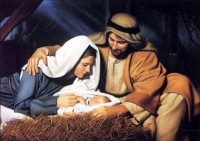
The muffled whoosh of the vacuum as it cleans up powdered sugar after the girls made โ€œgoose poopโ€ cookies (Russian Tea Cakes).

Christmas music playing nonstop as my wife decorates the windows with boughs of pine, ribbon, and lights.

The happy chatter of girls as they frost Christmas cookiesย  for the neighbors.

The crunch of ice underfoot as I walk to the mailbox to check for Christmas cards.

The knock of the UPS driver on the door when packages are delivered.

The girls practicing their lines and their songs for their self-written, self-directed Christmas Pageant.

The hand saw cutting through the stump of a Christmas tree before loading it on top of the van.

The tinkling of ornaments as they are hung on the tree.

The way my wife talks in a hushed voice as we sit on the couch at night and gaze at the lights on the tree.

The squeals of delight and laughter on Christmas morning as my daughters discover what Santa brought them in the night.

What sounds help you enjoy the Christmas season?


This post was part of the December Synchroblog, which focused on โ€œComing Home and the Season of Advent.โ€ Here is a list of other contributors this month:

  • Christine Sine –ย Is There Room for Jesus to Find a Home In Your Heart?
  • Nathan Kitchen –ย Coming Home
  • Michelle at Moments with Michelle –ย Homeย 
  • Mallory Pickering –ย Iโ€™m Kind of Homesickย 
  • Bobi Ann Allen –ย Coming Homeย 
  • J.A. Carter –ย Going Homeย 
  • Glenn Hager –ย Where the Adventure Beginsย 
  • Marta Layton –ย Can You Ever Come Home Again?ย 
  • Peggy at Abisomeone –ย Abi Has Finally Come Home For Christmasย 
  • Amy Hetland –ย Coming Homeย 
  • Coffeesnob –ย Homeย 
  • Carol Kuniholm –ย Advent Three: Redefining Homeย 
  • Liz Dyer –ย Advent 2013 The Way Homeย 
  • Harriet Long –ย The Body and the Sacred: Coming Homeย 
  • Edwin Pastor Fedex Aldrich –ย Who I Was Made to Beย 
  • Emkay Anderson –ย Homemaking
  • Anita Colemanย –ย At Home in the Kingdom of God
  • Kathy Escobar โ€“ย Mobile Homes (Not That Kind)ย 
  • Jennifer Clark Tinker –ย My Itinerant Homeย 
  • Doreen Mannion –ย Heart is Where the Home isย 
  • Sarah Quezada โ€“ย Coming Home with Tamales in Tow
  • Loveday Anyim โ€“ย Home is Where the Heart Belongsย 

Affiliate Disclosure: As an Amazon Associate I earn from qualifying purchases. Thank you for supporting my work in this way!

God is Uncategorized Bible & Theology Topics: advent, Blogging, Christmas, family, synchroblog

Advertisement

Biggest Hoping Day of the Year

By Jeremy Myers
Leave a Comment

Biggest Hoping Day of the Year

Today is one of the most important days of the year.

No, not because it is one of the biggest shopping days of the year, but because it kicks off one of the most celebrated seasons of the Calendar Year: the Season of Advent.

Advent Season

One of the reasons the Christmas Season is so celebrated is because it focuses on hope. Christmas is a Season of Hope. It looks to the birth of Jesus in the past, and all the hope that was wrapped up in that tiny baby born in a manger 2000 years ago, and generates hope in us today as well, that things can change, that things can get better, that redemption can come, that pain and wars and famine and sickness and trials and hunger can disappear, that tears will be wiped away.

Christmas season pulls all the hopes and dreams of the entire world and wraps them into a celebration of hope.

Christmas is probably the most widely celebrated Christian festival in the world. Incredibly, the birth of a tiny baby two thousand years ago in an obscure village in Palestine still has the power to impact and transform lives. Unfortunately it is also the most commercialized event on our calendars and even for many Christians is fast losing its religious significance. So what are we really expecting this Advent and Christmas season? Are we just waiting for a baby born in a stable or are we expecting a Saviour who will transform the world? This monthโ€™s synchroblog is centered around our expectations for the Advent and Christmas season. What are we expecting? How will it impact our lives and our faith?

I answered this question withย my post here.

Affiliate Disclosure: As an Amazon Associate I earn from qualifying purchases. Thank you for supporting my work in this way!

God is Uncategorized Bible & Theology Topics: advent, Blogging, Christmas, hope, synchroblog

Advertisement

My New Book is Out!

Get your copy on Amazon today!
Learn about the gospel and how to share it

Take my new course:

The Gospel According to Scripture
Best Books Every Christian Should Read
Study Scripture with me
Subscribe to my Podcast on iTunes
Subscribe to my Podcast on Amazon

Do you like my blog?
Try one of my books:

Click the image below to see what books are available.

Books by Jeremy Myers

My New Book is Out!

Get your copy on Amazon today!

Theological Study Archives

  • Theology – General
  • Theology Introduction
  • Theology of the Bible
  • Theology of God
  • Theology of Man
  • Theology of Sin
  • Theology of Jesus
  • Theology of Salvation
  • Theology of the Holy Spirit
  • Theology of the Church
  • Theology of Angels
  • Theology of the End Times
  • Theology Q&A

Bible Study Archives

  • Bible Studies on Genesis
  • Bible Studies on Esther
  • Bible Studies on Psalms
  • Bible Studies on Jonah
  • Bible Studies on Matthew
  • Bible Studies on Luke
  • Bible Studies on Romans
  • Bible Studies on Ephesians
  • Miscellaneous Bible Studies

Advertise or Donate

  • Advertise on RedeemingGod.com
  • Donate to Jeremy Myers

Search (and you Shall Find)

Get Books by Jeremy Myers

Books by Jeremy Myers

Schedule Jeremy for an interview

Click here to Contact Me!

Follow me on X

© 2026 Redeeming God · All Rights Reserved · Powered by Knownhost and the Genesis Framework