
Redeeming God

Liberating you from bad ideas about God

Join the discipleship group
  • Join Us!
  • Scripture
  • Theology
  • My Books
  • About
  • Discipleship
  • Courses
    • What is Hell?
    • Skeleton Church
    • The Gospel According to Scripture
    • The Gospel Dictionary
    • The Re-Justification of God
    • What is Prayer?
    • Adventures in Fishing for Men
    • What are the Spiritual Gifts?
    • How to Study the Bible
    • Courses FAQ
  • Forum
    • Introduce Yourself
    • Old Testament
    • New Testament
    • Theology Questions
    • Life & Ministry

A Lesson from World War I that could maybe be applied to ISIS?

By Jeremy Myers
39 Comments

A Lesson from World War I that could maybe be applied to ISIS?

I recently read the following in J. Denny Weaver’s book, The Nonviolent God (p. 220):

When the hour arrived for the end of Word War I, Winston Churchhill and his wife went to Downing Street to congratulate Lloyd George, the prime minister. Churchill interrupted a meeting already in progress and suggested that since the “fallen foe” was close to starvation, they should send “a dozen great ships crammed with provisions” to Hamburg. The suggestion received a cold rebuff.

Six years later a German soldier described his feelings at the time and wrote that “only fools, liars, and criminals could hope for mercy from the enemy.” His hatred grew for those responsible for the suffering. On observing the great misery [in Germany], he wrote, “My own fate became known to me … I resolved to go into politics.”

That soldier was Adolph Hitler.

HitlerCritics of nonviolence often use Adolph Hitler as an example of a time when violence and bloodshed was absolutely necessary. They say, “So if you had a chance to go back in time and kill Hitler and save millions of innocent Jews, you wouldn’t do it?”

What the question fails to recognize is that there were good ways of stopping Hitler that did not involve killing him. One wonders if there ever would have been a Nazi Germany and a World War II if Winston Churchill’s advice had been heeded.

Similarly, one wonders if Winston Churchill’s suggestion could help the West in our struggle with radical Islam and ISIS.

Recent estimates put the cost of the recent wars in Iraq and Afghanistan at somewhere between $4 and $6 Trillion.

If that isn’t appalling enough, in our efforts to retaliate against the horrible tragedy of the murder of 2,753 people in the Word Trade Center on 9/11/2001, we sent our young men and women overseas, and so far, 4,486 U.S. soldiers have died in Iraq and 2,345 U.S. soldiers have died in Afghanistan, with tens of thousands of soldiers being injured or wounded. And this is nothing compared to the casualties among the people of Iraq and Afghanistan.

Looking back, is it possible that there might be a better way to defeat Isis and radical Islamic terrorists … a way that would have spent less money and fewer (if any) lives? What would Iraq and Afghanistan look like today if we had followed Churchill’s advice in the wake of World War I, and had sent boatloads of food and construction crews to the Middle East to prop up their economy and give their people an education?

The annual GDP of Iraq is just over $200 Billion. Afghanistan is about $60 billion. Imagine what the two countries might look like today if we had spent $4 Trillion building those nations up instead of bombing them down?

ISISWhen it comes to stopping Islamic terrorists, I sometimes think a Wal-Mart in Baghdad would work better than bombs.

“Oh … But you can’t export capitalism into the Middle East! They will rise up in rebellion.”

Maybe. But if your choices are between a Wal-Mart and bombs, are you really going to choose bombs?

I am not saying this would have “worked,” … but then, is what we are doing now really “working”?

I am not a politician, and I know these are difficult issues, but I just sometimes wonder when the world is going to wake up and realize the truth that that violence always and only leads to more violence. In trying to defeat violence with violence you become like the enemy you seek to defeat.


Affiliate Disclosure: As an Amazon Associate I earn from qualifying purchases. Thank you for supporting my work in this way!

God is Redeeming Life Bible & Theology Topics: forgiveness, redemptive violence, terrorism, violence, war

Advertisement

[#21] Genesis 1:28-31 โ€“ Sex, Food, and Animals

By Jeremy Myers
7 Comments

[#21] Genesis 1:28-31 โ€“ Sex, Food, and Animals
https://media.blubrry.com/one_verse/feeds.soundcloud.com/stream/239225317-redeeminggod-21-genesis-1-28-31.mp3

What is the purpose of life? What is the chief end of mankind?

Genesis 1:28-31Is the chief end and purpose of man, as many dry and dusty old theologians like to say, โ€œto glorify God and enjoy Him foreverโ€? If thatโ€™s the case, itโ€™s no wonder that many people want nothing to do with God, with theology, or with Christianity.

But what if I told you that according to God, our three primary tasks in life were to have sex, eat good food, and take care of your pets?

Now that is a little more appealing, isnโ€™t it?

This is what we see from Genesis 1:28-31. Listen to the podcast to learn more!

The Text of Genesis 1:28-31

Then God blessed them, and God said to them, โ€œBe fruitful and multiply; fill the earth and subdue it; have dominion over the fish of the sea, over the birds of the air, and over every living thing that moves on the earth.โ€

And God said, โ€œSee, I have given you every herb that yields seed which is on the face of all the earth, and every tree whose fruit yields seed; to you it shall be for food. Also, to every beast of the earth, to every bird of the air, and to everything that creeps on the earth, in which there is life, I have given every green herb for foodโ€; and it was so.

Then God saw everything that He had made, and indeed it was very good. So the evening and the morning were the sixth day.

In this discussion of Genesis 1:28-31 we look at:

  • The three instructions God gives to humans for how to live life.
  • God wants you to be fruitful and multiply
  • God wants you to enjoy good food
  • God wants you to make friends with animals
  • Doing these three things is what makes creation โ€œvery goodโ€

Resources:

  • Logos Bible Software
  • Become a Patron of the One Verse Podcast
  • Wenham, Genesis โ€“ Amazon or CBD
  • The “Everything According to Tony Vance” Podcast
  • Subscribe and Leave a Review on iTunes

Downloadable Podcast Resources

Those who are part of my online discipleship group may download the MP3 audio file for this podcast and view the podcast transcript below.

You must join a discipleship group or login to download the MP3 and view the transcript.

Membership-become-a-member

Thanks for visiting this page ... but this page is for Discipleship Group members.

If you are already part of a Faith, Hope, or Love Discipleship Group,
Login here.

If you are part of the free "Grace" Discipleship group, you will need to
Upgrade your Membership to one of the paid groups.

If you are not part of any group, you may learn about the various groups and their benefits here:
Join Us Today.

Membership-become-a-member


Do you like learning about the Bible online?

Do you like learning about Scripture and theology through my podcast? If so, then you will also love my online courses. They all have MP3 audio downloads, PDF transcripts, quizzes, and a comment section for questions and interaction with other students.

If you want to deepen your relationship with God and better understand Scripture, take one (or all) of these courses. They are great for personal study or for a small group Bible study.

You can see the list of available courses here, and if you join the Discipleship group, you can take all the courses at no additional cost. Go here to learn more and join now.

Affiliate Disclosure: As an Amazon Associate I earn from qualifying purchases. Thank you for supporting my work in this way!

God is Redeeming God, Redeeming Life, Redeeming Scripture Bible & Theology Topics: Bible Study Podcast, Genesis 1:28-31, image of God, life, purpose in life, sex

Advertisement

A Pentatonix Christmas

By Jeremy Myers
1 Comment

A Pentatonix Christmas

I love Pentatonix, and I love Christmas, so what better way to get into the Christmas spirit by listening to some Christmas songs from Pentatonix?

Enjoy … and have a Merry Christmas!

I know the following is not really Christmas, but it’s still amazing (and funny).

Affiliate Disclosure: As an Amazon Associate I earn from qualifying purchases. Thank you for supporting my work in this way!

God is Redeeming Life Bible & Theology Topics: Christmas, music

Advertisement

Oops! I said “Christmas”!

By Jeremy Myers
12 Comments

Oops! I said “Christmas”!

Christmas bad word

And if you don’t hate country music, check out this song:

The song comes from Brad Paisley’s Christmas album.

Affiliate Disclosure: As an Amazon Associate I earn from qualifying purchases. Thank you for supporting my work in this way!

God is Redeeming Life Bible & Theology Topics: Christmas, humor, laugh a little

Advertisement

4 Subversive Truths from the Birth of Jesus

By Jeremy Myers
19 Comments

4 Subversive Truths from the Birth of Jesus

If you attend church, sing Christmas carols, send and receive Christmas cards, set foot into any store that is somewhat decorated for Christmas, or watch “Charlie Brown’s Christmas,” you will likely see or hear some reference to the birth of Jesus.

I think, however, that while many people are familiar with the birth story of Jesus, few of us recognize how religiously and politically subversive His birth narrative truly is. The birth accounts of Jesus undermine several core ideas in most religious and political worldviews.

In fact, as you prepare for Christmas, note when, where, and how you see these references to the birth of Jesus, and what these references are connected to. More often than not, these references to the birth of Jesus will be connected to things the birth of Jesus actually undermines.

Modern references to the birth of Jesus often support things that Jesus actually opposed.

birth of JesusBut when we begin to understand the birth of Jesus (and His entire life), we begin to see how politically and religiously subversive Jesus really was. To see some of this, read my studies on Luke 2, and other Christmas posts.
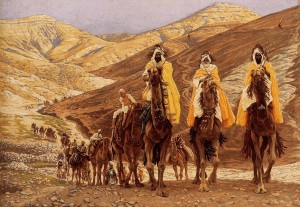
We consider four of these subversive truths below.

1. The Kingdom of Heaven does not support the Kingdoms of this World

One of the most pervasive ideas in nearly all religious and political hierarchies is that God is on their side. Religious and political leaders claim that God has blessed them, their plans, and their goals. Religious and political institutions claim that everything they do is advancing the rule and reign of God on earth.

But usually, the goals and methods of the political and religious kingdoms of this world have little overlap with the goals and methods of the Kingdom of God. Those religious and political leaders which recognize this threat to their power often use the name of God in the attempt to destroy the Kingdom of God.

This is exactly what we see in Matthew 2 when King Herod feels threatened by the birth of a baby boy in Bethlehem, and then uses the claim that he wants to worship the new-born Messiah as an excuse for trying to kill Jesus.

When we truly begin to understand the values of the Kingdom of God, we see that His kingdom has come to overthrow the powers of this world. The Kingdom of God upsets rulers and dominions and powers and authority. It rights what is wrongs, restores justice, and reintroduces righteousness, which are all things the religious and political kingdoms of this world claim to do why they are in fact doing the exact opposite. For more on this, seeย Wright, “Emperors and Angels.”

2. The Messiah did not come for the rich and powerful

This idea is similar to the one above, but focuses primarily on the leaders themselves. For some reason, we tend to think that the people in positions of power, the people with titles, and the people who get their voice heard are the ones that God has blessed in this world. Most of the leaders believe this too.

But if the birth of Jesus is any indication, one of the greatest lies of the religious and political world is that God is with the rich and powerful leaders. The birth narratives reveal that there were no rich and powerful people with Jesus at His birth.

The Messiah has come for the dishonorable, the outcasts, the uneducated, the poor. This is the kind of family He was born into. These were the settings He was born in, and these are the type of people who first learned of His birth.

3 wisemen outcastsThe shepherds were considered by most to be dirty, outcast thieves, and while the wise men from the East are often called “Kings” (though they were likely not kings at all), most people in Israel would have considered them to be religiously unclean, astrology-practicing, sinful foreigners. Modern parallels might be street hustlers and fortune tellers.


So before you go envying the people at the top, who seem to be receiving blessing after blessing from God, you might want to take a closer look at the people who live in the gutter, for it there where you are more likely to find God.

3. Jesus often shows up in the most unlikely places

If you were to listen to most of the religious and political rhetoric at Christmas, you might get the impression that Jesus came to support the powerful in their goals for domination, the rich in their quest for year-end bonuses, and the elite in their self-glorifying causes.

But when God began to perform His greatest work in human history, He launched it in an animal feeding trough in the backwoods town of a tiny, poor, insignificant country.

I imagine that if Jesus were to show up again today, it would not be in Washington D.C. or Rome. It would probably be in some poor village of central Africa. If Jesus was born in the United States (or any of the ruling nations in the world … Jesus was born in part of the Roman Empire, after all), it would be to a poor prostitute who is living under a cardboard box in a back alley.

dirty town in Africa

This leads me to believe that if you want to see God today, don’t look on your television, the internet, or in buildings made with marble and brass.

Instead, look where you would least expect him. Look where life is hard and people are dirty. Look among the homeless, the prisoners, the prostitutes, and the drug-addicts.

4. The birth of Jesus turns political and religious values upside-down

Power, greed, and manipulation are three central values of religion and politics. Wayne Jacobsen refers to them as cash, credit, and control. But such things do not describe the birth of Jesus in any way, shape, or form.

The values of Jesus at His birth (and during His entire ministry) did not include getting more wealthy, but in generously giving it away. Jesus did not seek to gain power or credit for Himself, but consistently gave glory to God and spread power among His followers. And Jesus never tried to manipulate or control anyone into doing what He wanted, but taught people that they were free to follow God and live as they pleased within His family.

In times when politicians promise change to the world, followers of Jesus can offer true and lasting change, based not on the principles of power or greed, but on service and generosity.

This Christmas

I am not sure what you have planned for this Christmas, or for the year that follows, but if you want to see Jesus, don’t look for Him among the rich and powerful, or among those who are famous and well-known (whether in political or religious arenas). Instead, look for Him among the poor, the outcast, the overlooked, the sick, and the weak.

And don’t run after fame and glory for yourself, thinking that such things are the way God keeps score. They aren’t. God doesn’t keep score at all. Such things are not God’s gifts to you. Instead, be generous, loving, gracious, and kind, for it is in these things that God reveals Himself to you, and reveals Himself to others through you.

Affiliate Disclosure: As an Amazon Associate I earn from qualifying purchases. Thank you for supporting my work in this way!

God is Redeeming Life Bible & Theology Topics: birth of Jesus, Christmas, Luke 2, Matthew 2, politics, religion, Theology of the Church

Advertisement

  • « Previous Page
  • 1
  • …
  • 9
  • 10
  • 11
  • 12
  • 13
  • …
  • 35
  • Next Page »

My New Book is Out!

Get your copy on Amazon today!
Learn about the gospel and how to share it

Take my new course:

The Gospel According to Scripture
Best Books Every Christian Should Read
Study Scripture with me
Subscribe to my Podcast on iTunes
Subscribe to my Podcast on Amazon

Do you like my blog?
Try one of my books:

Click the image below to see what books are available.

Books by Jeremy Myers

My New Book is Out!

Get your copy on Amazon today!

Theological Study Archives

  • Theology – General
  • Theology Introduction
  • Theology of the Bible
  • Theology of God
  • Theology of Man
  • Theology of Sin
  • Theology of Jesus
  • Theology of Salvation
  • Theology of the Holy Spirit
  • Theology of the Church
  • Theology of Angels
  • Theology of the End Times
  • Theology Q&A

Bible Study Archives

  • Bible Studies on Genesis
  • Bible Studies on Esther
  • Bible Studies on Psalms
  • Bible Studies on Jonah
  • Bible Studies on Matthew
  • Bible Studies on Luke
  • Bible Studies on Romans
  • Bible Studies on Ephesians
  • Miscellaneous Bible Studies

Advertise or Donate

  • Advertise on RedeemingGod.com
  • Donate to Jeremy Myers

Search (and you Shall Find)

Get Books by Jeremy Myers

Books by Jeremy Myers

Schedule Jeremy for an interview

Click here to Contact Me!

Follow me on X

© 2026 Redeeming God · All Rights Reserved · Powered by Knownhost and the Genesis Framework