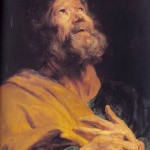
In Matthew 16, Jesus asks His disciples who they thought He was. It was Peter who answered that Jesus was the Christ, the Son of the living God (Matt 16:16). As a result, Jesus said this:
I also say to you that you are Peter, and on this rock I will build My church (Matt 16:18).
Of course, in the very next paragraph, Jesus was calling Peter “Satan” and telling Peter that he knew nothing about why Jesus had come or what He was doing (Matt 16:23).
I think that this little exchange in Matthew 16 perfectly describes the history of the church.
The church is like Peter. We know who Jesus is, but we haven’t a clue about why He’s come.
We think Jesus has come to rule the world. To dominate. To control. To manage people’s sin. To stop people from disobeying God. To set those of us who follow Him up as rulers over others.
And when we begin to talk and act like this, we ignore Jesus telling us that although we know who He is, we are listening to Satan regarding what Jesus wants to do in this world.
But I am hopeful.
I am seeing great changes in the church today.
We are beginning to awaken to the reality of why Jesus came and what Jesus stood for.
We are beginning to see what Peter eventually saw.
In a way, Peter’s life is a prophetic summary of the history of the church.

The Calling of Peter
The calling of Peter to be a follower of Jesus is similar to the birth of the church in Acts 2. The church is born and sets out with gusto and bravery to follow Jesus wherever He leads.
In these early years, the church sometimes says and does some dumb things, but we don’t let this stop us from loving Jesus. While we might stick our foot in our mouth, we keep our feet on the path of following Jesus.
The Confession of Peter
Peter is the one who first publicly stated that Jesus was the Messiah, the Son of God.
This seems parallel to the early creeds and confessions that were developed by the church. As the church grew and expanded, they wrestled with the question about who Jesus truly was. They debated about whether Jesus was fully God and fully man.
Eventually, we ended up with the Apostle’s Creed, the Nicene Creed, and the Chalcedonian Creed all set down what the church believed about the identity and nature of Jesus Christ.
The Craving of Peter
Almost immediately after Peter makes his confession in Matthew 16 about the identity of Jesus, Peter reveals that he doesn’t have a clue about why Jesus came to be the Messiah. He thinks Jesus came to rule and reign over the entire world with strength, power, glory, riches, and might. Peter wasn’t alone in this, of course. This is what every Jewish person expected of the Messiah. Peter craved power, and he saw Jesus as the ticket to the power.
And so it is interesting that almost at the exact same time the church was debating about the identity and nature of Jesus Christ, they were also consolidating their power in the world.
After the conversion of Constantine, the church leaders saw that using the power of the Roman Empire and the threat of the sword would help them gain glory, riches, honor, prestige, land, and wealth. To their credit (like Peter), they believed that such things would help them spread the Gospel of Jesus Christ.
But it didn’t. And it hasn’t. Such things only hindered the gospel. This was especially true when the church started using violence to advance their cause.
The Violent Cause of Peter
Peter is the one who struck out violently to defend Jesus when He was arrested in the Garden of Gethsemane. He took off the ear of Malchus, the servant to the High Priest. I believe Peter was actually trying to take off his head…
Why did Peter do this? Because he wanted to protect Jesus. He wanted to defend the honor of Jesus. He was also looking out for his own cause, that he had invested three years of his life into. That he had abandoned his lucrative fishing business for. He had forsaken all to follow Jesus, and if Jesus got arrested and condemned, all the work and sacrifice would be for nothing.
It has been the same with the church. We work. We labor. We invest. We serve. We tithe. We build. We follow. We sacrifice.
And we want it to pay off.
And we are willing to exhort to violence if necessary.
It is a clear fact that most of the violence carried out in Europe and the Middle East from about 400 AD to 1900 AD was violence done in the name of Jesus. It was violence to “defend Jesus” and they carry the gospel to the heathens. Like Peter swinging his sword at Malchus, we swung the sword at heathens in the North, and Muslims in the East, and Jews in Jerusalem.
Frequently, we also swung the sword at each other, because “they” did not follow Jesus or believe the same thing about Jesus as “we.”
The Cursing of Peter
When Jesus was finally arrested and brought to trial, Peter followed Him. But when challenged and questioned about whether he was a follower of Jesus, Peter ended up denying Jesus and cursing Him.
 This is exactly what the church has done as we have carried the Gospel and spread the name of Jesus with violent and greedy methods. In seeking to spread the name of Jesus with the use of money, power, domination, control, manipulation, and the sword, we have only ended up cursing and denying Jesus, and have led many other people to do the same.
Today, when most people reject Jesus, they are not rejecting Him as He truly is, but are instead rejecting and denying the Jesus which the church has presented to them. The Jesus who builds monstrous buildings on the backs of the poor. The Jesus who looks out for the rich and the powerful. The Jesus who kills others in the name of power. The Jesus who doesn’t forgive. The Jesus of rules, regulations, and rituals.
When we present Jesus this way to the world, we are saying, with Peter, “No, I never knew Him.”
The Contrition of Peter
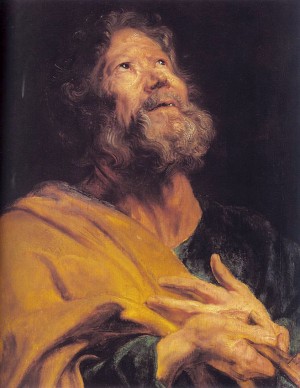
After the cock crowed, Peter realized what he had done, and went into mourning. I believe that while Jesus died on the cross, and was buried in a tomb, and stayed in the grave for three days, Peter was repenting and wailing and crying about what he had done.
 The church is beginning to do this over the past ten to twenty years.
We have begun to awaken to the fact of how we were complicit in much of the violence of this world. How we have contributed to the abuse of the poor, the neglect of children and women, the trampling of nature, and the overall condition of the world today.
I believe that many churches in the West have not yet come to his realization, but I see signs every day that more and more people are doing so.
The Conversion of Peter
Acts 2 reveals a completely different Peter. He has awakened to a new reality, and a new understanding of Jesus. He not only understands who Jesus is, but He now understands why Jesus came: Not to rule, but to serve. Not to live, but to die. Not to be powerful, but to be powerless.
For Peter, Jesus turned the world upside down, and once Peter aligned Himself to Jesus, he began, for the first time, to see the world right side up.
And as Christians around the world awaken to the reality of how we have maligned the gospel and blasphemed the name of Jesus by using Him to defend our violent causes, we too are beginning to see our place in the world. We are beginning to see that we are here, not to rule, but to serve. Not to live, but to die. Not to be powerful, but powerless.

 If you want to include stories and illustrations to help people understand what you are saying, this is fine to do; just don’t say you are following the example of Jesus.
 Most “Christian” stories are too sanitized to be any good.
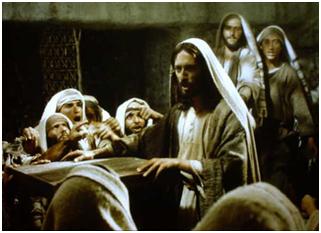 But even if the text is referring to a gay couple in bed, and even if the text does teach about the rapture, I pointed out to him that one of the men was taken in the rapture, which means that apparently, God accepted him.
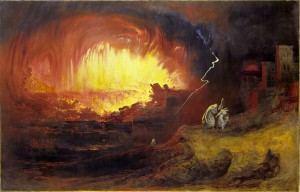 Immediately before the mention of two men in one bed is a lengthy discussion of the destruction of Sodom. Now I don’t believe the sin of Sodom was homosexuality. But there are many today who believe that it was, and I think most of the Jewish believers in Luke’s audience may have believed it as well.
 Plutarch (ca A.D. 45 to 120) was born in Greece near Delphi, and was a contemporary of Luke. One of Plutarch’s s, “The Banquet of Seven Wise Men,” is a fictional conversation among some famous men who lived around 650 BCE. After a brief lull in the conversation, Thales of Miletus speaks:
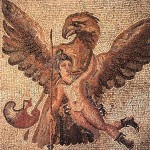
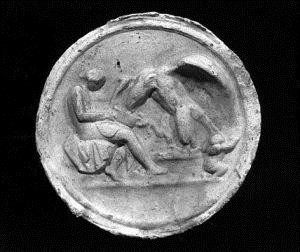 A major piece of evidence supporting the thesis of a deliberate gay theme in Luke’s Small Apocalypse (which I call “Luke’s Gay Apocalypse”) is found in the two primary symbols of Zeus, the supreme god in Roman religion. The symbols of Zeus are the lightning bolt and the eagle, and they appear in Luke 17:24, 37.
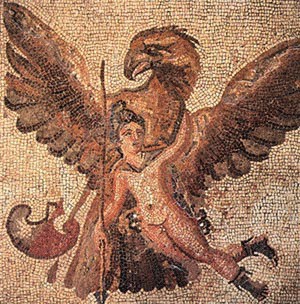 According to the story, the attractive young Ganymede is abducted by an eagle, who in one version is Zeus himself, having transformed himself into an eagle. While the story had several uses (as a paradigm for imperialism and an allegory for Truth), in the Roman era the sexual nature of Ganymede’s relationship with Zeus was widely recognized.
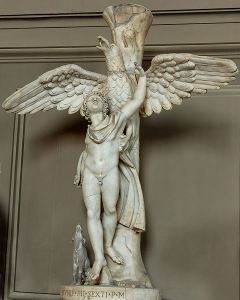 What we have here are the two chief symbols of Zeus, lightning and eagles, one of which is vividly associated with Zeus’ same-sex relationship with Ganymede, located at the beginning and end of a discrete unit of the third gospel, Luke’s Small Apocalypse. That distance between the verses may seem great, and this distance has obscured their historical and cultural connection. But these were the symbols of Zeus. If we were to read a paragraph that opened with a mention of a “crown of thorns” and ended with a “cross,” no one would doubt that the crucifixion was a central element in that paragraph.



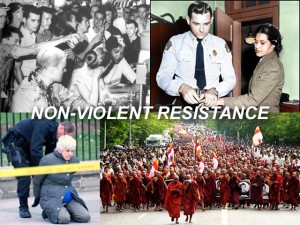 I recently had an email exchange with a reader of this blog about pacifism and nonviolence. Usually such exchanges are better suited for the comment section of blog posts, since this allows more people to weigh in on the conversation. So, for the sake of inviting you in to the conversation, I will post our email exchange below. Please read it and then weigh in with your own thoughts.
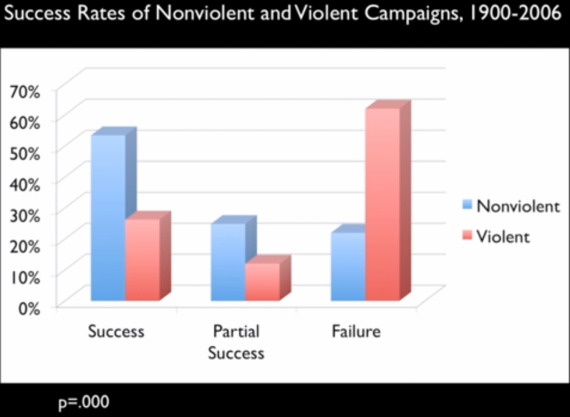
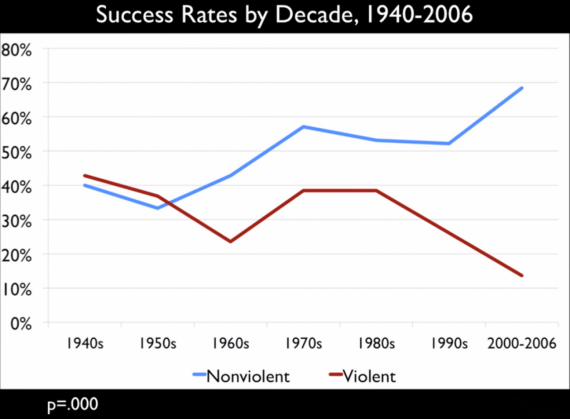
 [Note that nonviolent resistance is not about “winning” or “defeating the enemy.” If we nonviolently resist, we may end up dead. That’s what happened to Jesus, after all. The goal of nonviolent resistance is not to “stay alive” while taking the life of someone else (if necessary), but it is rather to reveal God and love others like Jesus. It is impossible to do this if you are killing them.]
 The Bible does not promote pacifism, but does promote nonviolent resistance. We are to do what we can to stop evil and fight against evil, but we must not do so with the weapons of war and violence. Among many other texts, one primary place Jesus teaches this is in His instruction to