Redeeming God

Liberating you from bad ideas about God

Join the discipleship group
  • Join Us!
  • Scripture
  • Theology
  • My Books
  • About
  • Discipleship
  • Courses
    • What is Hell?
    • Skeleton Church
    • The Gospel According to Scripture
    • The Gospel Dictionary
    • The Re-Justification of God
    • What is Prayer?
    • Adventures in Fishing for Men
    • What are the Spiritual Gifts?
    • How to Study the Bible
    • Courses FAQ
  • Forum
    • Introduce Yourself
    • Old Testament
    • New Testament
    • Theology Questions
    • Life & Ministry

The Parable of the Wheat and the Tares (Matthew 13:24-30)

By Jeremy Myers
7 Comments

The Parable of the Wheat and the Tares (Matthew 13:24-30)
https://media.blubrry.com/one_verse/feeds.soundcloud.com/stream/970193455-redeeminggod-the-parable-of-the-wheat-and-the-tares-matthew-1324-30.mp3

In this podcast episode, we look at what to expect from a Biden/Harris administration, how to know you have not committed the unforgivable sin, and a parable from Jesus that speaks to both issues (The Parable of the Wheat and the Tares in Matthew 13:24-30).

Predictions for Biden/Harris Administration

I always find it interesting that when people who hate President Trump hear about his accomplishments, they say things like “Yeah, but he made a lewd comment about women fifteen years ago!” or “Yeah, but he called racists ‘very fine people’!”

These sorts of rebuttals are laughable. Take the “very fine people” comment. If you actually go look at what he said, Trump totally condemned the white supremacists and neo-Nazis in the Charlottesville crowd that day, but said that apart from them, there were other very fine people there. If these sorts of arguments are the best you have in saying that Trump was bad, you may want to check your heart.

Here’s the truth about politics. When it comes to politics, it doesn’t matter what politicians say … it matters what they DO. Many politicians lie. They say what they think the voters want to hear, and then when they get into power, they do the opposite. So I don’t really care if you think Trump was mean on Twitter or wasn’t the most polished speaker. All that matters is what he actually DID. And the facts speak for themselves. Take just two areas. Trump was the most pro-life and pro-peace president we have ever had. He is the only president in modern history to not start a war, but in fact, work to end them. He is the only president who took actual steps to end the slaughter of innocent, unborn babies. And since Jesus Himself is pro-life and pro-peace, these two factors alone mean that Trump was leading the nation in Christlike directions.

And there are many other areas in which Trump did this as well. We have a verifiable and documented list of all the Trump Administration Accomplishments, most of which are the exact opposite of all the doom and gloom predictions that people made about a Trump presidency. They predicted he was going to get us into another war. Instead, he got us out of wars, brought our troops home, and helped bring peace to the Middle East, and eased tensions with N. Korea. I heard some people predict that he would round up and arrest gays and lesbians, which is simply absurd. They predicted the stock market would crash. It saw record gains.

Anyway, since people made predictions about the Trump presidency when it began, let me make a few predictions of my own for what will occur under a Biden/Harris Administration. I will revisit this list prior to the next presidential election to see how I did.

  1. Biden wonโ€™t make it through the year. Probably not even 6 months. He is in serious cognitive decline. He will resign for medical reasons, allowing Harris to step in.
  2. When Trump became President, he left many Obama-era appointees in office, and they continually sought to undermine him and his presidency. Biden will not make the same mistake. He will remove from office as many Trump appointees as he can. Sadly, while the media would have blasted Trump for doing such a thing, they will praise Biden for such actions, thereby showing more of their hypocrisy. (1/21/21 update: Biden’s first firing was Jerome Adams, the Surgeon General)
  3. Under Biden and Harris, all of the economic gains achieved by Trump will disappear and be reversed. There will be widespread economic downturn.
    1. Tax increases for everyone
    2. Higher poverty and homeless rates
    3. Higher unemployment rates, especially for Blacks, Hispanics, and women (all made worse by a massive influx of immigrants) (1/21/21 update … job losses have already begun as tens of thousands of union workers have lost their jobs from the end of the Keystone Pipeline and a call to end all fracking, which, by the way, Biden promised during his campaign he would not do)
    4. Lower stock market
    5. This $15 minimum wage hike will be a disaster. It will lead to higher prices across the board for everything, and a loss of at least one million entry-level jobs.
    6. Higher gas, oil, and electricity prices since US will no longer be energy independent (1/21/21 update: has already begun with the end of the Keystone pipeline and the end of fracking)
    7. Higher prescription drug prices and healthcare costs as the Democrats seek to increase bureaucracy and decrease competition in the marketplace
    8. Lower household income for the middle class
  4. Under Biden and Harris, there will also be greater social problems in the US and around the world
    1. As we support terrorist nations with gas and oil purchases, they will fund more terrorist activity in the US and abroad
    2. Peace will be endangered in the middle east, and especially with Israel
    3. Tensions will rise with N. Korea, Iran, Iraq, and Afghanistan, many of which will seek to develop their nuclear weapon capabilities
    4. A declaration of war on at least one other country
    5. Less religious freedom in the US and around the world
    6. Less free speech for those who donโ€™t agree with people in power (already begun as Google, Facebook, Twitter, Apple, and Instagram are actively censoring Trump supporters, and even Trump himself)
    7. Greater violence in our cities
    8. Higher incarceration rates for Blacks and Hispanics
    9. More drug overdoses
    10. Gun control will increase, and along with it, gun crimes. As statistics reveal in the US, where there is more control there is more gun crime.
    11. Higher crime rates in nearly every community
    12. An increase in abortions (1/21/21 update, A Biden EO has provided taxpayer funding for abortions)
    13. Women’s rights and protections will go backward (for example, with a push to legalize prostitution, and to allow transgender men to participate in women’s sports. 1/21/21 update: already occurring through EO on Gender Identity and Sexual Orientation)
  5. Trump and conservatives will be blamed by the democrats and by the media for all of the problems listed above
  6. One positive thing that will result from the Biden/Harris presidency is that COVID will disappear. They will do a mask mandate, and maybe a vaccination mandate, and then claim victory over COVID.

The Mail Bag

Numerous questions about the Unforgivable Sin and God’s love and forgiveness:

I bought (#AmazonAdLink) your book about the unforgiveable sin. I don’t find any part talking about jokes that includes the Holy Spirit. I laughed a joke like that and I was terrified I committed the unforgiveable sin. Do you think I committed it? – Hernyak

I sometimes have blasphemous thoughts and in a counseling session told the pastor the blasphemous thought the demons were trying to put in my head.ย  It was against the Holy Spirit and was not from me so just telling the pastor what the thought was will not send me to hell will it? – Anonymous

I fear that I’ve committed the unpardonable sin because I said something really horrible to the Holy Spirit in my mind. Hoping that you can give me some shred of hope. It’s killing me and I constantly doubt my salvation. These doubts have plagued me for years. – Mike

If you fear that you have committed the sin, this proves you haven’t. Why? Because it proves that the Holy Spirit is still at work in you to draw you to Jesus and convict you of sin. Read my sermon on the unforgivable sin.

This is not to say it is healthy to fear this sin. It isn’t. We should be able to rest in the love and and forgiveness of God, knowing that when we come to understand both, we will not fear, for there is no fear in love (1 John 4:18).

How to know you are loved, forgiven, and have eternal life? Believe in Jesus for eternal life (John3 :16; 5;24; 6:47). Once you have eternal life, it is yours forever. You cannot lose it. Eternal life, by definition, is eternal.

The Parable of the Wheat and the Tares (Matthew 13:24-30)

In the Bible study section of this podcast, we are looking at a passage that applies to both of the two previous sections, the politics section and the mail bag section. When there are different perspectives, different viewpoints, or different ideas about theology or politics, how can we know which view is correct, and which view is wrong? This is a big issue, right? We all want to know the truth. We want to do what is correct. We want to follow Jesus properly and do what is best for our families, our country, and this world. But how can we know which is the best and most Christlike way of walking?

Jesus provides the answer in the Parable of the Wheat and the Tares (Matthew 13:24-30). This study is a summary of what I teach in my Gospel Dictionary online course, in the entries on Fire and the Kingdom of God.

In the Parable of the Wheat and the Tares, Jesus says that the kingdom of heaven is like a man who sows good seed in his field (Matthew 13:24). The kingdom of heaven, of course, is not heaven, but is the way God brings heaven down to earth as Jesus and His disciples spread the rule and reign of God over the earth. It begins with the sower spreading seed. But an enemy comes and sows bad seeds in the field, so that a bunch of weeds, or tares, spring up among the wheat.

The seed that Jesus refers to should be read in light of the first parable of Matthew 13, the Parable of the Four Soils. There, Jesus teaches that the seed is the Word of God. But here in Matthew 13 we see that there are two types of seeds that can be scattered. There are the seeds of kingdom, and the seeds of the devil. These are two contrasting kingdoms, which result in two contrasting types of people. But initially, when the seeds first begin to sprout, there is great difficulty in deciding between the wheat and weeds.

When the servants discover the weeds, they ask how the weeds came to exist and what the owner wants to do about them (Matthew 13:25-27). This is where some humor enters into this parable. As anyone who has ever had a field (or even a flower garden) knows, one does not need an enemy to sow bad seeds for weeds to pop up and grow. So when Jesus describes an enemy sowing bad seeds in the ownerโ€™s field, His audience would have likely snickered a little bit. No enemy would work so hard to ruin a crop. If an enemy really wanted to ruin someoneโ€™s crop, there were better and easier ways to do it. But the enemy does sow bad seeds in this story, which not only shows his own foolishness, but also provides a humorous backdrop for the rest of the story.

Many commentaries and articles point out that the bad seed in the field is most likely darnel, which looks exactly like wheat until harvest time. It is a mimic weed. This is why the owner of the field tells his servants to just let the two plants grow side by side until harvest (Matthew 13:27-30). Prior to harvest, it would be nearly impossible to tell the two apart, and so any attempt to remove the darnel would likely result in the loss of wheat as well. Once harvest arrives, wheat turns golden and the heavy heads of grain droop down toward the ground, but darnel tends to remain greener for longer and will continue to stand upright.
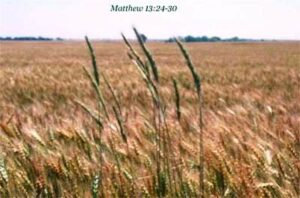
Since wheat and darnel appear so identical, the presence of the tares in the field goes unnoticed until the grain begins to โ€œgo to crop,โ€ or develop a head. This is why the servants only notice the tares once the wheat begins to mature (Matthew 13:26). So they ask the owner if he wants them to pull out the tares, but since wheat and darnel look quite similar to each other prior to full maturity, the owner tells his servants to leave the weeds alone and let them grow along with the wheat. At harvest, the reapers will go through and gather the tares, and then they can harvest the wheat (Matthew 13:30). The tares are thrown into the fire to be burned.

One of the reasons it was necessary to first harvest and then burn the tares is because darnel can be deadly to livestock and humans if consumed in large quantities. Smaller quantities will cause dizziness if baked into bread or brewed with beer. In fact, there are historical records of people actually cultivating darnel for this very reason, treating it like an ancient form of cannabis. But if too much is consumed, darnel can cause great sickness and even death.

When Jesus explains this parable to His disciples, He begins by identifying the various characters in the story. He says that the sower is the Son of Man (Matthew 13:37), which is one of Jesusโ€™s favorite titles for Himself. The field which the sower plants is the world, and so the good seeds which go out into the world are the sons of the kingdom (Matthew 13:38). The tares are therefore the opposite of the sons of the kingdom; Jesus calls them the sons of the wicked one. The enemy is the devil, the harvest is the end of the age, and the reapers are the angels (Matthew 13:38).

Now each of these characters need to be more carefully explained, but first, it is critical to notice that there is one set of characters Jesus does not identify. This missing identification is the key to the parable. Who is it that Jesus does not identify? It is the servants. Jesus does not explain who the servants represent. I have heard some say that the servants are the reapers, but when the owner is speaking to the servants, he clearly identifies the reapers as a different group (cf. Matthew 13:30).

The solution to this problem is to return to the image of the field as the world. The Son of Man sowed seeds in the field, and the servants went out and worked in the field. Since the field is the world, and Jesus is the one who sowed the seeds in the world, then the servants are the ones who tend, cultivate, and work in the fields. Who are they? They are the followers of Jesus. They are disciples. The servants in the story are the Christians. Christians, or followers of Jesus, are those who work in the world to grow and expand the kingdom of God which Jesus planted and initiated.

But if the servants are Christians, then who are the โ€œsons of the kingdomโ€? Jesus says the seed is the sons of the kingdom. But if the servants are Christians, then the sons of the kingdom (the seed) cannot also be Christians. To put it another way, since the servants are the followers of Jesus, then this means that the sons of the kingdom must be someone else. And when we understand the identity of the sons of the kingdom, we will also understand the identity of the sons of the evil one (which might be better translated as โ€œsons of wickednessโ€; Matthew 13:38).

To understand the identity of both, it is first necessary to understand how the word โ€œsonโ€ is used in Scripture. Typically, a โ€œsonโ€ is understood to be a child of someone else. But the word โ€œsonโ€ can also be used metaphorically. When the word โ€œsonโ€ is used in connection to a concept or idea, instead of to a person or family, it refers to the characteristics or inner attributes of someone, rather than to the person themselves. So โ€œsons of this worldโ€ are contrasted with โ€œsons of lightโ€ in Luke 16:8ย (cf. John 12:36; 1 Thess 5:5). A student or disciple of the Pharisees could be called a โ€œson of the Phariseesโ€ (Matt 12:27; Acts 23:6). Scripture can also speak of โ€œsons of the resurrectionโ€ (Luke 20:36), โ€œsons of this ageโ€ (Luke 16:8; 20:34), โ€œsons of disobedienceโ€ (Eph 2:2; 5:6), โ€œsons of the devilโ€ (Acts 13:10) and numerous other similar terms. Such descriptions are not literal (a son of the devil is not literally the biological offspring of the devil), but are instead figurative and symbolic ways of referring to someoneโ€™s character and behavior.

So who are the sons of the kingdom and the sons of wickedness, and how can we tell?

One more contextual key is needed before an answer is discovered. In the context before these seven parables of Matthew 13, the Jewish religious leaders accused Jesus of operating according to the power of Beelzebub (Matthew 12:24). Jesus responds with a teaching full of symbolism and imagery (Matthew 12:25-37) that shows up again in the parables of Matthew 13. He speaks of kingdoms (Matthew 12:25, 28), sons of the Pharisees (Matthew 12:27), gathering and scattering (Matthew 12:30), this age and the age to come (Matthew 12:32), and the fruitfulness (or lack thereof) of various trees (Matthew 12:33-37). All the parables of Matthew 13 must be read in light of this confrontation between Jesus and the Pharisees. While they were accusing Him of doing the devilโ€™s work, He responded by saying that it was not Him, but they, who were committing blasphemy and speaking evil from their hearts (Matthew 12:35).

But how could the onlookers, the disciples, tell who was right? They had grown up being taught to love, respect, and listen to the religious Pharisees. But now they loved, respected, and listened to Jesus. Yet the Pharisees were saying that the teachings of Jesus were from the devil, and now Jesus was saying the same thing about the teachings of the Pharisees. So what were the disciples to do? How could they know who was right and who was wrong? If you have ever had two Bible teachers, both of whom you greatly respect, disagree with each other, then you understand the dilemma of the disciples. How were they to choose between Jesus and the Pharisees?

The Parable of the Wheat and the Tares is the answer to their question. In this parable, Jesus, the Son of Man, tells His servants, the disciples, that two types of seeds have been sown which result in two types of sons of two types of kingdoms. But which was which and how could they know? Jesus tells His disciples to wait until the harvest โ€œat the end of this ageโ€ (Matthew 13:40). But this is not helpful for them if the end of the age is thousands of years in the future when the new heavens and new earth are created.

So what if โ€œthis ageโ€ was the age in which Jesus and His disciples were living, and the age to come was the age that followed (cf. Matthew 12:32)? Indeed, Scripture indicates in numerous ways and places that a new age did indeed come into existence with the death and resurrection of Jesus and the birth of the church. The death and resurrection of Jesus gave birth to a new age, the age of the kingdom of God, the church age. There were birth pains and many travails as the old age died and the new age began (as Jesus discusses in Matthew 24โ€“25), but the resurrection of Jesus and the birth of the church was the sign that the new age had begun.

Jesus tells His disciples that while it is difficult for them to decide between the wheat and the tares right now, it will become clear to them at the harvest. Though they had trouble deciding between the way of Jesus and the way of the Pharisees, the end of the age would make it clear when the messengers of God arrived and took away the tares. Here we have the religiously subversive nature of the parable. The disciples of Jesus are faced with a choice: they can either follow the way of Jesus or the way of the Pharisees. Jesus tells them that they donโ€™t need to figure it out. In fact, it would be dangerous for them to try to do so, for they will not be able to properly and perfectly tell the difference between the good teaching and bad. Instead, they should just wait for the harvest and let the reaping angels separate the wheat from the chaff.

And this is indeed what happened in 70 AD. The way of the Pharisees was destroyed when Jerusalem and the temple were burned with fire. This does not mean that the Pharisees and all who followed their teachings were unregenerate sinners who will spend eternity burning in hell. Everlasting torture in hell is not anywhere in view with this parable. To the contrary, the โ€œfurnace of fireโ€ imagery is drawn from Daniel 3:19-25ย where Danielโ€™s friends are thrown into a furnace of fire, but only their bonds are burned as they walk around in the flame with one shining like the Son of God. (As a side note, the โ€œSon of Manโ€ imagery is drawn from Daniel 7:13-14, and the imagery of the righteous shining like the sun in Matthew 13:43ย is drawn from Daniel 12:3). It can be assumed that when Jerusalem was destroyed by the Roman army, many Christians were also consumed by the flames. But Christianity survived, as it was not (and is not) dependent upon a city, a temple, or a priesthood. Yet the Jewish Pharisaical religion was dependent upon such things, and so it died out when Jerusalem fell.

And so we see that the burning of the chaff in the furnace of fire is not about God sending people to hell where they will burn forever and ever. Instead, it is about the disciples of Jesus allowing God to be the one to judge between right and wrong, good and evil, especially when it comes to deciding between the teachings of Jesus and the teachings of the Pharisees. As a result of the events in Genesis 3ย when Adam and Eve tried to gain for themselves what should be left up to God, we humans have always done a poor job of judging between good and evil. So God invites us to leave all such judgment up to Him. And this is what Jesus tells His disciples to do as well.

The same truth applies to us today. Humans make bad judgments, and when we do, we stumble and get burned. But this does not mean we go to hell; it means we face the consequences of our poor decisions. While such consequences are painful, we need not worry too much about them, for they do not say anything about our eternal destinies, and indeed, only serve to purify us so that we shine like the sun in the kingdom of the Father (Matthew 13:43).

The principle of this parable still applies to us today. It is sometimes very difficult to tell the difference between good teaching and bad teaching. Or even between good and bad politics. When this occurs, the advice of Jesus is that we withhold judgment and wait for the harvest to come, when the choice will be obvious. The harvest occurs when the natural results or logical outcomes of the various teachings begin to bear fruit. When a teaching results in the fruit of the kingdom of heaven (which Paul calls the fruit of the Spirit in Galatians 5:22-23), then we can know that such teachings are good and godly. But when a teaching bears fruit that is worldly and of the devil (the works of the flesh in Galatians 5:19-21), such teachings can be safely rejected.

We cannot look to a personโ€™s works to see whether or not they have eternal life, but we can (and should) look to a personโ€™s works to see whether or not their teachings can be followed. As we do this, we can see whether or not the kingdom of heaven is truly taking root in their life, and therefore in ours as well if we follow their teachings and example.

Affiliate Disclosure: As an Amazon Associate I earn from qualifying purchases. Thank you for supporting my work in this way!

God is Redeeming God, Redeeming Scripture, Redeeming Theology, z Bible & Theology Topics: biden administration, Matthew 13:24-30, Matthew 13:24-40, parable of the wheat and the tares, podcast, President Trump, Unforgivable Sin

Advertisement

God is Not Just

By Jeremy Myers
8 Comments

God is Not Just
https://media.blubrry.com/one_verse/feeds.soundcloud.com/stream/962011042-redeeminggod-god-is-not-just.mp3

I’m back! 2020 was a rough year, and 2021 will likely be difficult as well, but I am going to try to get back into blogging and podcasting.

In this first episode of 2021, I explain the new format for my podcast, and discuss three things:

  1. My thoughts on the response of some Christian pastors and authors on the January 6, 2021 election protest in Washington DC
  2. Mailbag: How to know you have eternal life and did not commit the unforgivable sin.
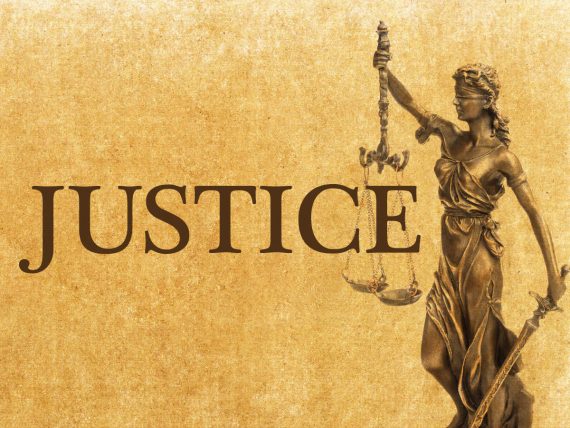
  3. Why God is not just, the Bible does not talk about justice, and how we can respond to injustice.

Is God a God of love AND justice? Nope.

On the topic of justice, here is a brief summary of what I say in the podcast, and also what I will be teaching in my soon-to-be-released Gospel Dictionary lesson on justice:

โ€œJusticeโ€ is not in the Bible. Indeed, the English word โ€œjusticeโ€ is not found anywhere in the New Testament of the King James Version.

The trouble with justice begins in the Bible translation. On the one hand, there are several Greek and Hebrew words that often get translated as โ€œjusticeโ€ and then then are several other English words that are used as translations for the Greek and Hebrew terms.

Usually, translation troubles come from one direction or the other. For example, we have one English word โ€œloveโ€ that is often used to translate four different Greek words for love (agape, philia, eros, and storgฤ“). Other times, there are numerous English words that are often used to translate one Greek word, such as both faith and belief being used as a translation for pistis. With the justice word family, both of these translation troubles exist.

With justice, the two main Greek terms are krisis (2920) and dikaiosunฤ“ (1342). However, as seen previously, the best translation for krisis is judgment; not justice (see Judgment). In the passages where krisis is translated as justice, the term judgment (and specially, the concept of properly naming or identifying something) is a better translation (cf. Matt 12:18, 20; 23:23; Luke 11:42; Acts 8:33). Therefore, it seems best to always translate krisis as judgment rather than justice.

That leaves the dikaiosunฤ“ word family. The dikaiosunฤ“ word family (including dikฤ“, dikaios, dikaioล) is variously translated as justice, justification, justify, just, and righteousness and a few others. You will notice that the term righteousness and justification have no English semantic connection, and yet they are both used to translate the same Greek term, dikaiosunฤ“. As argued elsewhere in The Gospel Dictionary, it is best, when translating a single Greek term and for clarityโ€™s sake, to pick one English term and stick with it. No English reader who has little knowledge of Greek would ever imagine that a single Greek word lies behind the translation of both righteousness and justification. So it is of immense help to the English reader to pick a single English word (and its word family) as a translation for a single Greek word (and its word family).

With dikaiosunฤ“, we have two English choices. We can choose the โ€œjustโ€ word family (justice, justification, justify) or the โ€œrightโ€ word family (righteous, rectificationโ€”or rightification, rectifyโ€”or rightify). Since โ€œrightificationโ€ is not an English word, the initial inclination is to go with the โ€œjustโ€ word family. However, the Greek term dikaiosunฤ“ is most literally translated โ€œto make right.โ€ Since, as seen above, the term justice is so misunderstood and misapplied today, it seems that using the right word family is the โ€œrightโ€ way to translate the dikaiosunฤ“ word family.

The Hebrew words tsedeq (6664) and misphat (4941) have also been translated as justice, but tsedeq is best translated as โ€œrighteousnessโ€ and misphat as โ€œjudgment.โ€ So again, justice is not in the Bible.

But righteousness is. When humans cry out for justice, what we really want is righteousness. We want things to be set right. And Godโ€™s way of achieving righteousness is far better and far different than the human, earthly way of seeking justice. In fact, the two are usually at polar opposites of the morality spectrum. The human methods of achieving justice are often seen as unrighteous by God, while the divine methods of righteousness are often viewed by humans as unfair, unjust, and irresponsible. So it is not true, as people claim, that God is a God of love and justice. Rather, God is a God of love and righteousness, and the two are not at odds with each other.

But justice and righteousness are at odds with each other. Human history, including biblical history, reveals that when humans call for justice, what they really want is vengeance. But God has said that vengeance is His and He will repay (Deut 32:35; Rom 12:19). And how does God exact vengeance? How does He repay people for the evil they have done? Jesus shows us how. When God sets out to repay people for the sins they have committed, He dies for them. He freely forgives them. This โ€œjusticeโ€ of God does not fit any human definition or understanding of justice.

Human justice calls for people to get what they deserve. To be punished in a similar measurement to the pain they have caused others. Divine โ€œjusticeโ€ extends only love, grace, mercy, and forgiveness, all of which are the exact opposite of what people deserve. This is why we cannot call it justice. It is righteousness, but it is not justice. It is as Gandhi said, โ€œJustice that love gives is a surrender. Justice that law gives is a punishment.โ€

None of this is to say that injustice does not occur in this world. Quite to the contrary, injustice is everywhere, even (and especially) in the political and religious programs (which often become pogroms) for justice. Our world is awash with injustice. The biblical solution to injustice, however, is not a better form of justice. In the same way that more war is never the answer to war, so also โ€œbetter justiceโ€ is never the answer to injustice. Why not? Because all forms of justice lead to greater injustice. In fact, cries for โ€œjusticeโ€ often hide the scapegoating mechanism. Scapegoats are never truly seen. If you are able to identify your scapegoat, he or she is not your scapegoat. People think a scapegoat truly is guilty, and therefore, killing or punishing them is not wrong, but is only justice. But scapegoating is always wrong, and scapegoating is always justified. Therefore, both scapegoating and cries for justice must be done away with.

So what can we do about injustice? We can follow the way of God. Godโ€™s answer to injustice is righteousness. The righteousness of God is based on forgiveness, restoration, reconciliation, and redemption (see Righteousness), terms that are not usually related to justice. It is usually not considered โ€œjusticeโ€ to forgive the one who wronged you. But it is righteous. It is usually not considered โ€œjusticeโ€ to reconcile with the one who hurt you, unless that other person is first forced to make reparations (often unjustly), but reconciliation is righteous. So it incorrect to say that God is a God of love and justice. He is not. God is love (1 John 4:8). God is holy (Isa 6:3). God is righteous but God is not just. And there is a vast difference.

Affiliate Disclosure: As an Amazon Associate I earn from qualifying purchases. Thank you for supporting my work in this way!

God is Redeeming God, Redeeming Theology, z Bible & Theology Topics: forgiveness, judgment, justice, podcast, righteousness, social justice

Advertisement

Is the Gospel Defined in 1 Corinthians 15:1-4?

By Jeremy Myers
4 Comments

Is the Gospel Defined in 1 Corinthians 15:1-4?
https://media.blubrry.com/one_verse/feeds.soundcloud.com/stream/842820175-redeeminggod-gospel-03-the-gospel-in-1-corinthians-15.mp3

1 Corinthians 15 does not contain the entire gospel. Nor is it a comprehensive list of what a person must believe to receive eternal life. To the contrary, how to receive eternal life is not even in view. Eternal life is assumed, and some elements of the gospel are proclaimed to help those who already have eternal life live in light of it.

This study is an excerpt from my Gospel Dictionary online course. This course considers 52 key words of the Gospel and thousands of biblical texts. The course contains over 100 hours Bible teaching. You can take the course byย joining my online discipleship group.

What is the Gospel?

The Gospel in 1 Corinthians 15

Paulโ€™s explanation of the gospel in 1 Corinthians 15 is probably more controversial than any other gospel-related passage in the New Testament. This is because 1 Corinthians 15 seems to explicitly define โ€œthe gospel.โ€ Paul writes, โ€œMoreover, brethren, I declare to you the gospel which I preached to you, which also you received and in which you stand, by which also you are saved, if you hold fast that word which I preached to youโ€”unless you believed in vainโ€ (1 Corinthians 15:1-2).

Paul writes that he is going to reiterate to them the gospel he preached when he was among them, which they had received, and in which they still stand. All of this is very similar to the language he used in Galatians 2.

The dilemma with what Paul writes, however, comes in the second half of 1 Corinthians 15:2: โ€œโ€ฆby which also you are saved, if you hold fast that word which I preached.โ€ By this, many believe that Paul is explaining what is necessary to believe in order to receive everlasting life.

But note that if this is what Paul means then the last part of verse 2 (โ€œunless you believed in vainโ€) implies that if a person doesnโ€™t persevere in holding fast to the gospel, then they either lose their salvation or never really believed in the first place. If Paul is defining what a person must believe in order to be justified, then apparently, they have to continue to believe it to stay justified or prove themselves justified.

The only other option is to recognize that the word โ€œsavedโ€ is not referring to going to heaven when you die, but is similar in meaning to how Paul used the word in Romans 1:16-17.

salvation

The word saved means โ€œdelivered,โ€ and context determines what we are delivered from (see Salvation: The Most Misunderstood Word in the Bible). The word โ€œsavedโ€ in 1 Corinthians refers to being โ€œhealthyโ€ or blameless at the Judgment Seat of Christ (cf. 1 Corinthians 1:18, 21; 3:15; 5:5; 6:19). The word โ€œsavedโ€ in 1 Corinthians is not about escaping hell and go to heaven when we die (It almost never means this in the Bible). Instead, it is about believers living in such a way so that when they stand at the Judgment Seat of Christ (a judgment for believers only), they receive praise and commendation from Jesus for a life well lived.

So the gospel Paul defines in 1 Corinthians 15 is a message for believers to help prepare them for the Judgment Seat of Christ.

This passage is not about the essential elements that must be believed in order to receive everlasting life. This is not a passage for unbelievers.

Rather, 1 Corinthians 15 contains essential discipleship truths which affect our sanctification as believers and how we use the power of God in our lives (cf. 1 Corinthians 1:18).

What if 1 Corinthians 15 IS for non-Christians about how to receive eternal life?

Nevertheless, some still want to use 1 Corinthians 15 as a central passage for the gospel that must be presented to unbelievers so they can receive eternal life. So for the sake of argument, let us briefly assume that such a view is correct.

Let us assume that Paul is talking about essential โ€œevangelisticโ€ truths that a person must believe in order to receive everlasting life. In this view, 1 Corinthians 15:3-4 delineate what these essentials are. Paul writes, โ€œFor I delivered to you first of all that which I also received: that Christ died for our sins according to the Scriptures, and that He was buried, and that He rose again the third day according to the Scriptures.โ€

When these two verses are used to define the essential gospel elements that people must believe in order to receive eternal life, they end up with three basic gospel truths. This passage, we are told, reveals three things a person must believe in order to receive everlasting life. They must believe that:

  1. Christ died for our sins.
  2. He was buried.
  3. He rose again from the dead.

Jesus crucifiedSome might add a fourth element on the top of this list which is implied by Paul but not stated explicitly, namely that we must also believe we are sinners. The logic is that since Paul writes that Christ died for our sins, people must first believe that they are sinful before they can believe that Christ died for their sins. Fine. Let us give the benefit of the doubt, and allow this implied truth of the gospel as well.

But this approach leads to some serious problems about Paulโ€™s definition of the gospel.

For example, who within Christendom does not believe these three (or four) truths? Sure, there might be a few liberal pastors and scholars who deny that we are sinners or argue that Jesus didnโ€™t actually rise from the dead, but for the most part, these three (or four) truths are known, accepted, and believed by just about everybody who bears the name โ€œChristian.โ€ Even the โ€œnon-evangelicalโ€ fringe groups such as Mormons and Jehovah Witnesses believe these things.

Furthermore, entire segments of Christianity which teach that eternal life is based on our own effort and good works will also wholeheartedly agree to these statements. There is very little in these statements to separate evangelical Christianity from all other forms. There is nothing here to separate orthodoxy from unorthodoxy; nothing which separates true Christianity from cultic Christianity.

Let me put it another way: What if someone believed they were a sinner, that Jesus died on the cross for their sin, was buried, and three days later He rose again from the dead, all in accordance with what Scripture says, but at the same time, believed that Jesus was only human, was not born of a virgin, and sinned just like the rest of us?

Has this person understood and believed the biblical gospel? Of course not! But nothing that Paul says here indicates anything wrong with these other beliefs.

Furthermore, it would be possible to believe everything Paul states in 1 Corinthians 15:3-4, but also believe that we still had to live a life of good works in order to make it to heaven. Has such a person understood and believed the gospel? I would say โ€œNo,โ€ as would most evangelical pastors and authors.

Some pastors and Bible teachers recognize this dilemma, and so they add some ideas to what Paul mentions here to help clarify the gospel. They argue that although Paul does not mention these other items here in 1 Corinthians 15, he does mention them elsewhere, such as in Galatians 2 and Romans, and so these other elements can be safely added to Paulโ€™s list of essential gospel truths.

Of course, as soon as people start to go outside of 1 Corinthians 15 to add elements to the gospel, there is no consistency in which elements people start adding. Some Bible teachers will add elements about the deity of Jesus and the necessity of justification by faith alone apart from works. Others will include the sinless life of Jesus, His virgin birth, His atonement, and whatever other โ€œessentialโ€ gospel truths they think are necessary.

But as soon as we start adding things to the list of what a person must believe in order to truly have everlasting life, there is no rational stopping place. It is all subjective to how much doctrine you want to throw into the mix. Some will have three essentials, another will have five, while someone else will have eight or ten.

And of course, all of these truths can be shown to be essential to the โ€œgospelโ€ since all of them, in one place or another in the New Testament are included in the gospel.

gospel-contextualizationThis arbitrary practice of augmenting Paulโ€™s definition of the gospel in 1 Corinthians 15 proves that Paul is not defining the gospel after all. He is including some of the essential truths of the gospel, but by no means is he including them all.


Evidence of this is further found in the fact that although most pastors and Bible teachers want Paulโ€™s definition of the gospel to conclude at 1 Corinthians 15:4, this is not where Paul himself stops defining the gospel. He goes on to include numerous truths within his definition of the gospel which no pastor or Bible teacher ever includes in their augmented lists.

Paul continues on through at least 1 Corinthians 15:8, and maybe further than that. In 1 Corinthians 15:5-8, he says, โ€œโ€ฆ and that He was seen by Cephas, then by the twelve. After that He was seen by over five hundred brethren at once, of whom the greater part remain to the present, but some have fallen asleep. After that He was seen by James, then by all the apostles. Then last of all He was seen by me also, as by one born out of due time.โ€

So if 1 Corinthians 15 defines what a person must believe to receive everlasting life, not only must we include the death, burial and resurrection of Jesus Christ, but also the appearances of Christ to Cephas, then the twelve, then to over 500 at once, then to James, then to the apostles, then last of all to Paul.

If Paul is truly defining the essential gospel elements in 1 Corinthians 15 that an unbeliever must believe in order to receive eternal life, we have no right to arbitrarily stop his definition in 1 Corinthians 15:4, but must include all of the elements he includes, and not add anything he fails to mention. But many pastors and Bible teachers do bothโ€”they first add to Paulโ€™s supposed gospel definition in 1 Corinthians 15 and then they also cut things out.

The only available solution to this problem is that Paul is simply mentioning some of the elements of the broader gospel in order to make a particular point to the believers in Corinth. And what point is that?

Paul is explaining the Gospel Truths about the Resurrection to Believers so they can Properly Live

In context, it is a point about the resurrection of Jesus and the future bodily resurrection of all believers (cf. 1 Corinthians 15:20-58). Paul wants the Corinthians believers to be praised and well-received at the Judgment Seat of Christ, and to do that, they need to understand that a future bodily resurrection is coming, after which time they will stand before Jesus and give an answer to Him for how they have lived their lives (cf. 1 Corinthians 3:11-17).

Toward this goal, Paul provides some specific truths from the multi-faceted and all-encompassing gospel which will help them understand that the bodily resurrection of Jesus proves that all believers in Jesus will also be bodily resurrected in the future.

So while the gospel truths of 1 Corinthians 15 can be shared with unbelievers, the truths Paul mentions are primarily directed toward believers, to encourage them to live lives by faith in the Son of God and follow Him in love, service, and self-sacrifice so that we will be spiritually healthy, strong, and bold when we stand before Jesus at the Judgment Seat of Christ.

To summarize then, 1 Corinthians 15 does not contain the entire gospel. Nor is it a comprehensive list of what a person must believe to receive eternal life. To the contrary, how to receive eternal life is not even in view. Eternal life is assumed, and some elements of the gospel are proclaimed to help those who already have eternal life live in light of it. In 1 Corinthians 15, Paul is defending the resurrection by showing that since Jesus was raised, believers will be raised also.

Conclusion

So what is the gospel? It can easily be proved from Scripture that the gospel is more than faith alone in Jesus Christ alone. Much more. The gospel includes elements of the kingdom of God on earth. It includes facts about justification, sanctification, glorification, security in heaven, satisfaction and contentment on earth, and eternal reward. The gospel includes all this and more.

Do you see what this scholar is saying about the gospel? The gospel is not just the content of what is preached, but is also everything God has done for the world in the incarnation, death, and resurrection of Jesus, including the act, process, and execution of the proclamation. The gospel is good news for everybody, whether Jew or Gentile, believer or unbeliever, regarding the benefits and blessings which come to us from the person and work of Jesus Christ.

And while different biblical authors seem to have different gospels, all they really have is different elements which they emphasize in the one all-encompassing, multi-faceted gospel of Jesus Christ. The gospelย contains everything related to the person and work, of Jesus Christ, including the events before, during, and after His incarnation.

So do you believe the gospel? I hope you not only believe the gospel truths you have been taught, but also endeavor to learn and believe more gospel truths. Most of all, I hope you believe the central gospel truth of them all, that eternal life is the free gift of God to those who believe in Jesus for it.

The Gospel DictionaryUnderstanding the Gospel requires us to properly understand the key words and terms of the Gospel. Take my course, "The Gospel Dictionary" to learn about the 52 key words of the Gospel, and hundreds of Bible passages that use these words.

This course costs $297, but when you join the Discipleship group, you can to take the entire course for free.

Affiliate Disclosure: As an Amazon Associate I earn from qualifying purchases. Thank you for supporting my work in this way!

God is Redeeming God, Redeeming Scripture, Redeeming Theology, z Bible & Theology Topics: 1 Corinthians 15, 1 Corinthians 15:1-4, crucifixion, gospel, salvation

Advertisement

What is the Gospel in Romans?

By Jeremy Myers
1 Comment

What is the Gospel in Romans?
https://media.blubrry.com/one_verse/feeds.soundcloud.com/stream/842818516-redeeminggod-gospel-02-the-gospel-in-romans.mp3

The gospel in Romans is the same gospel taught elsewhere in the New Testament. It is a message for both unbelievers and believers. Unbelievers should place faith in Jesus for justification and eternal life; believers should live a life of faith so that the power of God can deliver them from the power of sin in their lives.

This study is an excerpt from my Gospel Dictionary online course. This course considers 52 key words of the Gospel and thousands of biblical texts. The course contains over 100 hours Bible teaching. You can take the course byย joining my online discipleship group.

Romans

What is the Gospel in Romans?

If Romans is Paulโ€™s magnum opus on the gospel, we should expect his letter to contain a clear explanation about the content of the gospel he preached. And this is exactly what we find. If Galatians is Paulโ€™s defense of the gospel, Romans is where he defines the gospel. But we must be careful to include everything within the gospel that Paul himself does.

From my own study of Romans, it seems that many stop short of including everything within the gospel which Paul includes in his letter to the Romans. Many want to stop at the end of Romans 5, or maybe the end of Romans 8, but a careful reading of Romans reveals that Paulโ€™s gospel explanation carries all the way through Romans 16.

Paul begins his letter right away by talking about the gospel. He wants to tell his readers what his letter is about, and so from the opening statement in his letter, he indicates that he will be writing about the gospel of God (Romans 1:1). Romans 1:1 indicates that all sixteen chapters concern the gospel, not just the first three, five, or eight chapters. Romans 3 in context

The Gospel in Romans 1:1-5

In Romans 1:1, we read, โ€œPaul, a bondservant of Jesus Christ, called to be an apostle, separated to the gospel of God.โ€ The following verses explain what he was separated to.

First, Paul states that the gospel of God was โ€œpromised before though His prophecies in the Holy Scripturesโ€ (Romans 1:2). In other words, the gospel was a topic of prophecy. But in Romans 1:3, he really gets into the content of the gospel. This gospel concerns โ€œHis Son Jesus Christ our Lord, who was born of the seed of David according to the flesh, and declared to be the Son of God with power according to the Spirit of holiness, by the resurrection from the dead.โ€

As can be immediately seen, Romans 1:1-2 contains several elements of the gospel which are normally not included in typical gospel presentations. Not only does Paulโ€™s gospel include Old Testament prophecy, but it also includes the Lordship of Jesus Christ and the fact that according to the flesh, Jesus was born of the seed of David. Though many teach that the Lordship of Christ is essential to the gospel, almost nobody today includes the descendancy of Jesus from David.

Thirdly, he goes on to write that Jesus was declared to be the Son of God (Romans 1:4). This can be understood in various ways, either as a reference to the deity of Jesus or to His royal kingship, but either way, Paul stipulates that he is thinking primarily of the power and authority Jesus received after the resurrection. Nobody denies that the resurrection is central to the gospel, though few mention the power and authority as the Son of God that Jesus received by the resurrection from the dead.

In Romans 1:5ย Paul explains why he was separated to the gospel, and why he preached. He says that he preached this gospel โ€œfor obedience to the faith among all nations for His name.โ€ There are numerous ways this phrase โ€œobedience to the faithโ€ can be understood. The best option is that Paul is not primarily referring to initial faith in Jesus for justification, but the continual life of faith in Christ which results in obedience.

So Paulโ€™s gospel in Romans is not simply to tell unbelievers how to receive justification and everlasting life. Paulโ€™s gospel in his letter to the Romans includes this truth, but much more as well. Paul wants to emphasize how justified believers can live the life of faithful obedience to God, thereby escaping the temporal wrath of God in this life which comes upon us as a result of sin.

eternal security Romans 6:1

The Gospel in Romans 1:16-17

This idea is further seen in Romans 1:16-17, the key verses of Romans. The main point of these verses is that the gospel Paul preached is the power of God for salvation to everyone who believes.

โ€œSalvationโ€ in the Bible is not primarily about how to receive eternal life, but is instead about deliverance from some sort of physical, temporal, or even spiritual calamity, we are led to look into the context for what kind of deliverance Paul has in view. And we need not look far.

Romans 1:16 itself indicates that whatever deliverance Paul has in view, it is deliverance for believers, that is, it is for people who have already believed. The deliverance in view is not for people who have not yet believed, but for those who have believed, both Jews and Gentiles alike.

And in Romans 1:17, we see a theme that reminds us of what we saw in Galatians, that believers should live their life in Jesus by faith. Going on into Romans 1:18ย and following, Paul writes about how the wrath of God comes upon those who practice unrighteousness, and in Romans 2 Paul indicates that this wrath (which is not hell!) can fall upon anybody who practices unrighteousness, believer and unbeliever alikeโ€”for there is no partiality with God (Romans 2:8-11).

Paul does not want this temporal discipline of God to fall upon anybody, and especially not the believers in Rome to whom he is writing, and so He calls them in the following chapters to live their lives by faith in the Son of God. This is the idea he introduced in Romans 1:16-17, and which he expounds throughout his entire letter.

sin is not imputed in Romans 5

A Gospel for Believers

So in Romans, Paul is not teaching a gospel for unbelievers, but for believers. He wants to tell those who have already believed how to be delivered from the โ€œwrath of Godโ€ coming against those who practice unrighteousness.

Paulโ€™s gospel in Romans is a message about how all people, whether Jew or Greek, can escape the temporal devastation caused by sin in this life. And how does that occur? Unbelievers must believe in Jesus for justification (Romans 2โ€“4). Believers must live a life of faith under the cross of Jesus Christ (Romans 5โ€“8). But Paulโ€™s gospel does not stop with chapter 8. He wants believers to live a life of faith, whether they are Jewish believers or Gentile believers. And so in Romans 9โ€“11, Paul addresses some particular concerns that Jewish believers face concerning the wrath of God, the ingrafting of the Gentiles, and the future of the Jewish people as Godโ€™s chosen nation.

To be delivered from temporal wrath, it is critical to see that Romans 9โ€“11 are just as much a part of Paulโ€™s gospel as Romans 1โ€“8. His gospel explanation does not stop at Romans 8:39, but is only half finished.

This is also true for Romans 12โ€“16. Just as Romans 9โ€“11 helps Jewish believers grasp the gospel as the power of God for delivering them from temporal wrath, Romans 12โ€“16 similarly helps all believers (including Jewish believers) live in a way that will bring deliverance from temporal discipline. As evidence that the entire letter is part of Paulโ€™s gospel, near the end of what he writes he reminds the Roman Christians that what he has written to them, though strongly stated in some areas, is so that he can be a faithful minister of the gospel of God (Romans 15:16, 19-20).

Even in his concluding remarks, he says something almost identical to what he wrote in 1:5, 16-17, that what he writes is the gospel which is for obedience to the faith (Romans 16:25-26).

So the gospel in Romans is the same gospel we have seen elsewhere in the New Testament. It is a message for both unbelievers and believers. Unbelievers should place faith in Jesus for justification and eternal life; believers should live a life of faith so that the power of God can deliver them from the power of sin in their lives. The gospel message in Romans includes a vast array of truths and ideas to accomplish these goals.

The Gospel DictionaryUnderstanding the Gospel requires us to properly understand the key words and terms of the Gospel. Take my course, "The Gospel Dictionary" to learn about the 52 key words of the Gospel, and hundreds of Bible passages that use these words.

This course costs $297, but when you join the Discipleship group, you can to take the entire course for free.

Affiliate Disclosure: As an Amazon Associate I earn from qualifying purchases. Thank you for supporting my work in this way!

God is Redeeming God, Redeeming Scripture, Redeeming Theology, z Bible & Theology Topics: gospel, Romans 1:1-5, Romans 1:16-17, Romans 4, Romans 6, Romans 9-11, salvation, wrath

Advertisement

What is the Gospel in the Four Gospels?

By Jeremy Myers
1 Comment

What is the Gospel in the Four Gospels?
https://media.blubrry.com/one_verse/feeds.soundcloud.com/stream/842815591-redeeminggod-gospel-01-the-gospel-in-the-gospels.mp3

What is the gospel message in the four Gospel accounts of Matthew, Mark, Luke, and John? How can you know which points of the gospel need to be shared with others? This article briefly examines these questions. It shows you why the Gospel accounts were written, what gospel message the Gospels contain, and how you can know what truths of the gospel to share with others.

This study is an excerpt from my Gospel Dictionary online course. This course considers 52 key words of the Gospel and thousands of biblical texts. The course contains over 100 hours Bible teaching. You can take the course byย joining my online discipleship group.

4 gospels

The Gospel in the Gospels

There is no better place to define the gospel than the four Gospel accounts about Jesus as recorded in Matthew, Mark, Luke, and John. When beginning to study these Gospel accounts, it is critical to remember that at the time the New Testament was written, everybody would have recognized and understood the genre of literature known as โ€œgospelโ€ (or euangelion).

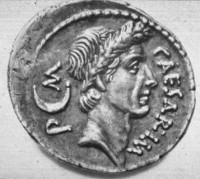
In Greek and Roman culture, the imperial cult produced a new โ€œgospelโ€ every time a new emperor gained the throne. When new emperors were inaugurated, one of the first things he would do is spread Caesar Gospels about himself across the entire empire.

In the context into which Paul was speaking, โ€œgospelโ€ would mean the celebration of the accession, or birth, of a king or emperor. Though no doubt petty kingdoms might use the word for themselves, in Paulโ€™s world the main โ€œgospelโ€ was the news of, or the celebration of, Caesar.

Caesar denariusCaesar demanded worship as well as โ€œsecularโ€ obedience; not just taxes, but sacrifices. He was well on the way to becoming the supreme divinity in the Greco-Roman world, maintaining his vast empire not simply by force, though there was of course plenty of that, but by the development of a flourishing religion that seemed to be trumping most others either by absorption or by greater attraction. Caesar, by being a servant of the state, had provided justice and peace to the whole world. He was therefore to be hailed as Lord, and trusted as Savior (see this article by NT Wright).
These Caesar Gospels would include stories of the miraculous birth of Caesar, how he was visited by foreign dignitaries, and how the sun, moon, and stars helped announce his arrival. These stories might contain some of the amazing things he said and did as a child, and might also include some of his victories at war. The stories would also be filled with promises of peace and prosperity for all during this emperorโ€™s reign. As such, the Caesar Gospels were propaganda tools to convince the citizens of the empire to swear fealty to the new Caesar (with the statement โ€œCaesar is Lord!โ€), and worship him as the newest member of the divine pantheon.

[In the imperial cult], the ruler is divine by nature. His power extends to men, to animals, to the earth, and to the sea. Nature belongs to him; wind and waves are subject to him. He works miracles and heals men. He is the savior of the world who also redeems men from their difficulties. โ€ฆ He has appeared on earth as a deity in human form. He is the protective god of the state. His appearance is the cause of good fortune to the whole kingdom. Extraordinary signs accompany the course of his life. They proclaim the birth of the ruler of the world. A comet appears at his accession, and at his death signs in heaven declare his assumption into the ranks of the gods. Because the emperor is more than a common man, his ordinances are glad messages and his commands are sacred writings. What he says is a divine act and implies good and salvation for men.

โ€ฆ Caesar and Christ, the emperor on the throne and the despised rabbi on the cross, confront one another (Friedrich, in Kittel, ed., II:224-25).

So the Gospels of Jesus Christ, while historically accurate, are more than just records of His birth, life, teachings, death, and resurrection. They are subversive political documents for the fledgling Christian community, showing them that Jesus Christ is Lord and Caesar is not, so they should follow and worship Jesus alone. The Gospels contain the good stories about Jesus which encourage and inspire His followers to live for Him and obey His instructions.

The Gospels of Jesus, therefore, are stories about Jesus for the benefit of believers. These are not books for โ€œevangelismโ€ but books for โ€œdiscipleship.โ€ While unbelievers can benefit greatly from reading the Gospel accounts of Jesus, they are primarily intended for believing audiences.

The Gospel in John

The Gospel of John is somewhat of an exception.

Gospel of John

Though his account of the life of Jesus is referred to as a โ€œgospel,โ€ John never once uses the word in his account, and his narrative of the life of Christ is missing most of the typical โ€œgospelโ€ elements that would be found in a typical Caesar Gospel, which are included in the Gospel accounts of Matthew, Mark, and Luke. Furthermore, based on the content, message, and theme of Johnโ€™s account, he seems intent on showing what a person must believe to receive eternal life (John 20:30-31). Believing in Jesus for eternal life is one of the prominent messages throughout the book.

So if there is one book of the Bible which is geared more toward unbelievers, it would be the Gospel of John.

Having said this, however, I believe that even Johnโ€™s Gospel is intended primarily for believers. There is enough instruction in the book about discipleship and what it means to follow Jesus, that this book also, along with the other three Gospels, can safely be categorized as a book for the discipleship of believers.

Luke 1:19 and the Gospel

When we look at Matthew, Mark, and Luke, we see some surprising elements that are explicitly mentioned as part of the gospel.

For example, in Luke 1:19, the angel Gabriel declares the โ€œgospelโ€ to Zechariah. Most translations say that the angel is declaring glad tidings, or declaring good news, but the Greek word is euangelizล; the angel declares the gospel. The content of the angelโ€™s gospel message is that Zechariahโ€™s wife, Elizabeth, will be the mother of John, who would prepare the way for the Messiah.

When you are telling people how to receive eternal life, is this a fact which you have ever thought to share? Probably not.

Sermons on the Gospel of LukeI have never heard any evangelist or preacher talk about the birth of John in their gospel presentations. But according to Luke and Gabriel, it is gospel truth that Elizabeth would bear a son in her old age and he would be the forerunner for the promised Messiah. It is probably safe to say that this is one of those โ€œfringeโ€ truths of the gospel which are part of the biblical gospel, but which rarely gets shared with unbelievers and which may not do a whole lot for believers who are trying to become better followers of Jesus Christ. However, we cannot deny that the birth of John is part of the gospel, for Scripture says it is.
Besides, once we begin to think about it, there are many helpful and wonderful truths that can be drawn from Gabrielโ€™s gospel message to Zachariah. I myself have taught some of these in the past when I preached through Luke. Few people, however, would ever list the prophecy about the birth of John as part of the gospel essentials. But just because few would list it, this does not mean it is not part of the gospel. It is. There are several other examples in the Gospels of this sort of gospel truthโ€”truths which the Gospel writers include as elements of the gospel, but which are rarely, if ever, included in any list of essential gospel truths or โ€œevangelisticโ€ message.

But such minor โ€œfringeโ€ truths are not the primary gospel truths in the Gospels. Of course, most of what modern evangelicals think of as the major โ€œcentralโ€ truths of the gospel are not included in the synoptic Gospels either. Truths about justification and believing in Jesus for eternal life are, for the most part, simply ignored.

Instead, the primary gospels truths in Matthew, Mark, and Luke center on Jesusโ€™ teaching about the kingdom of God. The central gospel truth in the Gospels is that Godโ€™s kingdom has arrived on earth in the person and work of Jesus Christ.

The Gospel in Matthew 4:23

Matthew 4:23 is one example. In this passage Matthew records that Jesus โ€œwent about all Galilee, teaching in their synagogues, preaching the gospel of the kingdom.โ€ Using the six questions above to help determine what the gospel message was, who it was spoken to, and what the expected result was, it can be quickly discovered that Jesus was preaching to the Jews in the region of the Galilee, and He was telling them that the kingdom of heaven was at hand (Matthew 4:17).

These Jews would not have understood Jesus to be saying that if they believed in Him, they could go to heaven when they died. Such a thought never would have entered their minds. Instead, they would have understood Jesus to be saying that the Old Testament promises to Israel were coming true. To them, this meant that the Messiah would rise to power and would lead the nation of Israel to throw off Roman occupation so that Israel could become the leading nation of the world.

For Jews living under Roman occupation, this was good news! It was exactly what they were praying and longing for. The condition for the reception of this promise was the national repentance of Israel (Matthew 4:17). Jesus said that to receive the kingdom, the Jewish people had to repent of the way they had perverted and destroyed the law of God, and return to a right relationship with Him in true obedience to the law.

Sermons on MatthewAs an indication of their repentance, they had to be baptized, symbolizing their death to the ways of Judaism and accepting the new way of life as prescribed by Jesus.


Yet when many of the Jewish people tried to crown Jesus as king to launch the rebellion against Rome which they knew must come, Jesus rebuffed them.

When they tried to crown Him king, He refused (John 6:15).

When Jesus predicts His suffering and death, they try to talk some sense into Jesus (Matthew 16:21-22).

When they believed that Jesus was about to begin His campaign for the kingdom, they wanted to know who would sit on His right hand and who on His left (Mark 10:37).

So apparently, the gospel message that Jesus preached about the kingdom of God was not exactly the same as the gospel message that the Jewish people heard. The gospel they wanted and the gospel Jesus preached used similar terms and ideas, but Jesus defined these words completely different than how the multitudes defined them.

Time and time again, Jesus is expected to take a stand against the Romans and begin the Jewish revolution which would result in their national independence and restoration as the leading nation of the world. Yet Jesus consistently turned away from such actions and denied that this was why He came.

Even near the end of His ministry, when challenged by Pilate about whether or not He was a threat to Rome, Jesus stated that His kingdom was not of this world (John 18:36). By this, Jesus does not mean that His kingdom was not for this world, for it was. What Jesus meant is that His kingdom would not look or function like an earthly kingdom. The kingdom of God is for this world, but it would not advance the same way as the kingdoms of this world. The kingdom of God was not built upon power structures and violence and military might, but on love, service, forgiveness, and self-sacrifice.

When we understand the kingdom of God in this way, we see that, despite the opinions of some, Jesus was not unsuccessful in launching His kingdom.

To the contrary, through His life, ministry, teachings, death, and resurrection, Jesus inaugurated the kingdom of God in this earth and it has been spreading around the earth ever since. Over and over again in the Gospels, Jesus makes it clear that He was setting up a kingdom, and that this kingdom would be over the entire earth, and it would result in peace and justice for all. But it would not be a kingdom that would rise to power like the other kingdoms of the world. It would be given to the weak, the poor, the outcast, the despised, and the rejected, and would be built upon the principles of humility, grace, mercy, forgiveness, self-sacrifice, service, and love.

This sort of message was too much for the average Jew. Though they wanted the Messiah, they did not want this kind of a Messiah, and so they rejected the instructions of Jesus, and instead of receiving the kingdom He offered, killed Jesus upon the cross. But three days later He rose from the dead as further evidence that His gospel message about the arrival of the kingdom was indeed true.

The resurrection of Jesus vindicated the message of Jesus, proving once and for all that His way of running the world was Godโ€™s way. When the Gospels contains gospel truths about the birth, life, teaching, miracles, death, and resurrection of Jesus (Mark 16:15; Luke 1:19; 2:10; 3:18), such truths are not presented as requirements to believe in order to receive eternal life, but are instead presented as gospel truths to vindicate and validate the person, identity, and message of Jesus Christ.

And while it is only hinted at in the Gospels, one of the accomplishments of the life and ministry of Jesus was that the offer of the kingdom of God was made available not just to Jewish people, but to all people of the earth. This becomes much more obvious in the book of Acts and in the letters of Paul and the Apostles.

What is the Gospel Message in the Gospels?

So note something important about the ways the gospel is presented in the Gospels. In the Gospels, the word โ€œgospelโ€ is rarely (if ever) used in connection with how to receive eternal life and go to heaven when you die. This is not the point of Matthew, Mark, and Luke, nor is it part of the gospel message which they are presenting. They have different goals and audiences in mind, and so when they write about the gospel, they include the truths and elements from the gospel which help make their point.

gospel message

The โ€œgospelโ€ in Matthew, Mark, and Luke emphasizes kingdom truths about how Godโ€™s people are to live on earth as a reflection of Godโ€™s rule and reign (e.g., Matt 9:35; 11:5; 24:14; 26:13; Mark 1:14-15; 13:10; Luke 4:18; 4:43; 7:22; 8:1; 9:6; 16:16; 20:1). That this offer will be opened to Gentiles as well as Jews is hinted at in various places, especially in Mark and Luke, where Jesus and the Apostles minister to mixed multitudes (cf. Mark 14:9).

Frequently, in these gospel offers, commitment, discipleship, and cost are required of those who will respond. But in these instances, it is not everlasting life that is offered, but blessing, reward, and inheritance in the kingdom (cf. Mark 8:35; 10:29). Discipleship, obedience, and life transformation are never the conditions for receiving eternal life, but are instead presented as conditions for experiencing the rule and reign of God in oneโ€™s life.

Even when the Gospels contain calls to โ€œbelieve the gospel,โ€ (cf. Mark 1:15; 16:15-16), these are not invitations to receive eternal life, but are once again invitations to enter into and experience the rule and reign of God in oneโ€™s life while avoiding the opposite (described as โ€œwrathโ€). Wrath, by the way, is not hell or eternal separation from God, but is instead the temporal disastrous and destructive consequences of ignoring Godโ€™s instructions and living instead according to your own will and selfish desire. In this sense, living in the rule and reign of God (the kingdom of God) is the polar opposite of experiencing wrath.

So what is the gospel in the Gospels?

While it does contain some truths which were primarily significant for people living at that time (such as Elizabethโ€™s pregnancy), the vast majority of the uses of the word โ€œgospelโ€ in Matthew, Mark, and Luke refer to truths about the birth, life, teaching, miracles, parables, death, and resurrection of Jesus Christ and how all these events and ideas help His followers (which include us) to live within the kingdom of God inaugurated by Jesus Christ.

The gospel in the Gospels focuses on discipleship truths about how to follow Jesus so that His rule and reign expands in our lives and upon the earth.

The Gospel DictionaryUnderstanding the Gospel requires us to properly understand the key words and terms of the Gospel. Take my course, "The Gospel Dictionary" to learn about the 52 key words of the Gospel, and hundreds of Bible passages that use these words.

This course costs $297, but when you join the Discipleship group, you can to take the entire course for free.

Affiliate Disclosure: As an Amazon Associate I earn from qualifying purchases. Thank you for supporting my work in this way!

God is Redeeming God, Redeeming Scripture, Redeeming Theology, z Bible & Theology Topics: euangelion, gospel, Matthew 4:23, the gospels

Advertisement

  • « Previous Page
  • 1
  • …
  • 5
  • 6
  • 7
  • 8
  • 9
  • …
  • 82
  • Next Page »

My New Book is Out!

Get your copy on Amazon today!
Learn about the gospel and how to share it

Take my new course:

The Gospel According to Scripture
Best Books Every Christian Should Read
Study Scripture with me
Subscribe to my Podcast on iTunes
Subscribe to my Podcast on Amazon

Do you like my blog?
Try one of my books:

Click the image below to see what books are available.

Books by Jeremy Myers

My New Book is Out!

Get your copy on Amazon today!

Theological Study Archives

  • Theology – General
  • Theology Introduction
  • Theology of the Bible
  • Theology of God
  • Theology of Man
  • Theology of Sin
  • Theology of Jesus
  • Theology of Salvation
  • Theology of the Holy Spirit
  • Theology of the Church
  • Theology of Angels
  • Theology of the End Times
  • Theology Q&A

Bible Study Archives

  • Bible Studies on Genesis
  • Bible Studies on Esther
  • Bible Studies on Psalms
  • Bible Studies on Jonah
  • Bible Studies on Matthew
  • Bible Studies on Luke
  • Bible Studies on Romans
  • Bible Studies on Ephesians
  • Miscellaneous Bible Studies

Advertise or Donate

  • Advertise on RedeemingGod.com
  • Donate to Jeremy Myers

Search (and you Shall Find)

Get Books by Jeremy Myers

Books by Jeremy Myers

Schedule Jeremy for an interview

Click here to Contact Me!

Follow me on X

© 2026 Redeeming God · All Rights Reserved · Powered by Knownhost and the Genesis Framework