
 As we seek to learn why bad things happen in this world, we are looking at several principles of a theological chaos theory. We are currently discussing the point that due to the fall of humanity, nature has spun out of control. In yesterday’s post we saw that Scripture and theology seems to indicate that in some way humans were enabled by God to guide and control natural forces, but when we sinned, we lost this ability, and nature spun out of control.
Due to sin, we lost control of the powers that control nature, and having spun out of control, they now wreak havoc on the world. There is now disarray and chaos in creation.
From this, we can know several things.
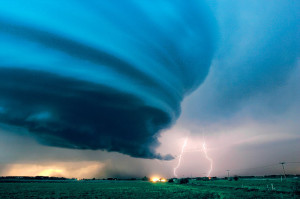
Storms are Not Sent “From God”
First, when storms and disasters occur, they do not “come from God.” Storms are not sent by God. (I know that some will object and point to the Flood or to the storm that God sent to bring back a fleeing Jonah. We will look at these texts at a later time.)
Storms occur because the forces of nature are out of control. Much of the work of God on earth is focused on protecting humanity from complete destruction at the hand of these destroying powers. Sometimes God “withdraws” His hand of protection and allows storms to rage, but we must be careful with saying that this is why all storms occur. We do not know why God allows some storms. When it comes to storms, there is much we do not know.
For example, we will never know all of the boundaries that God has placed upon the destructive powers so that they do not overwhelm and annihilate mankind forever. We can never know how many disasters have been averted, how many floods have been avoided, how many meteorites have been nudged off course by God. And when storms and disasters do occur, we can never know what string of events and decisions by God, angels, and human beings led to that storm occurring.
 The second principle of the
 As we try to understand the theology behind the idea that on the cross, Jesus reveals to us what God was doing in the Old Testament, we are in a section where we recognize that there are no “pat answers” to the problem of evil in the world, and that the situation is much more complex than most of us realize. I have about six points to a “
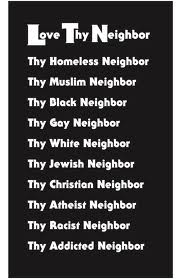
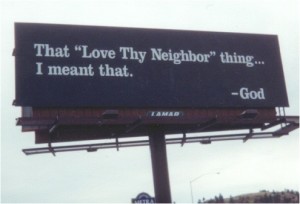 This post contains three more ways to develop friendships with your neighbors.
 When we learned that our neighbor’s cancer had returned, we started spending time with her. When she told us that she wanted watermelon, we found a store that had watermelon in January. When she couldn’t keep down any food we made her lots of batches of “pear pudding,” the only thing she could keep down. We looked at her pictures with her and her husband – the church where they married, vacations they had taken, and other pictures from her life. We prayed with them. We tried to answer their questions about God. We sat by her bedside the night before she died. We hugged her every time we saw her. We cried with her, and then again with her husband after she passed.

 I
 And let me tell you, he NAILED it. He basically said the same thing I have been saying in my series on this blog.

 Before we can look at specific Bible passages regarding the violence of God in Scripture, it is important to develop a framework which helps us understand what is going on within and behind these violent texts. I have six points of this framework, which I call “

 So before we look at any specific passages, I want to briefly present a framework for how to understand what is going on behind many of the violent and destructive passages in Scripture. In this post I will present the basic framework, and in the following couple of posts I will present what I call the “Six Principles of Chaos Theory.” Only then will be well prepared to begin looking at some of the violent texts of Scripture to see how they do not reveal a violent and bloody God, but a God that looks surprisingly like Jesus Christ.
 Thankfully, this is not the God that created the world, nor is it the God portrayed in Scripture, nor especially is it the God revealed in Jesus Christ. The true God, the God who created heaven and earth, the God of Abraham, Isaac, and Jacob, the God who raised up Kings and Prophets in Israel to carry His message, the God ultimately revealed in Jesus Christ, and carried now by the Spirit through His Church, is a God of infinite love, mercy, compassion, forgiveness, long-suffering, patience, kindness, and grace. This is the God who desires a relationship with each person on earth.
 An analogy might be helpful. You probably remember the scene from “Jurassic Park” where the wild-eyed scientist, Dr. Ian Malcom, talks about “chaos theory” and illustrates it by watching drops of water roll off his knuckle. He shows that even though the drop of water lands in the same place each time, it rarely goes in the same direction.
 How can a God who says "Love your enemies" (Matthew 5:44) be the same God who instructs His people in the Old Testament to kill their enemies?

 There are numerous ways of doing this, but let me mention just seven that have worked well for my wife and I as we seek to build relationships in our neighborhood. This post will contain the first four, and the next post in this series will contain the final three.
 On other occasions we walked by neighbor’s houses and saw water running out of the house from under the garage door or front door. This indicates a broken water pipe indoors and a flooded house. After determining that no one is home, we try to find a neighbor with a large wrench so we can turn the water off at the street, or I run home to find such a wrench. After the water is off, we try to contact a neighbor who can reach the homeowner so they can return home to start the massive cleanup. At least three times the homeowners have later told me that our quick action saved them thousands of dollars in damages and prevented them from having to move out of the house while it was being repaired.
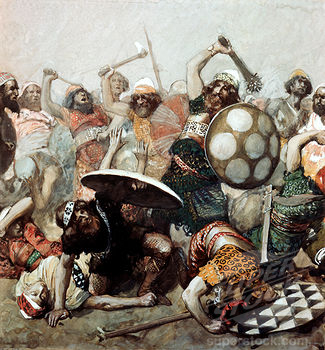 This is a summary post from much of what I have been writing over the past two weeks or so about the violence of God in the Old Testament. The reason I am summarizing it is because I want to begin looking at some of the key biblical passages which are affected by my proposal to see how we can read and understand these texts.