

And if you don’t hate country music, check out this song:
The song comes from Brad Paisley’s Christmas album.
Liberating you from bad ideas about God

“Good works won’t get you saved, BUT if you don’t have good works this proves you never were saved.”
Read this book and learn the REAL truth about the biblical gospel.Available now on Amazon.
The good news in Scripture is that through Jesus, God has done everything that needs doing as far as your eternal life is concerned, and so there is nothing you need to do to earn, keep, or prove God’s free gift of eternal life.
And if you don’t hate country music, check out this song:
The song comes from Brad Paisley’s Christmas album.
Affiliate Disclosure: As an Amazon Associate I earn from qualifying purchases. Thank you for supporting my work in this way!
If you attend church, sing Christmas carols, send and receive Christmas cards, set foot into any store that is somewhat decorated for Christmas, or watch “Charlie Brown’s Christmas,” you will likely see or hear some reference to the birth of Jesus.
I think, however, that while many people are familiar with the birth story of Jesus, few of us recognize how religiously and politically subversive His birth narrative truly is. The birth accounts of Jesus undermine several core ideas in most religious and political worldviews.
In fact, as you prepare for Christmas, note when, where, and how you see these references to the birth of Jesus, and what these references are connected to. More often than not, these references to the birth of Jesus will be connected to things the birth of Jesus actually undermines.
Modern references to the birth of Jesus often support things that Jesus actually opposed.
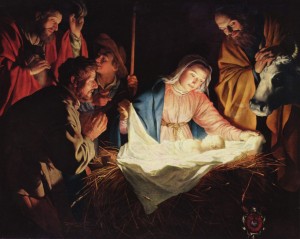 But when we begin to understand the birth of Jesus (and His entire life), we begin to see how politically and religiously subversive Jesus really was. To see some of this, read my studies on Luke 2, and other Christmas posts.
We consider four of these subversive truths below.
One of the most pervasive ideas in nearly all religious and political hierarchies is that God is on their side. Religious and political leaders claim that God has blessed them, their plans, and their goals. Religious and political institutions claim that everything they do is advancing the rule and reign of God on earth.
But usually, the goals and methods of the political and religious kingdoms of this world have little overlap with the goals and methods of the Kingdom of God. Those religious and political leaders which recognize this threat to their power often use the name of God in the attempt to destroy the Kingdom of God.
This is exactly what we see in Matthew 2 when King Herod feels threatened by the birth of a baby boy in Bethlehem, and then uses the claim that he wants to worship the new-born Messiah as an excuse for trying to kill Jesus.
When we truly begin to understand the values of the Kingdom of God, we see that His kingdom has come to overthrow the powers of this world. The Kingdom of God upsets rulers and dominions and powers and authority. It rights what is wrongs, restores justice, and reintroduces righteousness, which are all things the religious and political kingdoms of this world claim to do why they are in fact doing the exact opposite. For more on this, see Wright, “Emperors and Angels.”
This idea is similar to the one above, but focuses primarily on the leaders themselves. For some reason, we tend to think that the people in positions of power, the people with titles, and the people who get their voice heard are the ones that God has blessed in this world. Most of the leaders believe this too.
But if the birth of Jesus is any indication, one of the greatest lies of the religious and political world is that God is with the rich and powerful leaders. The birth narratives reveal that there were no rich and powerful people with Jesus at His birth.
The Messiah has come for the dishonorable, the outcasts, the uneducated, the poor. This is the kind of family He was born into. These were the settings He was born in, and these are the type of people who first learned of His birth.
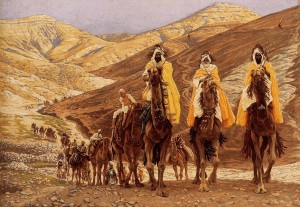 The shepherds were considered by most to be dirty, outcast thieves, and while the wise men from the East are often called “Kings” (though they were likely not kings at all), most people in Israel would have considered them to be religiously unclean, astrology-practicing, sinful foreigners. Modern parallels might be street hustlers and fortune tellers.
So before you go envying the people at the top, who seem to be receiving blessing after blessing from God, you might want to take a closer look at the people who live in the gutter, for it there where you are more likely to find God.
If you were to listen to most of the religious and political rhetoric at Christmas, you might get the impression that Jesus came to support the powerful in their goals for domination, the rich in their quest for year-end bonuses, and the elite in their self-glorifying causes.
But when God began to perform His greatest work in human history, He launched it in an animal feeding trough in the backwoods town of a tiny, poor, insignificant country.
I imagine that if Jesus were to show up again today, it would not be in Washington D.C. or Rome. It would probably be in some poor village of central Africa. If Jesus was born in the United States (or any of the ruling nations in the world … Jesus was born in part of the Roman Empire, after all), it would be to a poor prostitute who is living under a cardboard box in a back alley.

This leads me to believe that if you want to see God today, don’t look on your television, the internet, or in buildings made with marble and brass.
Instead, look where you would least expect him. Look where life is hard and people are dirty. Look among the homeless, the prisoners, the prostitutes, and the drug-addicts.
Power, greed, and manipulation are three central values of religion and politics. Wayne Jacobsen refers to them as cash, credit, and control. But such things do not describe the birth of Jesus in any way, shape, or form.
The values of Jesus at His birth (and during His entire ministry) did not include getting more wealthy, but in generously giving it away. Jesus did not seek to gain power or credit for Himself, but consistently gave glory to God and spread power among His followers. And Jesus never tried to manipulate or control anyone into doing what He wanted, but taught people that they were free to follow God and live as they pleased within His family.
In times when politicians promise change to the world, followers of Jesus can offer true and lasting change, based not on the principles of power or greed, but on service and generosity.
I am not sure what you have planned for this Christmas, or for the year that follows, but if you want to see Jesus, don’t look for Him among the rich and powerful, or among those who are famous and well-known (whether in political or religious arenas). Instead, look for Him among the poor, the outcast, the overlooked, the sick, and the weak.
And don’t run after fame and glory for yourself, thinking that such things are the way God keeps score. They aren’t. God doesn’t keep score at all. Such things are not God’s gifts to you. Instead, be generous, loving, gracious, and kind, for it is in these things that God reveals Himself to you, and reveals Himself to others through you.
Affiliate Disclosure: As an Amazon Associate I earn from qualifying purchases. Thank you for supporting my work in this way!

 I hope you are having a great Christmas.
Here are some Christmas Carols sung by my three daughters as a Christmas present for my wife, Wendy. My daughter, Taylor, played the piano and sang (she’s only been playing for about three months), while my other two daughters, Selah and Kahlea, sang.
I am taking the rest of the year off from blogging so I can spend more time with my family.
When I come back, it will be with a flurry of activity…. I’ve got a lot planned for the first 10 days of 2014…
And so much more! See you in 2014!
Affiliate Disclosure: As an Amazon Associate I earn from qualifying purchases. Thank you for supporting my work in this way!

Did you know that Christmas tress are idols?
At least, that is what I was once told by a member of my church.
Several of us had gathered together on a Saturday afternoon in early December to decorate the church for Christmas. We put up lights, tinsel, red and green ribbon, poinsettias, and the crowning glory… a tall, beautiful Christmas tree – right up in front of the sanctuary to the left of the platform. We used all white lights and wrapped it with silver and gold ribbon.
The next day, after the Sunday service concluded, one of the men in the church pulled me aside and said, “Pastor, I cannot attend a church that erects idols in the sanctuary.”
I just stared at him. I had no clue what he was talking about.
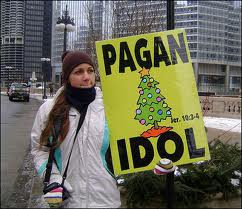 He pulled out his Bible and turned to Jeremiah 10:3-4 and had me read it. It says this:
For the customs of the people are futile;
For one cuts a tree from the forest,
The work of the hands of the workman, with the ax.
They decorate it with silver and gold;
They fasten it with nails and hammers”
So that it will not topple.
“You see?” he said. “You have erected a Christmas tree idol in the church sanctuary. Until you remove it, I and my family will not be back.”
Being a young pastor at a small church, I didn’t want to lose any family over such a things as a Christmas tree, and so I called a few of the elders that afternoon, and we decided that while we could not get rid of the tree (another family had donated it to the church and they would be offended if we threw it out), we could move it into the foyer. I called the man who had pointed out Jeremiah 10:3-4 to me, and while he wasn’t happy that we were keeping the pagan Christmas Tree idol, he said that moving it would be good enough, and he and his family would be back in church the next Sunday.
Ironically, he and his family had a little Christmas party over at their house that year. We went. I remember walking into his house and seeing all the normal Christmas decorations. He had the lights, the tinsel, the ribbon… even some ornaments which he had hung on the wall, but no Christmas tree. Cookies were on the counter. Christmas music played on the stereo. There were even Christmas presents piled in a corner. But no Christmas tree. I remember thinking that it seemed a bit hypocritical…
He and his family left the church a few months later over something else. It had to do with the worship team this time. (And I lost the worship team as well… Ah, the joys of a small church.) I remember thinking after he left, “I sure wish I had left that tree in the sanctuary. In fact, I wish I had added a few more Christmas trees!”
So are Christmas trees idolatrous? If you put up a Christmas tree in your house, or in your church building, are you engaging in pagan idolatry?
The answer is no… unless of course you are praying to the tree and worshiping it… in which there might be some Christmas tree idolatry going on. And no, singing “Oh Christmas Tree” does not count as praying to the tree or worshiping it…
Look, I fully admit that there was a pagan practice of chopping down trees and erecting them in public spaces or homes and decorating them with lights and gold and silver. This is a common practice among many cultures that goes back thousands of years and is part of their cultural and religious celebrations at this time of year.
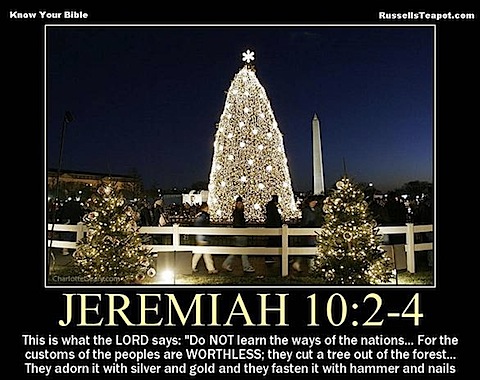
I don’t think that is exactly what Jeremiah 10:3-4 is talking about, however. If you look at the surrounding context, it appears that after the tree is cut down, it is carved into a shape and then gold and silver is hammered onto it. What Jeremiah is talking about, it seems, may be the actual crafting of an idol, not necessarily the decorating of a tree itself.
But regardless, even IF Jeremiah 10:3-4 is talking about a practice that is almost identical to our tradition of putting up a Christmas tree, it is still not idol worship.
Why not? Because in the minds and practice of most Christians, the Christmas tree does not represent a pagan holiday, but represents a time when we celebrate the birth of Jesus Christ. The Christmas tree reminds us of how the Light of the World arrived to bring hope to those in darkness. The Christmas tree reminds us how shepherds and wise men brought gifts to honor His birth, and how Jesus Himself brings the free gift of eternal life to all the world. The Christmas tree even reminds us of how Jesus died upon a tree, taking our curse upon Himself, so that we might become the righteousness of God.
Though it is true that the Christmas tree may have once been a pagan symbol, it is a symbol that has been redeemed in Jesus. Just as Jesus redeems us, so also, Jesus has redeemed the Christmas tree. For most people, the Christmas tree is no longer an idol, but is a reminder of what Jesus did for us in coming to this earth as a humble babe.
Jesus is in the business of redemption. Take the cross as another example of a “tree” that has been redeemed. At the time of Jesus, the cross was a symbol of brutal torture and Roman military power. Nobody would dream of erecting a cross in their house or wearing one around their neck. But Jesus redeemed it! When people see a cross today, nobody thinks of brutal Roman torture. They think of Jesus.
The Christmas tree is the same. Though it used to be (and still is in some places) a symbol of pagan idolatry, the Christmas tree has been redeemed by Jesus and we can put one up in our houses and in our church buildings as a way of celebrating the birth of Jesus and all that He accomplished for us through His birth, life, death, and resurrection. Christmas trees have been redeemed by Jesus, just like you and me and everything else Jesus touches.
So Merry Christmas! I hope your Christmas tree is especially beautiful this year.
P.S. I wrote a short eBook on this subject…. you can get it here.
Affiliate Disclosure: As an Amazon Associate I earn from qualifying purchases. Thank you for supporting my work in this way!
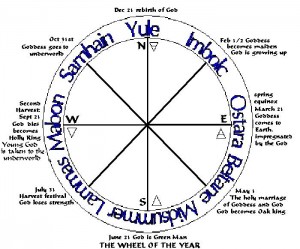 I attended a seminar recently on the topic of Paganism. You know… those people who worship Thor, Freya, Odin, and engage in mystical rites out in the woods, usually around a fire. No, they don’t worship Satan. No, they don’t practice black magic.
Today, of course, is Winter Solstice, one of the most religiously significant days of their year. Today is the day when they believe that the dividing wall of separation between men and women and gods and goddesses is the thinnest.
In the seminar, I was shocked at how “Christian” the Pagan belief system really was. Of course, if you ever told a Pagan this, they would smile and say, “What you mean to say is how Pagan the Christian belief system really is…. Most of Christian theology and practice was stolen from Paganism, after all.”
Though most Christians are shocked to hear it, the Pagans might have a point. In fact, Frank Viola wrote a book about this very thing a few years back (Pagan Christianity?), and I wrote one specifically about the Pagan roots of our Christmas traditions (Christmas Redemption).
But in the seminar I attended (which was taught by a Pagan High Priestess, by the way…), I noted the belief of a creation, of an ongoing battle between good and evil, and of a coming final last battle, in which humans will join in the fight to defeat and vanquish evil from the universe. There was talk of a tree, and getting knowledge from the tree, but at great sacrifice. The similarities go on and on.
The reason I bring this up is because of something I read from C. S. Lewis a while back. As he watched the world slide into debauchery and atheism, he believed that while we ultimately want people to accept Christian beliefs about God, Jesus, and the afterlife, it is not easy to lead a person to that point straight from atheism. C. S. Lewis said that before a person can believe in a divine law, they first need to believe in a natural law. The way the world is going, people tend not to believe in any law. Paganism, at least, believes in a natural law, and it is an easy jump from there, says C. S. Lewis, to teach people the divine law as recorded in Scripture and revealed through the gospel of Jesus Christ.
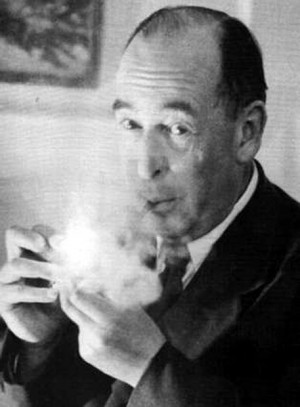 I am butchering what C. S. Lewis said. Here is his exact quote:
But… certainly I feel that very grave dangers hang over us. This results from the apostasy of the great part of Europe from the Christian faith. Hence a worse state than the one we were in before we received the Faith. For no one returns from Christianity to the same state he was in before Christianity but into a worse state: the difference between a pagan and an apostate is the difference between an unmarried woman and an adulteress. For faith perfects nature but faith lost corrupts nature. Therefore many men of our time have lost not only the supernatural light but also the natural light which pagans possessed.
But God, who is the God of mercies, even now has not altogether cast off the human race….We must not despair. And (among us) a not inconsiderable number are now returning to the Faith.
So much for the present situation. About remedies to the question is more difficult. For my part I believe we ought to work not only at spreading the Gospel (that certainly) but also at a certain preparation for the Gospel. It is necessary to recall many to the law of nature before we talk about God. For Christ promises forgiveness of sins: but what is that to those who, since they do not know the law of nature, do not know that they have sinned?…Moral relativity is the enemy we have to overcome before we tackle Atheism. I would almost dare to say ‘First let us make the younger generation good pagans and afterwards let us make them Christians’ (Yours, Jack; p. 219).
Any Youth Pastors out there? Try suggesting in your next planning session that you are going to start teaching Paganism to your youth so that they will learn the natural law. See how well that goes over.
But seriously, I think Lewis might be on to something here.
Someone once said (though I do not remember who) that while not all roads lead to Jesus, Jesus walks all roads to lead people to Him.
I think this is true of many of the world’s religions. They do not necessarily lead people to Jesus, but Jesus has no qualms whatsoever about walking into such religions to lead people to Him.
 I think that the reason there are so many similarities between Christianity and other religions is not because Christianity borrowed or stole from these other religions (though some of that might have happened too), but because the Spirit of God was at work in the hearts and minds of the people who developed these religions to write eternity into their hearts, to foreshadow the Gospel of Jesus Christ, and to give men and women a longing for grace that could not be achieved in any other way than through Jesus.
Just as Paul wrote that the Law was given to lead people to Jesus (Gal 3:24), so also, other religions and pagan traditions and ideas about creation and the afterlife and defeating evil were given to lead people to Jesus. I have written about this previously here: Merry Mithras!
Don’t worry. I am not about to start teaching or practicing Paganism.
I will, however, wish you a Happy Winter Solstice: Tomorrow, may the light of God’s love in Jesus Christ shine brighter and longer through your life than it did today. May the Son of God be made flesh again as you love and serve others.
Affiliate Disclosure: As an Amazon Associate I earn from qualifying purchases. Thank you for supporting my work in this way!